Ancient Bar Kokhba revolt-era tunnels and Byzantine church reopened to public in Israel
An archaeological complex at Horvat Burgin, featuring hiding tunnels used by Jewish rebels and a mosaic-floored Byzantine church, has been inaugurated after years of excavation and conservation.
By Chinedu Schneider ·
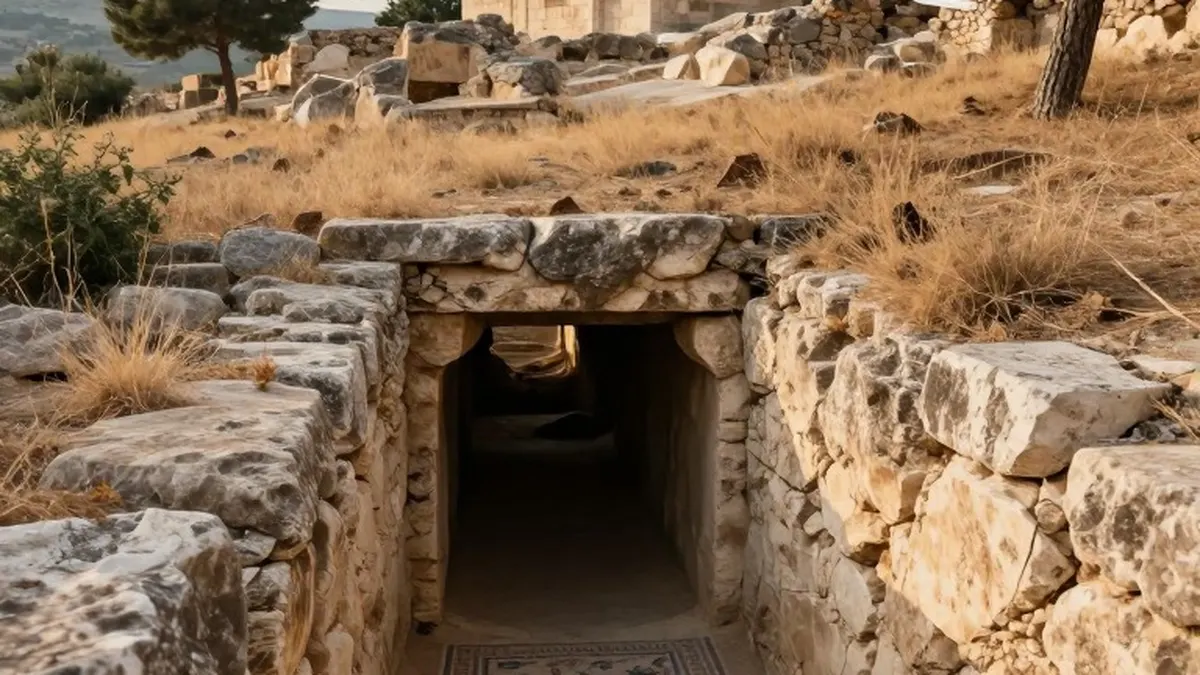
An archaeological complex combining an ancient Byzantine church with a network of underground tunnels once used by Jewish rebels hiding from the Romans was inaugurated last week at Horvat Burgin, in Adullam-France Park.
The opening ceremony was held jointly by the Keren Kayemeth LeIsrael-Jewish National Fund (KKL-JNF), the Israel Antiquities Authority (IAA) and the Mateh Yehuda Regional Council, following extensive excavation, conservation and development work carried out to make the area accessible to the public.
Earlier excavations at the site, led by Dr. Amir Ganor, director of the IAA's Theft Prevention Unit, together with Alon Klein and Dr. Peter Gendelman of the IAA, uncovered evidence of a large Second Temple settlement that continued to exist through the Ottoman period. Researchers have proposed identifying the settlement as Kfar Bish, a 1st century village first mentioned in the writings of Flavius Josephus.
During the early Roman period, residents of the settlement carved an extensive system of hiding tunnels into the bedrock in preparation for conflict. The settlement was eventually besieged by the Romans and destroyed during the Bar Kokhba revolt, which ran from 132 to 136 CE. According to Josephus, its surrounding wall was so strong that the Romans expected the siege to last a long time, but the inhabitants unexpectedly surrendered. A pagan population later settled among the ruins of the Jewish settlement, constructing new buildings above ground and hewing elaborate burial sites beneath it.
In the Byzantine period, a church whose floor is decorated with colorful mosaics was built at the site along with a monastic complex. Numerous columbaria, structures used for raising pigeons, were also discovered, as were winepresses.
"Horvat Burgin is the largest ancient settlement in the area, both in its extent and in the scale of its surviving remains," Ganor said. "For years, the site suffered from intensive antiquities looting. Looters broke into burial caves and underground hiding systems and damaged buildings aboveground." He said further damage was halted only through intensive efforts by IAA inspectors and KKL-JNF personnel, including enforcement operations and the apprehension of looting gangs, the initiative to establish Adullam Caves Park, excavations undertaken in response to looting, and the opening of the site and park to visitors.
KKL-JNF Chairman Eyal Ostrinsky stressed his organization's role in protecting such heritage. "The story of Horbat Burgin is the story of our land. Our responsibility at KKL-JNF is not only to protect nature and forests, but also to safeguard our historical heritage and make it accessible to the public," he said.
Avishai Cohen, head of the Mateh Yehuda Regional Council, said developing the site is important for strengthening tourism in the region. "Mateh Yehuda is the land of the Bible, a region where history, heritage, and landscapes together tell the story of the Jewish people over thousands of years," he explained. "Opening the site to the public allows the local community and the younger generation to grow up with pride in their roots and a deep connection to the land."
Ami Shahar, deputy director-general for Built Heritage Conservation at the IAA, described the project as an example of fruitful cooperation with KKL-JNF. "For us at the Israel Antiquities Authority, uncovering fascinating finds in the ground is the beginning of a journey, one that continues with preserving this heritage for future generations," he said, adding that the remains must be preserved to the highest standards as a living cultural asset.
Heritage Minister Amichai Eliyahu of Otzma Yehudit said the discoveries at Horvat Burgin "bear living witness to our deep roots in this land, our enduring attachment to it, and our unceasing struggle for it." He described the tunnels dug by Jewish rebels two thousand years ago as "not merely pages of history, but a tangible lifeline connecting our people's past heroism with our sovereignty and national rebirth today," and pledged to keep developing heritage sites across the country.