Anthropic Mathematician Claims Riemann Hypothesis Solution via AI
A technical staff member at Anthropic announced that he used the company's AI tool Claude to find a proof for a famous mathematical problem unsolved for over 150 years.
By Chinedu Schneider ·
Levent Alpöge, a member of the technical staff at the artificial intelligence company Anthropic, announced on Friday that he believes he has solved the Riemann Hypothesis. This historic claim was made through a four-page explanation published on his personal website. Alpöge stated that he worked alongside the company's AI model, Claude, to develop a proof for the problem, which has remained unsolved since it was formulated in 1859.
The Riemann Hypothesis is a central problem in number theory that concerns the distribution of prime numbers as they extend toward infinity. Prime numbers are defined as integers greater than one that are only divisible by one and themselves. The hypothesis has challenged mathematicians for more than 150 years and is widely regarded as one of the most important open problems in mathematics.
Alpöge revealed that his breakthrough occurred late Sunday night. At that time, he messaged Anthropic CEO Dario Amodei to ask about his ability to announce the findings. This timing coincided with the company preparing for a major stock market debut. The following day, which was the day after Anthropic's initial public offering, Alpöge made the revelation public. The IPO was the most valuable in history, raising a record-breaking $81 billion at a valuation of $1.5 trillion.
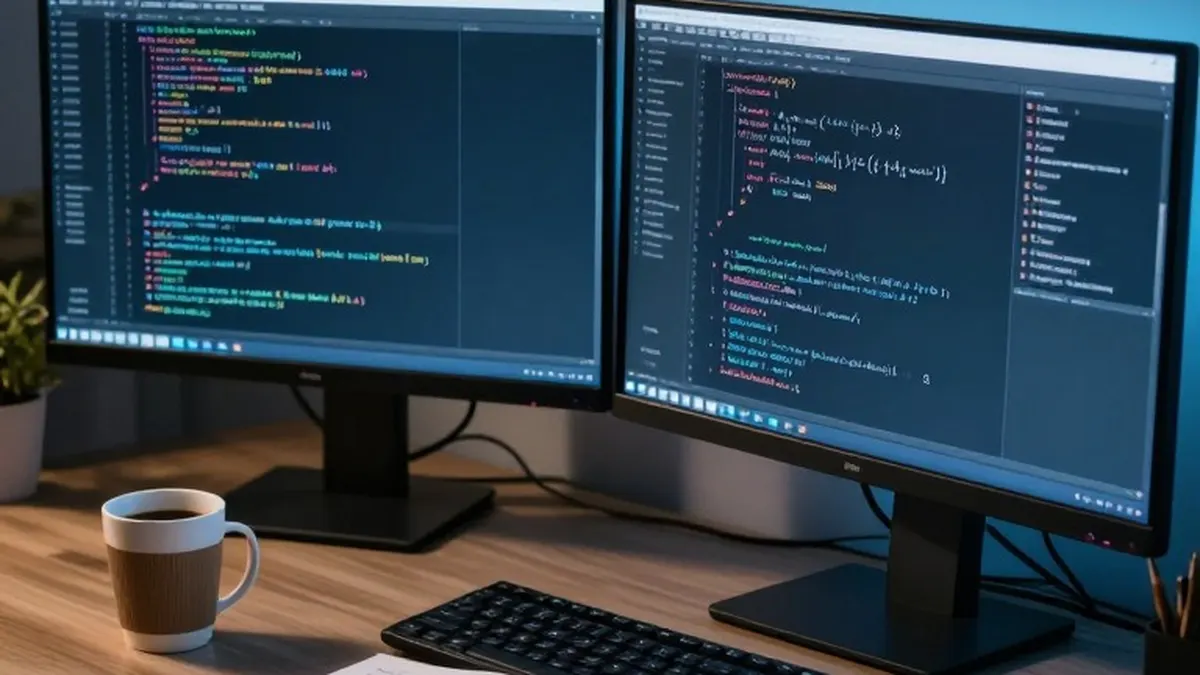
The proof itself was released in a format that differs from traditional mathematical papers. Alpöge provided the argument within 17 million lines of Lean code. Lean is a programming language specifically designed to allow computer verification of mathematical proofs. Alex Kontorovich, a distinguished professor and department chair of mathematics at Rutgers University, noted that traditionally, such findings are published as formal papers that readers must follow line by line to understand the logic.
Kontorovich explained that while the computer, specifically Claude, has verified the code and declared the proof true, human understanding is still required. He stated that the computer is extraordinarily picky and if a proof satisfies the machine, there is a very good chance it will satisfy mathematicians as well. However, he emphasized that he still needs to do the work of understanding the solution himself. He described the current situation as an out-of-body experience where he is struggling to comprehend the implications of the announcement.
Alpöge acknowledged that he is presenting the world with a complete argument before having fully mastered the surrounding mathematics. He noted that more than 250,000 pages of material came from his work with the AI. In a lighthearted comment, he wrote that while he and Claude had a great time working together, the AI far outpaced him near the finish line, describing the AI as flying, dancing, and sparkling during the final stages of the work.
This event marks the second time in recent months that an AI company or someone linked to one has claimed to crack a famed unsolved math problem. In September, OpenAI stated that its technology was key to a breakthrough involving the Navier-Stokes equations, which govern the flow of fluids. Kontorovich remarked on the rapid succession of these events, saying that after Navier-Stokes, the Riemann Hypothesis has now also been claimed as solved.
Despite the announcement, the Riemann Hypothesis remained listed as unsolved on the website of the Clay Mathematics Institute hours after the news broke. The institute had selected the hypothesis in 2000 as one of seven Millennium Prize Problems, offering a reward of $1 million for a correct solution. Martin Bridson, the president of the institute, said in a statement that the announcement is of historic significance and holds the promise of transforming the perception of what is possible in mathematics.
Bridson added that the journey from the initial announcement to a place of real understanding will be long and difficult. The assessment process to determine if the problem has actually been solved takes time. Anthropic did not respond to an email from The Associated Press requesting comment on Alpöge's claim. CEO Dario Amodei has previously projected an optimistic vision for the future of AI, highlighting its potential to lead to significant advancements in math and science research while also warning about the risks the technology poses.
The verification process is expected to involve a rigorous review by the mathematical community. While the Lean code provides a high level of confidence in the logical consistency of the proof, the broader mathematical implications and the human comprehension of the result remain to be established. The event underscores the growing role of artificial intelligence in tackling complex scientific and mathematical challenges that have persisted for centuries.
More News · National news · Report a business · Got a Story?