Army completes five-ton lead explosive blast in Iowa
The U.S. Army detonated unstable lead azide at the Middletown plant on Wednesday after legal delays and weather concerns.
By Chinedu Schneider ·
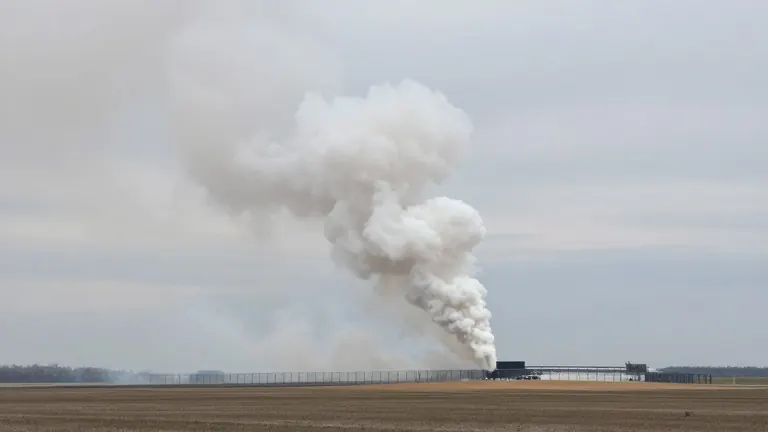
The U.S. Army finished detonating more than 60 barrels of unstable lead azide at the Iowa Army Ammunition Plant in Middletown on Wednesday. The controlled blast disposed of approximately five tons of the material, which has been stored at the facility since World War I. Federal partners and state emergency management officials reported that the mitigation measures were successful and the explosion remained well-contained. Missouri Governor Mike Kehoe posted on social media that state agencies would continue monitoring the situation following the event.
The detonation date shifted three times from its original schedule last Friday. Environmental groups filed lawsuits to block the blast, creating legal uncertainty that delayed the operation. The Army stated that the lead azide, used to ignite munitions, had been stored for decades. In recent years, crystals formed inside the storage containers, making the material highly sensitive to movement and temperature changes. Administration officials ruled out chemical treatment at a Tuesday press briefing, noting that the munitions had degraded to a point where moving them or opening the containers posed a risk of accidental detonation.
FEMA advised residents within 20 miles southwest of the plant to stay indoors with windows closed to limit exposure to airborne lead dust, noise, and vibration. Some residents voluntarily evacuated from the area. The Centers for Disease Control and Prevention identified children and pregnant individuals as facing the greatest danger, noting that no safe level of lead exposure exists whether the substance is airborne or settles on surfaces. The Iowa National Guard deployed 100 soldiers to support local efforts and federal agencies. Governor Kim Reynolds said the Guard assisted with community outreach to 150 households.
Local residents expressed concern after learning about the planned explosion only last week. Professor Andrew Whelton of Purdue University, who specializes in environmental disaster planning, told NPR that the timing should have been planned better. He noted that poor messaging caused anxiety and stress, leading some businesses to plan shutdowns and farmers to worry about moving cattle. FEMA reached out directly to homes in the highest risk areas to offer evacuation assistance, though reporters who called the agency hotline were told to expect a callback of several hours.
Officials from the Trump administration described the detonation as the only safe method to dispose of the ordnance, which was moved to a bunker in Iowa 17 years ago. In March, authorities determined the substance was too unstable to move, starting a race to destroy it before an uncontrolled explosion occurred. Acting Army Secretary and leaders from FEMA and the ATF pushed back on the idea that the event was a surprise, citing previous town hall meetings. They admitted, however, that the specific timing of the blast had remained a moving target while the military built berms and monitored weather conditions.
Tom Croci, an official with the Environmental Protection Agency, explained that agencies worked to set parameters for a supervised detonation in the most optimal environment. He said the back-and-forth process ensured the right conditions for the explosion. President Donald Trump told the Army to wait for court approval and sign-off by Iowa Governor-elect Rob Sand on Monday. A federal appeals court cleared the way for the blast on Monday, allowing the operation to proceed despite the pending legal challenges.
Whelton expressed concern about follow-through on toxic sampling and long-term cleanup. He referenced the chemical spill in East Palestine and the Los Angeles wildfire cleanup as examples where the government’s track record for managing long-term toxic exposure effects has been mixed. The Army and federal partners will continue to monitor the site and the surrounding communities in the days following the detonation.