Army issues three-day window for 17 new Middle East bunkers
Contractors have until November 22 to bid on precast shelters for troops in Israel, Saudi Arabia, and Lebanon.
By Bianca Shevchenko ·
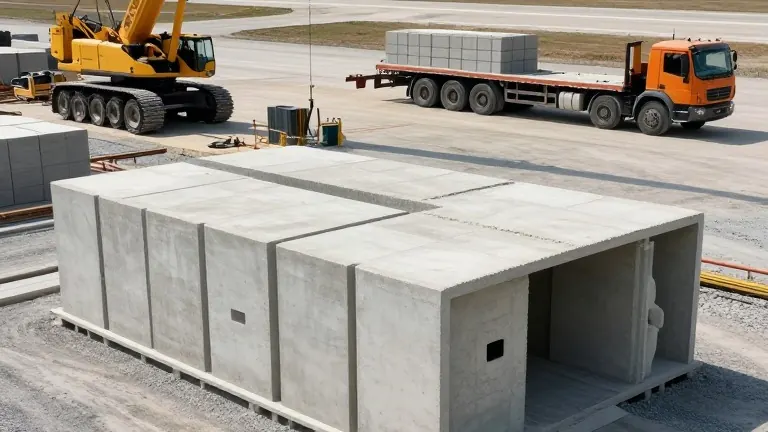
The US Army issued a procurement notice on November 19 seeking immediate construction of 17 reinforced concrete shelters across the Middle East.
The request aims to replace aging shipping containers with standardized structures capable of withstanding missile and drone impacts. The Army plans to install ten of these units in Israel, five in Saudi Arabia, and two in Lebanon.
A government document describes the need as urgent due to elevated regional threat levels. It states that current non-standard shelters leave service members vulnerable in hostile environments under US Central Command jurisdiction.
In Israel, the specifications require fully operational indirect fire bunkers. Each unit must contain three reinforced concrete sections. Entry and exit points will feature Alaska barriers, which are blast and fragmentation protection walls. These barriers stand three meters high and weigh approximately 6.1 tons per piece.
Additional protective measures include sniper screens on the exterior. The roof will be covered by 18 inches of sandbags, while the sides will receive four feet of sandbag coverage.
Contractors have a three-day window to submit price quotes for the project. The notice cites extreme operational urgency as the reason for the short timeline. It notes that soldiers are currently at risk while using temporary containerized shelters. Once a contractor is selected, the firm must complete the work within 45 days.
The procurement document does not list specific base names or coordinates. It states that verified bidders will receive exact locations upon the release of the solicitation. However, the text implies that Israeli sites are Air Force bases. It prohibits contractors from disposing of materials in base trash bins or other locations without prior approval.
The notice lists several prohibited materials, including mercury, lead, asbestos, and chlorinated solvents. It explains that these substances can negatively impact aircraft structure, systems, and safety if they enter the environment.
This move follows continued Iranian missile and drone attacks on Gulf States. During Operation Epic Fury, an Iranian drone struck a base in Kuwait, killing several American soldiers. The attacks caused billions of dollars in damage to US military infrastructure in the region, including in Jordan.
Defense Secretary Pete Hegseth visited the region in March to discuss shelter needs. He stated that rapidly fielding hardened shelters is a theater priority alongside air defenses. In late October and early November, at least 32 C-17 transport aircraft landed at Ovda Air Base in Israel. These flights originated from Fort Bliss, Texas, which hosts US Army air-defense units. A THAAD battery is also currently deployed in the country.