Syria and EU seek normalisation as diplomats worry over migration focus
Negotiations to restore ties between Syria and the European Union are progressing, but observers fear that repatriation pressures may overshadow broader goals like human rights and trade.
By Marco Ortega ·
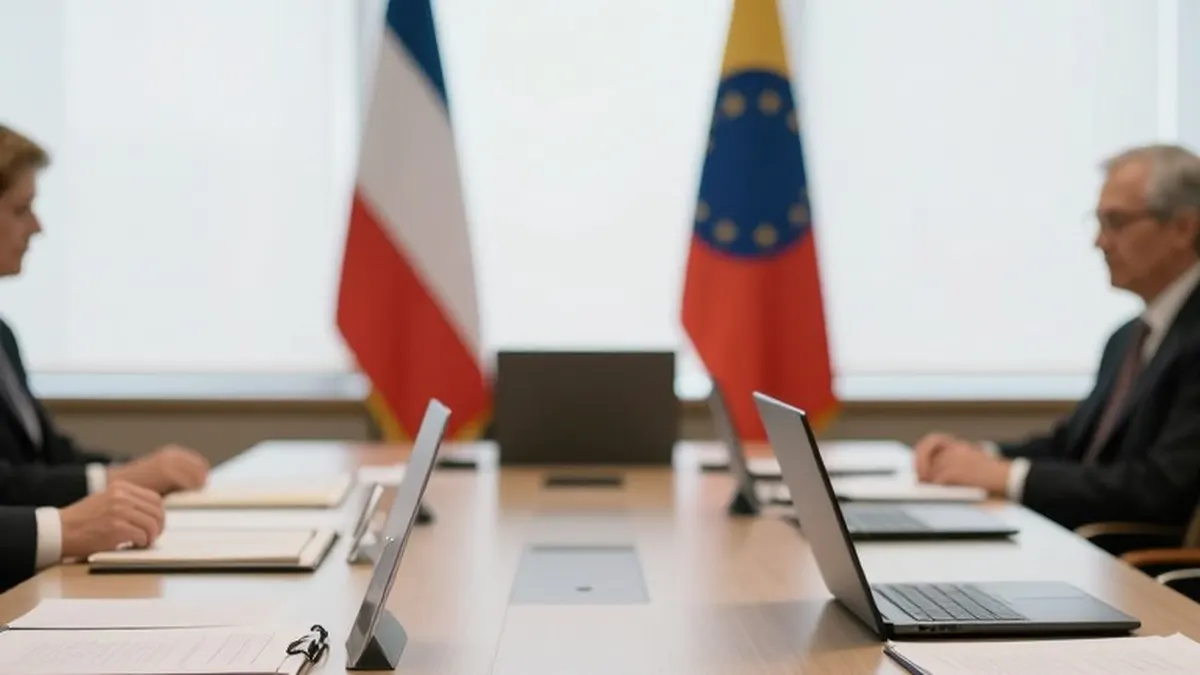
Officials from Syria and the European Union are actively working to normalise diplomatic relations after a fifteen year suspension. However, current and former European diplomats have expressed concern that growing right wing sentiment in Europe could shift the priority of these talks toward the repatriation of Syrian refugees and immigration management, potentially at the expense of other critical issues such as human rights.
The two sides hope that a deal with the new Syrian government will lead to stronger political and trade ties. These relations were originally suspended in 2011 following the brutal crackdown on protesters by then President Bashar al Assad. Now that the Assad regime has been overthrown, a government led by President Ahmed al Sharaa is seeking closer engagement with Europe, creating an opportunity to resume diplomatic and commercial cooperation.
Kaja Kallas, Vice President of the European Commission, stated on November 16 that the aim is to establish a framework for trade, political dialogue, and closer cooperation as soon as possible. She emphasised that Syria needs investment and a successful transition. Analysts note that Syria's primary priority in these talks is the removal of remaining EU sanctions, while Brussels is largely focused on the issue of repatriation, given that more than one million Syrians fled to Europe during the war between 2011 and 2024.
Iyad Jaber, a former French diplomat and head of Middle East at Timios and Co, told Al Jazeera that migration is a significant issue in Europe today. He noted that right wing and far right parties are taking more political space, which is influencing political speech on migration. While diplomats stress that these issues must be managed carefully to avoid piling too much pressure on a rebuilding Syria, the historical context shows a long path to normalisation.
The first cooperation agreement between Europe and Syria was signed in 1978 by the European Economic Community when Hafez al Assad was president. A proposed association agreement in 2008 was never signed due to human rights concerns. In 2011, the EU suspended ties, moved its diplomatic mission to Beirut, and imposed sanctions including asset freezes and travel bans. Since the change in government, the EU lifted all economic sanctions last year, though some dual use export controls remain.
In January, Brussels announced a two year funding package of 620 million euros for Syria. In May, the EU held its first high level political dialogue with Damascus to revive bilateral relations. Many European nations are now exploring the reopening of embassies or missions in Syria. Sally Shobat from Syria's Ministry of Foreign Affairs met with Jonas Jonsson from the European External Action Service on Saturday, following earlier bilateral meetings with French, Cypriot, and Belgian officials.
Despite the positive momentum, experts point out that legal and technical obstacles remain. President al Sharaa has tried to demonstrate Syria's importance to Europe in security matters, particularly in the fight against ISIL and as an energy transit point. In April, he proposed the Four Seas and Nine Corridors Initiative, a transatlantic framework that would connect the Gulf, Caspian, Mediterranean, and Black Seas via a pipeline through Syria and Turkiye. This proposal aims to bypass the Strait of Hormuz, which has seen disruptions due to the US Israel war on Iran that began in February.
Trade is another key area of discussion. Experts believe Brussels will likely try to open the Syrian market to EU products, which could lower costs for consumers. However, Syrian negotiators must consider what they can export to Europe. Jaber warned that Syrian exports are mostly agricultural and pharmaceutical, and that the country must be careful not to open its market to European goods while still facing barriers on its own exports. There is also potential for coordination on Assad regime assets hidden in Europe, which could be worth tens of billions of dollars.
Migration remains a major political issue in Europe, especially with the growth of far right parties. Some European states have paused asylum claims for Syrians, citing the end of the war and former regime dangers. Kallas addressed human rights and decisions made by the Assad regime, including the non recognition of occupied Ukrainian and Georgian territories. She argued that clear conditionality regarding human rights is necessary. Al Shmaly noted that even centre ground governments have adopted increasingly extreme immigration policies in recent years.
Current and former diplomats fear that Europe will overly focus on repatriation, leaving human rights by the wayside. A former European diplomat speaking on background said that right wing populists see no interest in engaging with Syria's complexity and often view refugees as a burden rather than an opportunity. Since the fall of the Assad government, about one million Syrians have returned home, mostly from Lebanon, Turkiye, and Jordan. Tariq Azeez from the International Rescue Committee warned that returns cannot become the price of the relationship. He noted that many Syrians are returning to damaged housing and missing services, and that accelerating returns without investing in infrastructure risks fuelling instability.