Atacama Desert bloom draws record crowds, spurs UNESCO bid
El Niño rains triggered the region's largest floral display in 30 years, boosting tourism revenue and prompting officials to seek international protection status.
By Marco Ortega ·
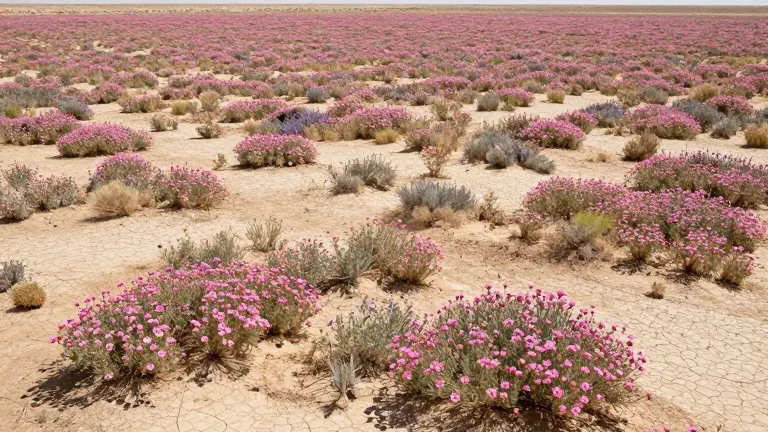
Visitors to the Atacama Desert in northern Chile now face a surge in traffic and accommodation demand as the region hosts its most extensive floral bloom in three decades. The phenomenon, driven by heavy El Niño rains, has transformed the arid landscape into a dense field of pink, yellow, lilac, and purple flowers. This sudden change has altered the daily reality for residents and travelers, who are now competing for limited lodging and navigating roads lined with vehicles.
The rains that caused the bloom also brought destruction. Flash floods in July and August damaged or destroyed dozens of homes and forced hundreds of people to evacuate their neighborhoods. The water penetration was deeper than in previous decades, allowing millions of dormant seeds, bulbs, and tubers to break the surface. More than 200 species are currently in flower. Scientists note that some blooms are appearing in locations where flowers have never been previously recorded, suggesting these plants have been dormant since before the phenomenon was first studied in detail in 1997.
Llanos de Challe National Park, a 113,000-acre coastal reserve, serves as a primary viewing spot. Administrator Moisés Grimberg described the site as a natural seed bank that becomes a living archive when rains arrive. He warned that the biological window is short, lasting only two to three months. The park typically welcomes 10,000 visitors annually. Recent weeks have seen 15,000 tourists visit, and the national tourism board projects 300,000 overnight trips during the two-month bloom period.
The bloom supports a temporary ecosystem. Insects hatch, attracting lizards, bats, and larger mammals such as the guanaco. Biologists from INIA, Chile's national seed bank, are collecting specimens to analyze before the season ends. Ana Sandoval, a biologist at INIA, collected seeds in the field to study the genetic material and unique adaptations the plants have developed for arid conditions. She noted that the desert is not devoid of life but is waiting for the right precipitation to awaken it.
The garra de león, an endemic flower with crimson blooms and flame-like green leaves, is a major draw. It grows along a few miles of coastline in the Atacama Desert and is found nowhere else in the world. While blooms occur every few years in this nonpolar desert, scientists say the frequency is increasing due to unseasonal rains caused by climate changes.
Local officials are moving to capitalize on the event. Miguel Vargas, the governor of the Atacama region, has begun the process of seeking UNESCO World Heritage recognition for the desert bloom phenomenon. He stated that the designation would strengthen special interest tourism and help diversify an economy currently heavily reliant on mining. Vargas hopes the site will become Chile's eighth World Heritage site within a couple of years.
A national park dedicated specifically to the bloom was created in June 2023 to protect a 141,000-acre area. This year, the bloom is projected to last until mid-November. As the flowers begin to fade, scientists will examine the data to determine if this was the largest flowering event on record and to identify any previously unknown species among the millions of plants.