Carney Signals Openness to Chinese Auto Partners in Bid to Save Canadian Manufacturing
Prime Minister Mark Carney is exploring partnerships with Chinese and Asian automakers to protect Canada's auto sector from US tariffs, a move that has drawn sharp criticism from Washington.
By Chinedu Schneider ·
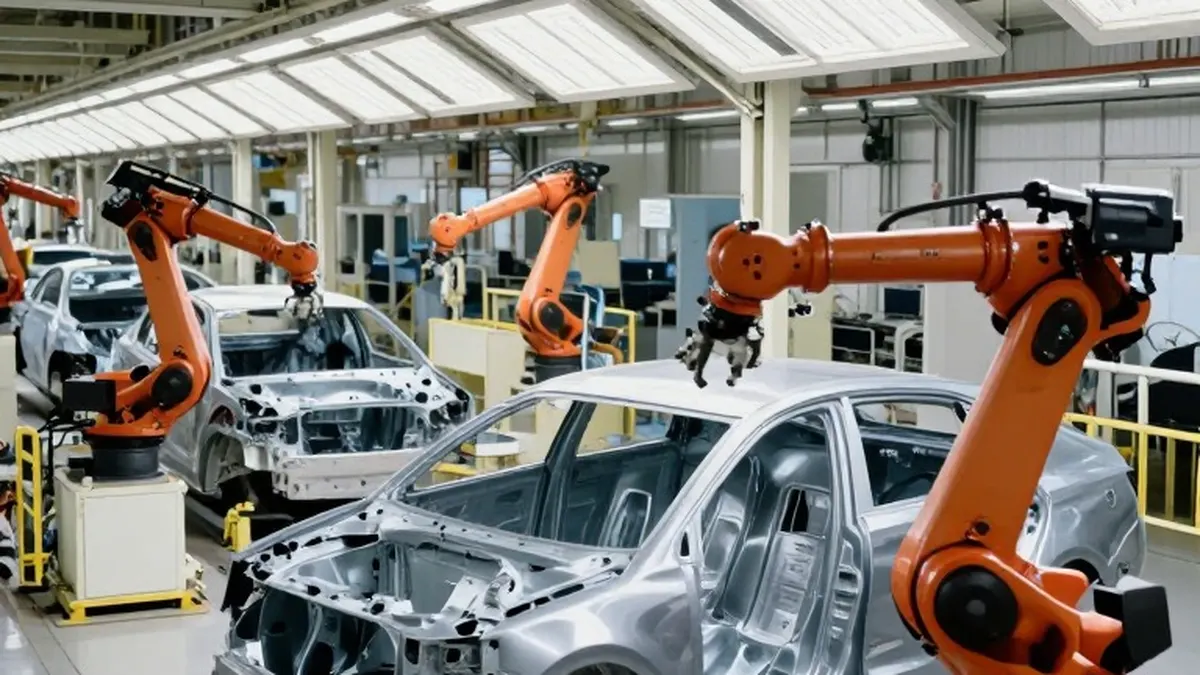
The Canadian automotive industry is facing its most significant challenge in decades as Ottawa seeks to mitigate the impact of United States tariffs. Since President Donald Trump imposed a 25 percent tax on non-American vehicles, the sector has suffered thousands of job losses and widespread uncertainty. With 90 percent of cars manufactured in Canada destined for the US market, the strain on the economy has become a primary focus for the government. Prime Minister Mark Carney has indicated that looking beyond North America, specifically toward China, is a necessary step to secure the future of domestic manufacturing.
During a visit to China for the Asia-Pacific Economic Cooperation summit, Carney met with Chinese President Xi Jinping. The two leaders discussed the importance of deepening bilateral relations and agreed to implement further tariff reductions. Although vehicles were not explicitly mentioned in their public statements, analysts believe the topic was central to their discussions. Carney previously noted that opening the market to Chinese electric vehicles could stimulate investment in Canadian-owned companies and create new manufacturing roles.
The strategic shift involves allowing a limited number of Chinese electric vehicles to enter Canada at low tariff rates. The government announced a quota of 49,000 vehicles, with plans to increase this to 70,000 by 2030. This approach contrasts sharply with the US strategy, which has heavily taxed Chinese electric vehicles to protect domestic production. Canadian Trade Minister Maninder Sidhu recently toured a Chery plant in China and suggested that affordable Chinese electric vehicles could be available in Canada by early 2027.
The urgency for this pivot is highlighted by recent developments involving Stellantis, a multinational automaker. The company announced it would sell its assembly plant in Brampton, Ontario, to Roshel, a Canadian defense contractor. Carney described the decision as a betrayal of the 2,200 workers at the facility. The plant had been idle since 2023 for retooling, but US tariffs made the temporary shutdown permanent, prompting the company to shift some production to Illinois. The auto workers union has criticized the deal as underhanded, warning that it will lead to the loss of high-paying jobs.
Speculation is growing that a Chinese manufacturer may take over parts of the Brampton facility. Media reports suggest Stellantis plans to lease back a portion of the plant to assemble affordable electric vehicles. This potential partnership has drawn opposition from political figures, including Ontario Premier Doug Ford, who warned against allowing Chinese kit assembly in the region. Experts note that while China often ships cars in kits for overseas assembly, introducing this model into Canada raises concerns about job displacement and the erosion of the North American industrial base.
Lynette Ong, a director at the University of Toronto's China Governance Lab, described the move as controversial. She emphasized the need for Canadian companies to be jointly involved in any venture, ensuring that technology transfer occurs and Canadian labor standards are met. She also cautioned against potential security breaches and the risk of provoking the US administration. Carney has stated that there are clear guardrails for these dealings, including restrictions on sensitive areas like artificial intelligence and critical minerals.
The strategy has not gone unnoticed in Washington. Peter Navarro, a senior trade counselor to the US president, criticized Carney on social media, questioning whether Canada was using China to pressure the US. He called the approach offensive and warned that China could dominate the Canadian market. His comments were shared by the US ambassador to Canada, signaling a heightened diplomatic tension.
Despite the friction, public opinion in Canada appears to be shifting. A recent poll indicates that many Canadians are open to Chinese investment in the electric vehicle sector, provided there are strict security measures and restrictions in place. The government has set specific terms for entry, requiring joint ownership, adherence to labor standards, and the use of Canadian-made parts.
As the Carney government pursues these new partnerships, it is also seeking associate membership with the European Union and has recently signed a free trade deal with the Philippines. The extent to which Canada will embrace Chinese manufacturing remains dependent on the outcome of ongoing trade negotiations with the United States. While some progress has been made in recent talks, significant differences remain, and it is unclear if Carney and Trump will meet during the current summit.