Democrats Take House With 258 Seats, Largest Win Since 1992
The party gained 44 seats in a sweep that ends a narrow Republican majority and sets up a divided government with the Senate and White House.
By Chinedu Schneider ·
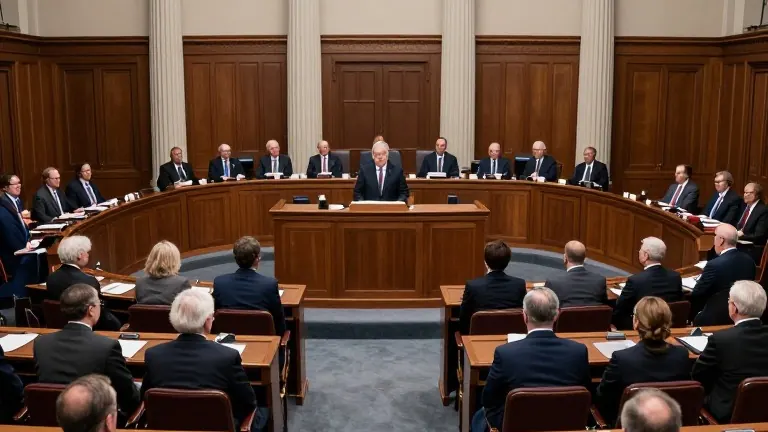
House Democrats secured at least 258 seats on Sunday, marking their largest majority in a general election since 1992. The tally came after Chuck Hubbard defeated Virginia Foxx in North Carolina. Four races remain open in Minnesota, Tennessee, and Louisiana, with two heading to a December runoff.
The party gained 44 seats, outpacing the 40 seats captured in the 2018 midterm. Republicans now hold at least 173 seats in the 435-member chamber. This result establishes a divided government, as Democrats also control the Senate and Donald Trump retains the presidency.
Senate Democrats won a 56-seat majority in the 100-seat chamber. This is their largest advantage in over a decade. The new configuration gives Democrats a wide margin to pass legislation. They can lose dozens of members on a vote and still reach the 218 needed for passage.
Hakeem Jeffries of New York is in line to become House speaker on January 3, 2027. He would become the first Black speaker of the House. The party is preparing a 100-day agenda to address the cost of living. Plans include swift votes to reverse Medicaid cuts and restore Affordable Care Act tax credits that expired under Republican leadership.
Democrats also intend to use oversight powers to check the White House. They plan to launch investigations into the administration and probe how Trump and his family became wealthier since his return to office. Jeffries has not ruled out a third impeachment attempt.
Jason Crow, a Democrat from Colorado and former Army Ranger, described the pressure at the Capitol. He said people are dying, losing healthcare, and being terrorized by U.S. Immigration and Customs Enforcement. "If you don't feel a sense of urgency and pressure in this job, and a desperation to deliver for folks, then you don't belong under this Capitol dome," he said.
Alexandria Ocasio-Cortez of New York called the result a mandate for change. She noted the class represents one of the largest groups the party has seen. Tom Suozzi, a centrist Democrat from New York, suggested the caucus spend 75% of its time on affordability and 25% on accountability. He urged colleagues to connect investigations to how they affect people's pocketbooks.
The White House warned against planned probes into the administration. Officials claimed such investigations may amount to blatant criminality. This stance contrasts with the standard oversight role of Congress.
Republican Jim Jordan of Ohio was elected as the minority leader. He vowed to fight for American families over the next two years. The party's seat count is now far below the 247 seats won in 2014 and the 230 seats won in 1994. The previous Republican high water mark was 301 seats in 1920.
Troy Carter of Louisiana is expected to lead the Congressional Black Caucus. He said the caucus is not a monolith and that members bring different ideas. The new leadership will have more room to maneuver than the narrow 218-214 Republican majority that struggled to keep the House functioning for the past two years.