Disco Elysium’s Pale: The Mind as the Ultimate Pollutant
The game’s lore defines a new epoch where human consciousness physically erodes reality, forcing workers to traverse a growing void of non-existence.
By Bianca Shevchenko ·
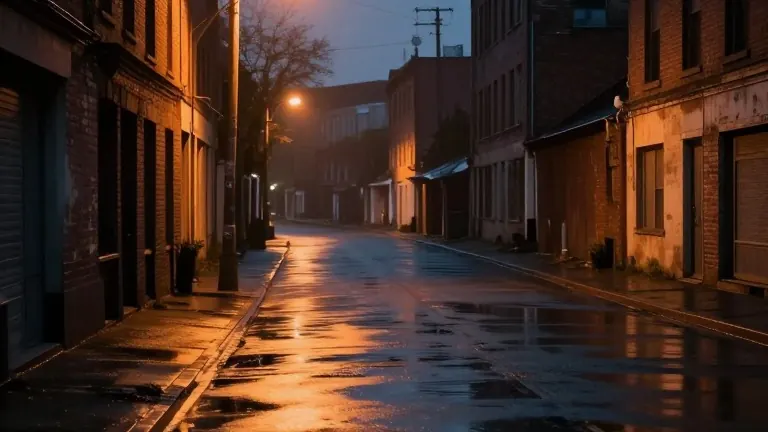
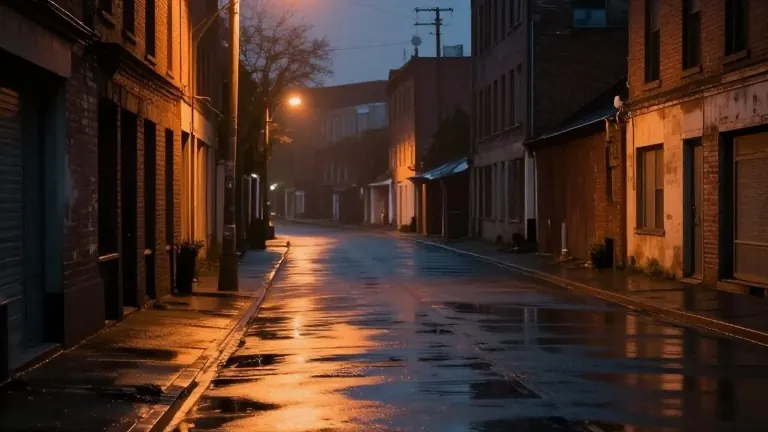
In the district of Martinaise, the sky is a frozen gray and the air smells of wet brick and sodium lights. Here, the residents of Jamrock Quarter live on an island called Le Caillou, part of the shrinking world of Insulindian isolas. The environment is not a battlefield or a wasteland of bombs. It is a quiet, expanding void known as the pale. According to the game’s lore, the pale is a swelling entropic space formed by the accumulation of human memory, history, and trauma. It has fractured the globe into isolated pockets of land surrounded by non-existence.
The Dolorian religion offers a maxim that frames this decay: “After the world, the pale; after the pale, the world again.” At the current point in the narrative, the pale has not yet consumed everything. It is a static but suffocating force that encroaches on existence. This spatial decay mirrors the shrinking of habitable zones on Earth due to climate crisis. In Martinaise, the proletariat views the pale with grim resignation. They cannot afford to be distracted by the endpoint beyond their control. Their focus remains on immediate survival, worker strikes, and widespread poverty.
The response to this existential threat is driven by those with power and capital. The empires of Elysium prioritize the continuation of commerce over sustainability. They study the phenomenon through a field called Entroponetics. This discipline allows humanity to traverse fields of non-existence. Massive aerostat airships and radio-wave latitude compression maintain transport, trade, and logistical infrastructure across the void. The working class bears the high costs of this upkeep. Interisolary radio communication requires technicians to work within the pale, deploying buoys and manning repeater stations. Logistics depend on Paledrivers who haul freight via dangerous and unauthorized routes.
Work in the pale is intensely dangerous and isolating. Most ground workers lose their minds within just a few years. The global powers of Elysium mirror Earth’s reliance on techno-solutionism to bypass planetary limits. They connect the shrinking isolas into navigable pockets of commerce. Corporate elites and high-ranking logistical managers are insulated by medical teams and legal exposure limits. Working-class minds are treated as expendable material. They are cast to the urban margins once the pale erodes their being and compromises their functionality. Out of sight, out of mind, as the pale dissolves the fundamental boundaries of their individual psyches.
Civilization aims to detach itself from the natural world that its mental detritus is actively dissolving. This delusion is exposed by a being older than human history. The Insulindian Phasmid is an ancient cryptid that appears in the reeds of Martinaise. As an entity that existed long before human consciousness, the Phasmid serves as a natural medium of “the world.” It is a remnant of pre-conscious Elysium. The cryptid’s account confirms that the pale is explicitly anthropogenic. No natural being remembers it before humanity, including cnidarians and radially symmetricals. It positions the human mind as a violent and irrepressible miracle capable of replacing reality with nothing.
The Anthroponcene in Elysium is the pale. Human thought’s accumulation has become physical, an atmospheric pollutant that dissolves the organic baseline wherever the human ego expands. Just as carbon dioxide warms the planet, human thought subsumes the natural world. The Phasmid’s narrative suggests a radical theory: consciousness itself is fundamentally antithetical to the natural world. This renders the Anthropocene an inescapable state of the developed mind, rather than an interval on a geologic time scale. This is the true state of the Dolorian maxim’s second stage, the totality of “the pale,” after “the world.”
If human consciousness is inherently antithetical to nature, the pale’s total expansion guarantees its ultimate finitude. The pale came with human consciousness and is sustained by the active exhaust of human memory and ego. Its expansion is fueled by the same source. Every aspect of the pale is predicated on human consciousness. Its existence remains bound to the violent miracle that projected it into the world. When civilization is inevitably consumed by the pale, the generation of cognitive waste will stop with it. Slowly, without the detritus of consciousness to sustain its existence, the pale will recede. Physical laws and geography will restore themselves over deep time. When the natural returns, so will the world. The Anthropocene will not bring about the permanent destruction of Earth. It is a brief, violent interlude in the planet’s history. Once human noise burns out, and the pale recedes, nature will reclaim its existence in the quiet absence of mankind. “After the pale, the world again.”