District 4 candidates split on how to handle homelessness and rent
Four running for city council in Portland's District 4 outlined their plans to cut encampment removal costs and target housing subsidies toward the lowest incomes.
By Marco Ortega ·
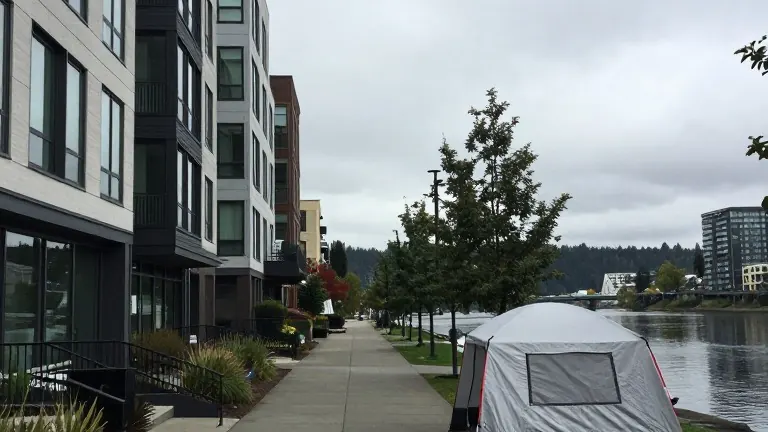
Portlanders living in Downtown, Northwest, and Southwest districts face rising costs for shelter and rent. Four candidates for the city council seat in District 4 released detailed answers on how to fix these systems. The district includes neighborhoods like the Pearl District, Sellwood, and Linnton. Incumbents Mitch Green and Olivia Clark are running for reelection. Eric Zimmerman is also an incumbent. The other running candidates are Matt Schulte, Jeremy Beausoleil Smith, and Jayne Cronlund. Five candidates did not respond to the survey.
The cost of removing homeless encampments has been a point of contention for years. The city spends tens of millions of dollars annually on these removals. Critics argue the tactic does not reduce homelessness and can lead to higher mortality rates among the unhoused. Candidates were asked if they support this spending or if the money should go elsewhere.
Mitch Green, the incumbent, said the current policy is cruel and ineffective. He noted that he passed a budget amendment in the FY26-27 cycle. This change reduced the sweeps budget by $1 million. The savings will fund workforce development and hygiene services. He wants future budgets to focus on rent assistance and micro villages.
Matt Schulte, a musician and filmmaker, also opposes the tactic unless there is an immediate safety hazard. He pointed out that more than 25% of people affected by sweeps lose contact with their social workers. Schulte wants the city to pay for transportation and protect essential belongings during removals. He wants to ensure that care continues after the sweep is complete.
Jeremy Beausoleil Smith called the sweeps expensive and ineffective. He cited 2024 Medicaid claims data showing that about 51% of homeless people in Multnomah County are experiencing psychosis or substance use disorders. He wants to invest in supportive housing that pairs shelter with treatment. He pointed to Central City Concern’s program, which reported 91% housing retention after 12 months.
Jayne Cronlund, a small business owner, said sweeps are not ideal but necessary for the local economy. She argued that visitors must feel safe for downtown businesses to thrive. She described this as a difficult tension to manage while providing services.
The candidates also discussed how to make housing affordable. The city currently targets households earning 60% to 80% of the area median income. For a one-person household, that range is $53,940 to $71,900. Data shows housing is scarcest for those earning less than 51% of that median. Schulte said the metro area has only 35 affordable rentals for every 100 renter households at or below 50% AMI. He wants more subsidies for households below 30% AMI.
Smith agreed that the definition of affordability needs reassessment. He supports pre-approved building designs to speed up permitting. He also wants the city to build new social housing and acquire existing buildings. Green wants to move away from area median income caps. He supports a cost rent model based on the expense of maintaining a building. He has appropriated $17.5 million to convert housing to social housing. Cronlund said she is skilled at holding the tension between economic needs and housing services.
Source: Street Roots