Jensen Huang's exit from Nvidia ends the era of the visionary showman founder CEO
Jensen Huang has left the chip giant he cofounded 33 years ago amid scandal, leaving a leadership vacuum at the world's first $5 trillion company and raising questions about what comes next for the AI industry.
By Bianca Shevchenko ·
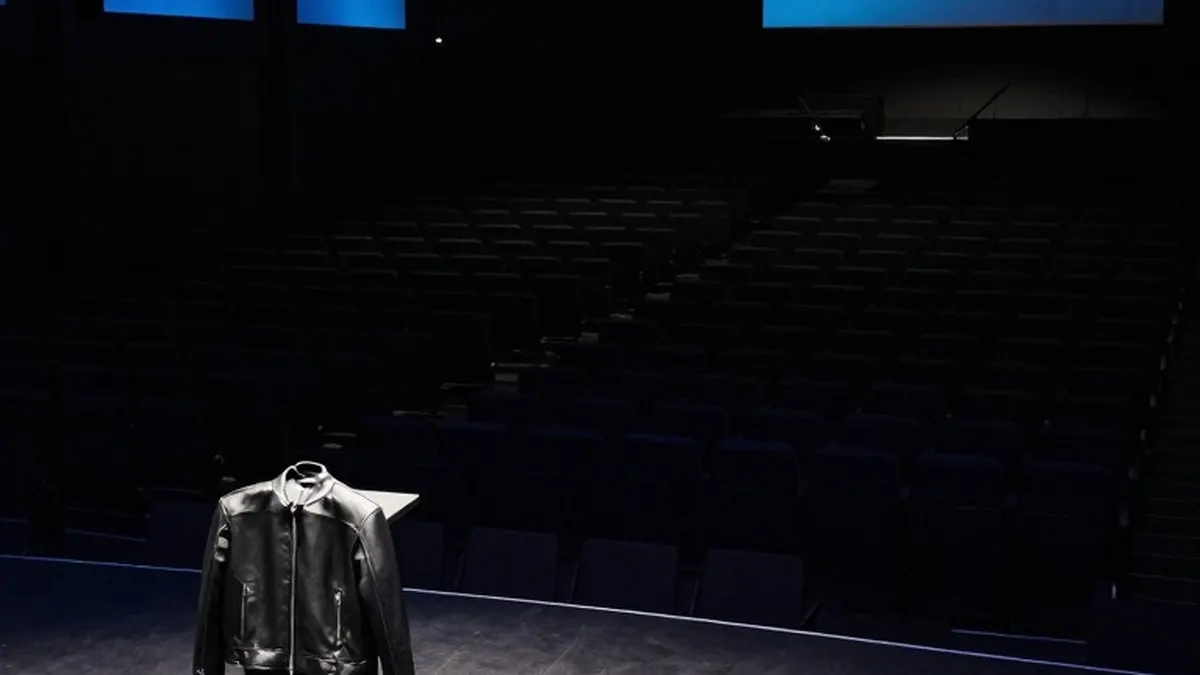
Jensen Huang, the leather-jacketed chief executive who turned Nvidia into the most valuable company on the planet, has left the firm he cofounded 33 years ago. His departure follows his apparent enabling of two chip smuggling scandals and allegations of three extramarital affairs, including one with an alleged Chinese spy at the same time he was mingling with President Donald Trump.
The exit is reverberating far beyond one company. Huang was running the first $5 trillion corporation, one that single-handedly represents around 6 percent of the S&P 500, and its GPUs power the worldwide AI boom. The world is now watching whether the scandal could disrupt the entire US AI industry and destabilize the stock market with it, particularly because Huang never planned for succession. Around 60 employees reported directly to him. "He built the company around himself, and everything that happened there flowed through him," says IDC analyst Tom Mainelli. Jon Peddie, an analyst who has tracked Nvidia since its inception, puts it more bluntly: "Jensen is Nvidia, and Nvidia is Jensen."
Huang's departure also closes a chapter for the technology industry at large, because he was Big Tech's last true example of the visionary showman founder CEO. "He was both the visionary and the tactical leader, the closest thing tech has had to Steve Jobs," says Pat Moorhead, chief analyst at Moor Insights & Strategy. Elon Musk did not exactly found Tesla and has a track record of broken promises, Meta's Mark Zuckerberg has proven neither visionary nor showman, Google's Larry Page and Sergey Brin stepped away in 2019, and both Microsoft and Apple have passed the torch twice since the days of Bill Gates and Steve Jobs.
Huang followed the Jobs playbook, from keynote product launches to a single signature piece of clothing, a black jacket that started as a Nvidia-branded softshell before becoming his famous leather look, which he insisted on wearing even in stifling heat. Behind the showmanship was a founder who repeatedly bet the company. In 1996, three years after cofounding Nvidia at a Denny's diner, the company nearly collapsed while working on a failed graphics chip for the Sega Dreamcast, yet Huang personally persuaded Sega to invest $5 million anyway, The Wall Street Journal reported in 2024. He then staked everything on the Riva 128 graphics accelerator, laying off more than half of Nvidia's roughly 100 staffers, skipping prototyping, and finishing with just one month of payroll left. It sold a million units in four months, paving the way for the GeForce GPU and a long partnership with TSMC.
His boldest wager came roughly eight years later, when he committed the company's entire gross profit to CUDA, a feature letting GPUs handle computing tasks beyond graphics that no customer had requested and that raised the cost of every GeForce card by 50 percent. "Jensen had the vision for what it could be and the courage to pursue it in spite of the opinions of others," says Peddie. The timing was brutal: during the 2007 to 2009 recession, with defective laptop chips compounding the pain, Nvidia lost 80 percent of its market value. Huang pressed on regardless, handing high-end GPUs to researchers at conferences and seeding universities such as Stanford with hardware.
The payoff arrived in 2012, when University of Toronto researchers trained the prize-winning AlexNet image-recognition network on Nvidia GPUs, a breakthrough widely credited with sparking the AI revolution. Six years before ChatGPT launched in 2022, Huang hand-delivered Nvidia's first purpose-built AI workstation to OpenAI, and by 2022 Microsoft had linked tens of thousands of Nvidia A100 GPUs to run it. "Every time competitors got close, he moved the fight up a level: the chip, then the server, then networking with the $6.9 billion Mellanox deal, then the full rack, all tied together by CUDA," says Moorhead. "Decisions that took other companies four weeks took Nvidia four days."
As profits ballooned, Huang became a genuine celebrity, receiving a hero's welcome in his birthplace of Taiwan in summer 2024 and fielding autograph and photo requests instead of tough questions at investor events. The aura has now burst, but history suggests the company need not follow: Apple went on to become the world's most profitable company under Tim Cook after losing its own charismatic founder.
Analysts are not predicting disaster, at least not yet. "This is a stock shock, not a business shock, for the next year. The roadmap and manufacturing are locked in through 2027," says Moorhead, adding that the bigger risk is customers hedging during a leadership vacuum. Creative Strategies analyst Ben Bajarin agrees that nothing changes strategically, noting the next several chip generations are already in design, tape-out or on order. Peddie believes an outsider will have to be found, warning the stock will likely get battered until investors see stability, while Mainelli is more sanguine: "He will be hard to replace.. But the company will survive."
More News · National news · Report a business · Got a Story?