Jordan's Christian community shaken by deadly funeral ambush
A coordinated attack on a church in Karak governorate has left nine people dead and dozens more injured, prompting a national security review.
By Bianca Shevchenko ·
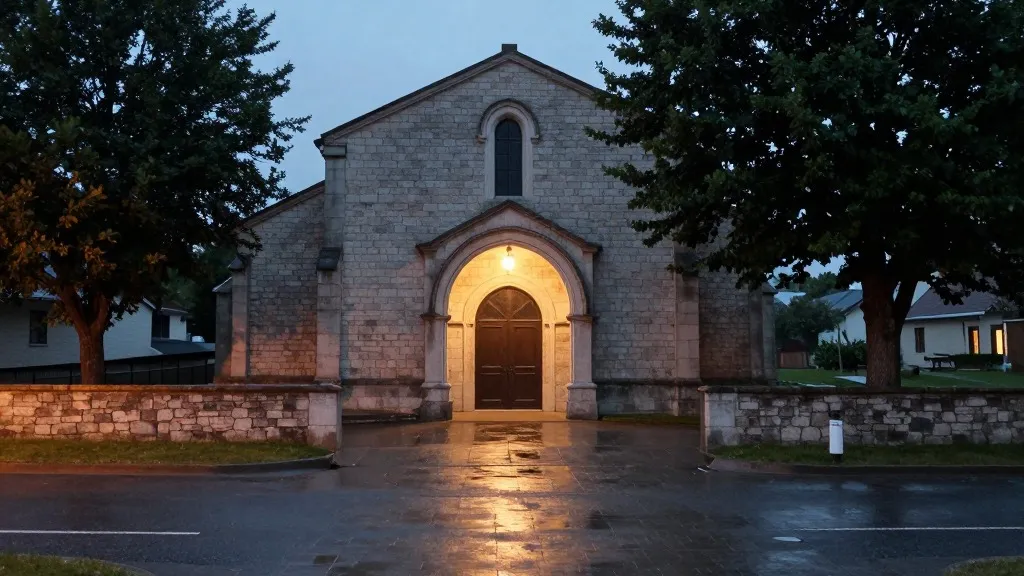
For many families in the Karak region, the end of this week began with a tragedy that felt far removed from their daily reality. Nine individuals lost their lives and 40 others sustained injuries when armed men opened fire during a funeral service at a Greek Orthodox church. The incident has brought renewed attention to the security challenges facing Jordan's Christian minority, a group that has historically lived in relative peace within the broader society.
The violence unfolded on Friday at St George's church in the town of Hamoud. According to the health minister, the official count of those wounded stands at 40, while nine victims have been confirmed dead. Maj gen Abdallah al-Maaytah, who leads the Public Security Directorate, indicated that most of the injured were receiving medical care and that efforts to locate the gunmen were still ongoing as of the latest reports.
Government officials moved quickly to characterize the event. Interior minister Mazin Al Farrayeh identified the perpetrators as extremists, though he noted that it was premature to determine if they had connections to established groups within Jordan or abroad. No faction had formally claimed responsibility for the attack at the time of the report. Prime minister Jafar Hassan described the incident on social media as a manifestation of blind extremism and a terrorist ideology that the nation intends to counter.
Video footage distributed by state television appeared to originate from a security camera positioned at the church. The recording showed three figures firing from a sidewalk, using trees and a low wall for cover before sprinting toward the entrance. International news agencies verified the authenticity of the clip by cross-referencing the path of entry and the surrounding architectural details. Witness accounts paint a picture of sudden chaos. Priest Theodoros Soueiss recalled instructing the congregation to take cover as panic spread. He noted that the gunfire was indiscriminate, making it difficult for attendees to predict where bullets might strike.
Other attendees corroborated the intensity of the assault. Khaled Burqan, who was present at the funeral, stated that the shooting continued for several minutes while dozens of people were inside. Ihab Ammareen described seeing individuals collapse with visible blood on the floor, surrounded by crying and wailing voices. The scene outside a government hospital in Karak, where families gathered to support the wounded, reflected the community's shock. Hani Al-Mbaydeen expressed a common sentiment that the state must investigate the source of these dark ideas and how they reach the minds of the younger generation.
The royal response was swift and personal. King Abdullah, a key partner for the United States in the region's fight against militant groups, traveled to Karak within hours of the shooting. He vowed that the perpetrators would be punished with an iron fist and asserted that those hoping to divide the country with bullets would face a united populace. In the aftermath, security forces were deployed to the church site, where blood was still visible on the floor near the entrance.
The broader implications extend beyond the local community. The United States embassy in Amman confirmed that security measures have been increased at malls, diplomatic missions, and other strategic locations nationwide. On the international stage, UN secretary general António Guterres condemned the violence, emphasizing that attacks on places of worship are unacceptable. The US ambassador to the UN, Mike Waltz, labeled the incident a brutal and depraved assault on a sacred site.
This event occurs against a backdrop of cautious optimism regarding regional stability. Although US authorities have recently thwarted several attempted attacks by Islamist militants, Jordan has remained relatively secure. The country was among the US allies targeted by Iranian strikes earlier this year, following US and Israeli operations in February. As a nation home to numerous biblical sites that attract pilgrims from across the globe, the attack on this Christian minority serves as a stark reminder of the vulnerabilities that can persist even in stable environments.
The investigation remains active, with authorities balancing the need for a thorough search with the desire to restore a sense of normalcy. The combination of political statements, royal visits, and heightened security signals a government intent to project strength and unity in the face of a violent surprise.
Source: The Guardian