Judge Refuses to Make California Set Aside 20,000 Ballots in Justice Department Citizenship Suit
A federal judge in California rejected the Trump administration's request to separate mail-in ballots from people it alleges are noncitizens, citing unreliable data and the risk of disrupting an election already underway.
By Chinedu Schneider ·
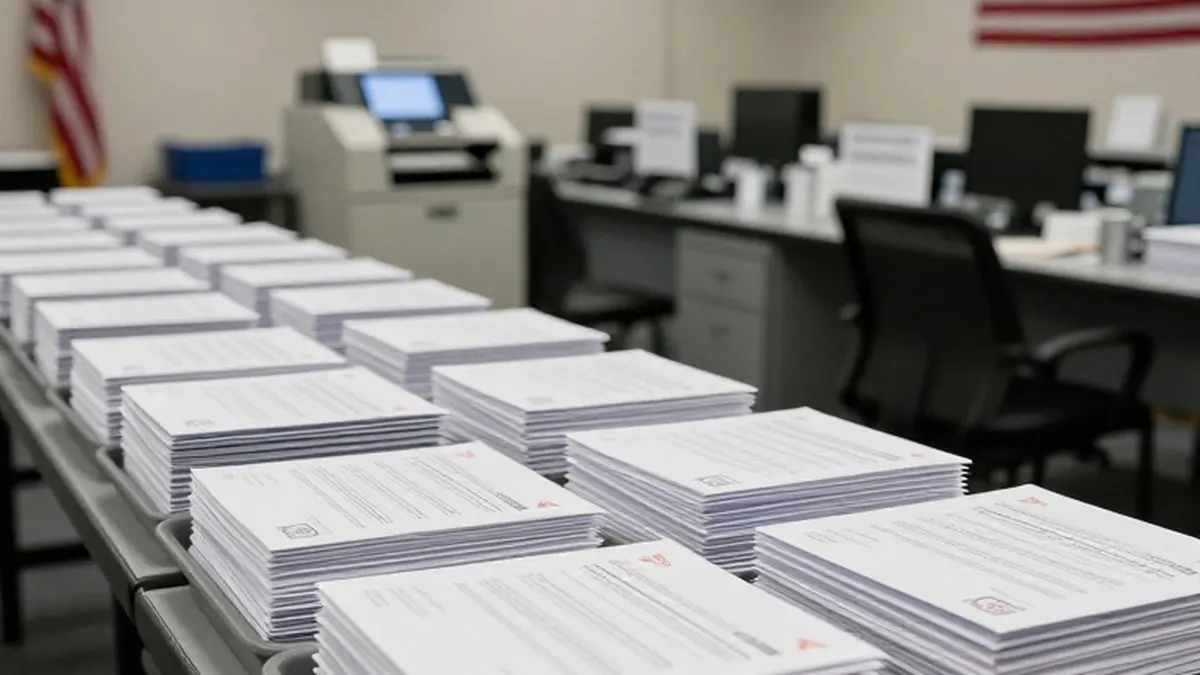
A federal judge in California on Wednesday turned down a request from the Trump administration to have the state set aside 20,000 mail-in ballots that the government says were cast by noncitizens.
U.S. District Judge David Carter said the demand ran against longstanding constitutional principles that give states control over their own elections. He warned that granting such a late request would let either side "create chaos for their own political purposes to disrupt the election process." In his words, the relief sought "would wreak havoc and disrupt the election that is already underway, create a chilling effect on election workers and voters alike, and discount the votes of United States citizens."
Carter also doubted the government's numbers. Pointing to the vagueness of the federal description of its methods and the unreliability of similar claims elsewhere, he wrote that the court "cannot conclude that Plaintiff's process is credible." He cited Nevada, where the Department of Homeland Security first flagged up to 15,903 registered voters as noncitizens, then lowered the figure to 6,218, and finally to 185 after a manual review. Nevada officials later confirmed all 185 were citizens. "This Court will not deprive Californians who have met the requirements for voter registration of their fundamental right because of Plaintiff's unfounded allegations," he wrote.
The Justice Department sued on Oct. 15, asking for an order that California set aside vote-by-mail ballots from people the federal government identified as likely noncitizens and withhold them from the count until citizenship was confirmed. The department said it had compiled a list of more than 20,000 names. California's attorneys argued the figures are unreliable, noting that a July letter from the government put the number of suspect voters at 190,000, and that the government has declined to explain how it built its lists.
At a hearing Tuesday, state attorney Christina McCall asked, "Where is the evidence?" and called the allegations vague and not reliable. Another state attorney, Anne Bellows, said "the stakes here are enormous" and described the demand as "a recipe for disenfranchisement." First Assistant U.S. Attorney Bill Essayli replied that the government was not telling California what to do, but what it cannot do. He said the state "cannot do nothing and proceed to count the votes" once it knows of potential noncitizens on its rolls.
Carter suggested the government already has a remedy if it believes illegal voting occurred. He noted prosecutors recently announced 28 indictments of people who allegedly voted illegally in California in recent years. "You've got a remedy, for goodness' sakes," he said. "Go out and indict."
Essayli criticized the ruling Wednesday and said an appeal is underway. He argued that every day more ballots are processed, which he said disenfranchises American citizens through dilution. He said the Solicitor General had authorized an immediate appeal and that the department would seek an emergency order from the Ninth Circuit.
The case has been before that court once already. After Carter did not rule by the Thursday deadline the government requested, the department asked the 9th U.S. Circuit Court of Appeals to expedite. The panel held an emergency hearing Sunday and ruled 2-1 against the administration on Monday. The majority said it lacked jurisdiction because Carter had not yet ruled, and described the government's "claimed emergency" as at least partly "a self-constructed one."
Circuit Judge Mark Bennett noted that the government has questioned California's voter rolls since at least July 16, when it sent a letter to the secretary of state citing a preliminary analysis. He added that neither the state's law allowing ballot processing twenty-nine days before an election nor its law on mailing ballots to registered voters is new. Circuit Judge Gabriel Sanchez, in a concurring opinion, said the request would have the court dictate to a state legislature a matter within the state's traditional domain. Judge Patrick Bumatay, a Trump appointee, dissented, writing that federal law bars California from commingling ballots likely cast by noncitizens with legitimate ones.
Source: NBC News
More News · National news · Report a business · Got a Story?