Lebanese family returns to burned home after Israeli withdrawal
Atef Kadouh and his wife found their 40-year-old house destroyed and their orchard uprooted following the first test of a U.S.-brokered ceasefire plan.
By Marco Ortega ·
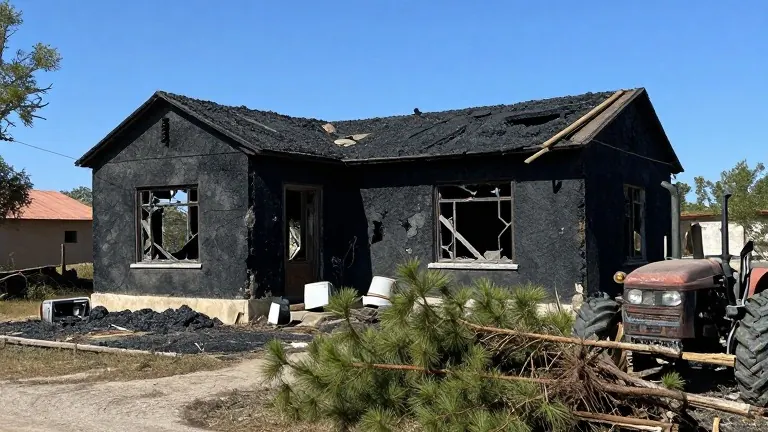
Atef Kadouh, a former Saudi Arabia worker, returned to his village of Zawtar al-Gharbiyeh in July to find his home destroyed. He and his wife, Soumaya Yaghi, had lived in the house for four decades and raised five children there. Their youngest son, Adel, a 27-year-old sports teacher, is now deceased.
Adel was killed on March 28 in a drone strike while volunteering as an ambulance driver. He and four other medics were struck while burying a 75-year-old man. The Israeli military stated that militants often use ambulances to transport weapons for Hezbollah, though it did not provide proof that the group was in an ambulance at the time of the strike. Lebanon's Health Ministry reports that more than 135 medical staff and first responders have been killed in the past two years.
The village became the first site for a U.S.-brokered plan that allows the Lebanese army to take over from Israeli forces. The arrangement is designed to limit the presence of Iran-backed Hezbollah in the south. Israel's defense minister has acknowledged destroying more than 20,000 homes in a self-declared security zone since the conflict began in October 2023.
When Kadouh and Yaghi entered their property, they found Israeli soldiers had occupied the house before setting it on fire. Bullet holes punctured the refrigerator, freezer, and washing machine. Furniture was thrown from the second-floor balcony and smashed on the ground below. Blue marker names of soldiers were written on the scorched hallway walls.
The family found no running water or electricity because the military destroyed the solar panels. The Lebanese army told the couple that it dismantled explosives left in their house and other nearby buildings. Kadouh said he saw a tank in his courtyard through drone images posted online while he was unable to enter the village.
Yaghi points to the spot where a bulldozer uprooted the family's pine trees, which produced their main cash crop, pine nuts. The army also demolished the garage and destroyed the family's tractor. Other lost crops included olive trees, a fig tree brought from Italy, avocado trees, and thyme fields.
Kadouh says the Lebanese government has not provided assistance since the family returned. He notes that the Lebanese army is intentionally underequipped to avoid threatening Israel, leaving the village without protection. He believes peace is unlikely during the tenure of Israeli Prime Minister Benjamin Netanyahu, who he says killed his son.