AI stocks tumble as tariff fears and inflation data weigh on markets
U.S. equity markets reversed Monday's historic rally on Wednesday, driven by renewed anxiety over the AI sector, new trade barriers, and rising inflation metrics.
By Chinedu Schneider ·
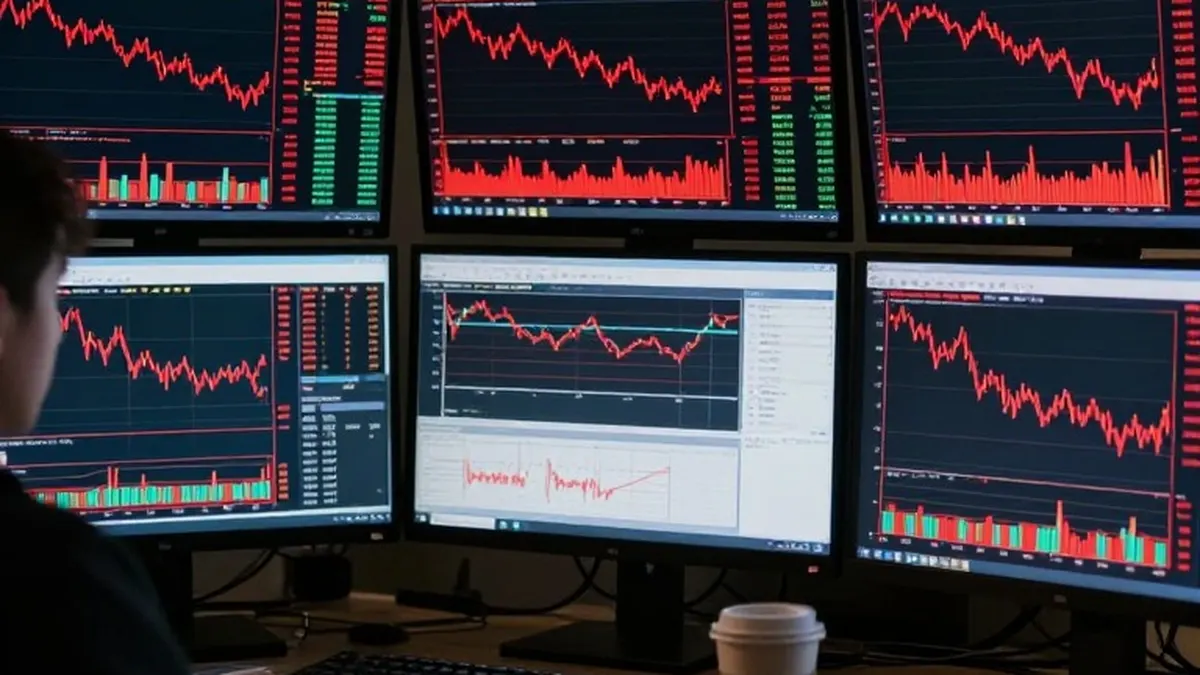
U.S. stock markets experienced a sharp decline on Wednesday, with a significant sell-off erasing the gains from the previous day's historic rally. The downturn was primarily led by companies heavily invested in the artificial intelligence boom. By early Wednesday, the Nasdaq 100 index had dropped more than 4%, while the S&P 500 lost nearly 3%. The Dow Jones Industrial Average fell by 900 points, and shares of Nvidia, a major player in the sector, slid by 7%.
This move marked a dramatic reversal from Monday, when financial markets staged their largest one-day rally since April 2025. On that day, the Nasdaq 100 surged 6.8% and the S&P 500 jumped 4.7%. The initial optimism was largely fueled by the announcement that Jensen Huang, the CEO of Nvidia, would return to his role. This decision came despite an ongoing scandal involving multiple extramarital affairs, one of which involved a woman believed to be a Chinese spy. Huang is widely considered a de facto ambassador for the AI industry, and his return briefly reassured investors that major AI firms would continue to grow without interruption.
However, the positive sentiment faded quickly. Deutsche Bank strategists noted in a report early Wednesday that a risk-off tone had returned as the previous day's momentum in tech stocks lost steam. They added that the latest declines have revived questions about whether the selloff has further to run. Prior to Monday's rally, weeks of selling had already pushed the Nasdaq 100 into correction territory. On Wednesday, the index fell further, entering bear market territory, which is defined as a decline of 20% or more from its most recent high.
Shares of semiconductor and computer memory companies were among the biggest drags on the market, with many falling between 7% and 10% in early trading. Sentiment in the AI sector was further damaged by the performance of Anthropic, a frontier developer. Although Anthropic shares closed more than 17% higher on their first day of trading last Friday, they have since suffered three consecutive days of losses. The stock price has now dropped to $78 per share, sitting about 10% below its initial public offering price and nearly 25% below its first-day closing level.
Additional pressure on stocks likely stemmed from the approaching Thanksgiving holiday. U.S. markets are scheduled to close on Thursday and will operate for only a half-day on Friday. Investors often reduce large or risky positions before extended weekends to avoid being trapped in volatile markets while events unfold.
New tariff announcements also contributed to market uncertainty. On Wednesday, the administration unveiled a new wave of tariffs targeting top trading partners, including the European Union, China, Japan, and a dozen other nations. Inga Fechner, a senior trade economist at ING, wrote that while the legal justification for tariffs continues to change, U.S. protectionism is becoming increasingly difficult to reverse. This development raised fears of renewed trade tensions and a potential spike in inflation.
Before the formal announcement, a spokesperson for the Chinese Commerce Ministry criticized the new import duties, stating that tariff wars are in the interests of neither side. The ministry described the move as political manipulation. Sarah Bianchi, chief strategist of international political affairs at Evercore ISI, noted that while some investors may have been caught off guard, the timing of new tariffs from the Section 301 investigation was always a matter of when, not whether.
Compounding the negative pressure, the Federal Reserve's preferred inflation gauge moved further away from its 2% target. The personal consumption expenditures index for October reached 3.8%, up from 3.6% in September. Even excluding food and energy, core inflation rose to 3.3% from 3.1% the previous month. This rise is particularly noteworthy as it suggests high energy prices are spilling over into the broader economy.
The inflation data increases the likelihood that the Fed will raise interest rates at its next meeting, which concludes with a rate decision on December 9. Last week, Federal Reserve governor Christopher Waller expressed deep concern about inflation, stating in a CNBC interview that it is headed in the wrong direction and spreading out. He suggested the Fed might need to shock people with a larger rate hike, such as 0.50%, rather than the usual 0.25%.
A rate hike would introduce further complications for the market. As trillion-dollar tech giants borrow hundreds of billions of dollars to build AI data centers and chips, higher interest rates could quickly increase their costs. Additionally, rising rates could hurt an already strained U.S. consumer, as mortgage rates remain well above 7% and borrowing costs for auto loans, credit cards, and personal loans could climb further.
More News · National news · Report a business · Got a Story?