Melbourne Attic Holds Missing Chapters of Bollywood’s Golden Age
Three brothers have spent years cataloging 3,000 artifacts from Devika Rani’s studio, now seeking Indian partners for a $1.2 million documentary.
By Marco Ortega ·
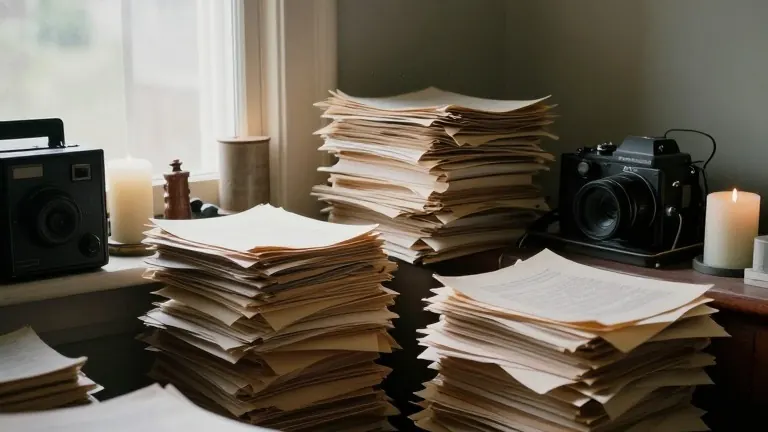
Three Melbourne brothers have spent years cataloging more than 3,000 artifacts in a spare room of their suburban home, a collection that reshapes the history of early Indian cinema. The items include studio documents, photographs, and over 1,100 letters written by Devika Rani, a pioneer who managed Bombay Talkies during World War II. The family recently confirmed that their grandfather, whom they believed was German, was actually Himansu Rai, the founder of that studio.
Director Anupam Sharma is adapting these findings into a documentary titled Dada & Us. He is currently pitching the project at the Co-Production Market at the WAVES Film Bazaar in Goa. Sharma was introduced to the family by executive producer Vikrant Kishore, a Melbourne film academic. He noted that the largest surviving body of Rani’s personal writing is located in Australia, a fact that remains largely unknown to Indian audiences.
The Dietze brothers, Walter, Peter, and Paul, preserved the collection in their home for decades. The archive was confirmed as authentic after a photograph surfaced in a family attic. Rani led the studio after being widowed at age 32, launching the careers of actors such as Ashok Kumar, Dilip Kumar, and Madhubala. She later became the first recipient of the Dadasaheb Phalke Award, India’s highest film honor.
In India, Rani’s personal belongings and jewelry have been stored in a government strongroom in Bengaluru since 1994. The state government took over her Tataguni estate in 1996 with a promise to build a museum, a project that has not yet materialized. A parallel court case regarding the inheritance of these memorabilia is nearing a conclusion, a legal thread the documentary will also explore.
The film’s budget stands at $1.2 million, with $800,000 already secured. Temple, Sharma’s production company, is producing the project in partnership with the Dietze family. A commitment for theatrical distribution in Australia, New Zealand, and Canada qualifies the film for a 40 percent producer offset. Screen NSW provided a travel grant to producer Farabee Kabir to attend the current market.
Sharma emphasized that the film is not intended as a history lesson. He wants Indian audiences to recognize Rani as a creative and business leader who managed a studio during a war, while allowing Australian audiences to view the story as their own. The project is in late development, with the treatment in its third draft. Priority digitization of correspondence from 1940 to 1945 is underway, and filming with lawyers in Bengaluru is scheduled for next week.
The team is seeking an Indian co-producer with experience in documentary and archival work. They also want an archival restoration partner and an Indian broadcaster or streamer. Producers cited exclusive access to the archive and the aging nature of the principals as primary reasons for backing the project. The main shoot across Australia and India is expected to begin in 2027.
More Culture · National news · Report a business · Got a Story?