Michael Twitty cooks Kush to trace West African culinary roots
The two-time James Beard Award winner explains how a dish he has prepared since his teens links his Wolof, Hausa, Fula, and Serer heritage to modern Southern kitchens.
By Marco Ortega ·
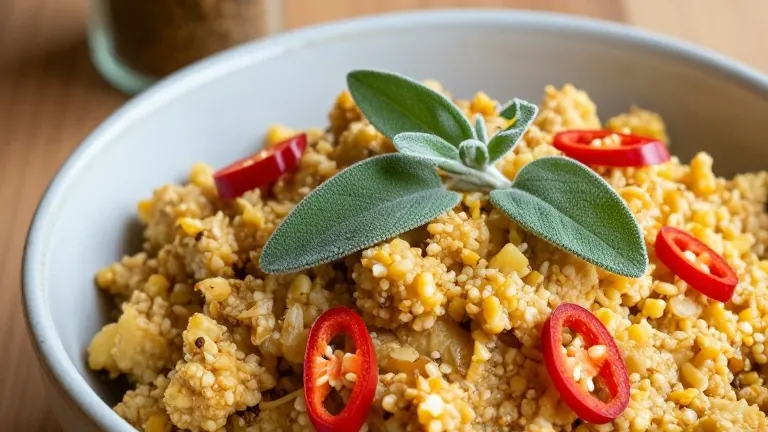
Michael Twitty brought fresh sage, fish peppers, onions, and a custom spice blend into the studio for a Thanksgiving cooking demonstration.
The two-time James Beard Award winner appeared on Morning Edition with host Leila Fadel on November 26, 2026, to discuss his dish called Kush.
Twitty has prepared the recipe since he was a teenager and describes it as the forerunner to Southern cornbread dressing.
The name Kush derives from the Hausa language of West Africa, a region where Islam often blends with traditional spiritual practices.
Twitty notes that the name is phonetically similar to couscous, a grain staple in the region.
The dish serves as a tangible link to Twitty's specific ethnic lineage, which he identifies as part Wolof, Hausa, Fula, and Serer.
He explained that knowing these roots changed how he views the food he prepares.
"There was a time when I couldn't tell you what particular African ethnic groups I came from, but now that I know that I'm part Wolof, Hausa, Fula, and Serer and so many others, now, I know this dish has a connection to who I am and my roots and where I came from," Twitty said.
His work also documents the intersection of African American and Jewish culinary traditions.
Twitty cited examples such as matzah ball gumbo and black-eyed peas quiche, which draw on North African and Ethiopian influences while adhering to kosher dietary laws.
He mentioned that his version of Shito omits the shellfish typically found in the traditional preparation.
Twitty is the author of four books, including The Cooking Gene, which chronicles African American culinary history, and Recipes from the American South, which contains the recipe for Kush that was discussed on the program.