Lebanese Transport Drivers Block Roads Over Fuel Costs and Unlicensed Competition
Transport workers staged nationwide protests demanding fuel assistance, promised government payments and stronger enforcement against unlicensed services.
By Bianca Shevchenko ·
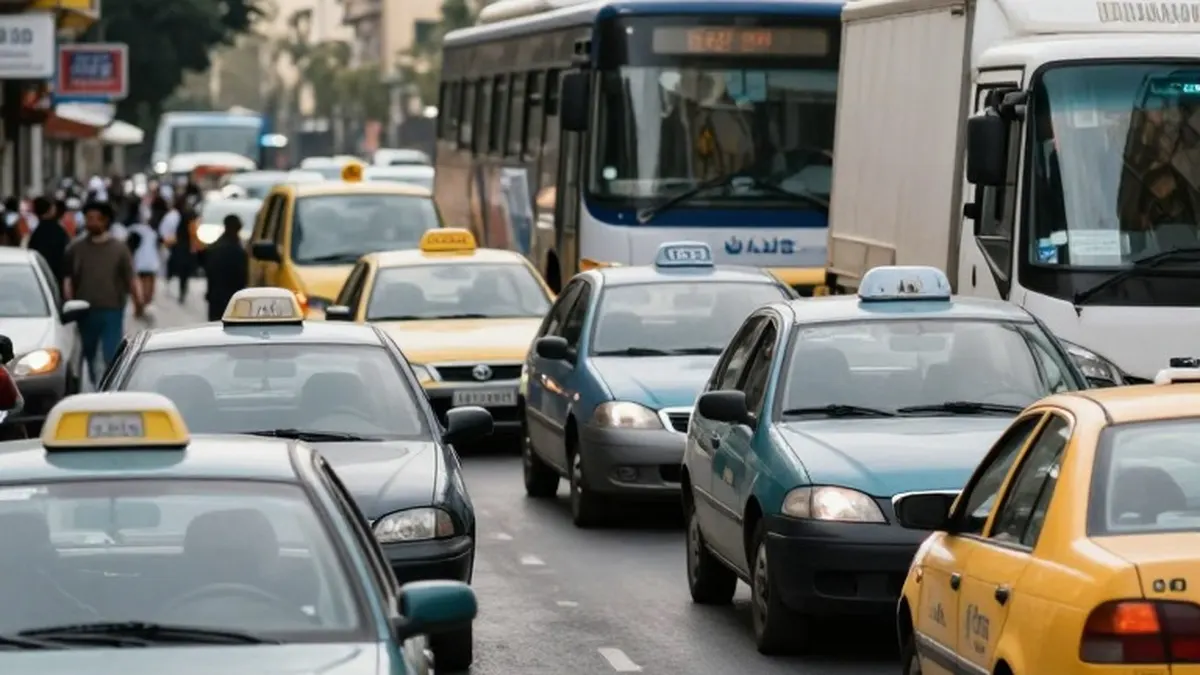
Bus, taxi and truck drivers blocked major roads across Lebanon on Wednesday, demanding government help with fuel costs and enforcement against unlicensed transport operators. Demonstrations took place in Beirut, Tripoli, Sidon and Baalbek, according to Lebanese media reports and footage, as drivers sought relief for a sector facing mounting financial pressure.
Among the protesters’ concerns was competition from motorcycle taxis, whose lower operating costs allow them to offer cheaper fares than licensed cabs. The services have become increasingly attractive to passengers seeking less expensive journeys. Drivers also complained about operators avoiding licensing requirements. Many foreign workers operate vehicles without the red license plates legally required for public transport.
Those plates distinguish licensed commercial passenger vehicles from private cars. A 2019 law established an official price of 40 million Lebanese pounds, approximately $450, for a public taxi plate. Limited supplies, however, have helped create a secondary market. Listings reviewed by The Jerusalem Post advertised existing plates for more than $15,000, putting them beyond the reach of many drivers.
In Beirut, drivers blocking the road between Riad Al Solh and Martyrs’ Square on Wednesday morning told The National they wanted to put peaceful pressure on politicians to address fuel costs. At a press conference, Bassam Tlaiss, head of the Land Transport Unions and Syndicates, accused the government of failing to honor its promises and warned that protests would continue. He said 54,000 families relied on the sector, with many struggling to meet living expenses.
Public transport driver Firas Dandash told Lebanon’s MTV that authorities should prohibit Syrian-registered vehicles from operating in Lebanon and act against private cars illegally carrying passengers as taxis. He also urged security forces to increase patrols, take stronger measures against cars and vans with forged plates, and pursue legal action over transport violations.
The dispute follows an agreement that prompted unions to cancel an earlier protest this year. That deal included a $134 monthly stipend for public transport drivers and a 40% rise in family allowances. Qassem Shibli, president of the public transport drivers’ union of Saida and the South, told L’Orient Today that drivers had been promised 12 million each month for three months but had received nothing.
Shibli said drivers were now below the poverty line and unable to earn enough to cover daily food needs. He warned that unless the government implemented the agreed measures, future protests would involve blocking roads and remaining in the streets until their demands were met.
Lebanon’s fuel crisis, a longstanding concern for the United Nations, has worsened with the closure of the Strait of Hormuz while the country continues to face the consequences of its 2019 financial collapse. In April, Abdo Saadeh, head of the Association of Private Generator Owners, told Al Hurra that diesel had climbed from about $700 a ton to nearly $1,400 in a short period. The increase pushed household electricity costs higher.
Fuel prices have fallen slightly since late September but remain well above their levels at the start of 2026. Official schedules show that 20 liters of 95-octane gasoline cost nearly 70% more than in January, while diesel prices have risen 94%. Disruptions to shipping through the Strait of Hormuz have contributed to those increases.