Portland State Study Finds 400 Western Glaciers Have Vanished Since 1950s
A new analysis in the Proceedings of the National Academy of Sciences links the loss of more than a quarter of the region's ice to rising temperatures, with steepest declines in California and Montana.
By Chinedu Schneider ·
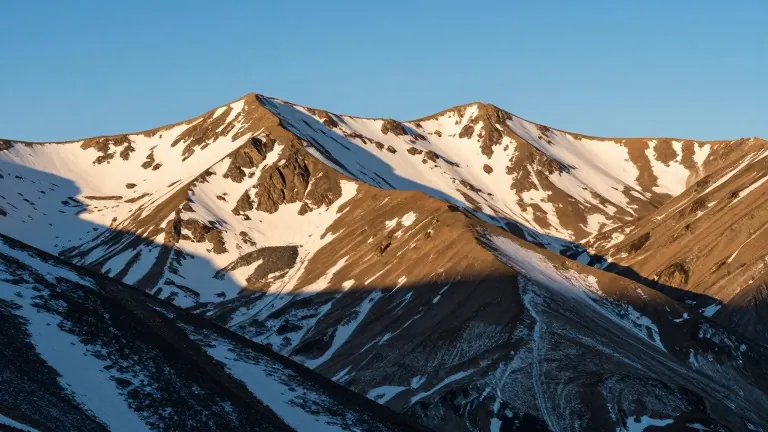
Andrew Fountain, a glaciologist at Portland State University, led a team that identified nearly 400 glaciers that no longer exist across the western United States. The findings, published in the Proceedings of the National Academy of Sciences, indicate that these vanished ice fields represent more than a quarter of the glaciers recorded in historical surveys. The research compares inventory data from the 1950s through the 1980s with aerial and satellite imagery collected around 2015.
The study covers more than 1,300 glaciers in six states: California, Colorado, Montana, Oregon, Washington, and Wyoming. Fountain noted that most of these are small, lacking the massive scale often associated with glaciers. He pointed out that Mount Rainier in Washington possesses more glacier-covered area and ice volume than the glaciers in the other five states combined.
Since the historical baseline, Western glaciers have lost approximately one-third of their surface area and ice volume. The losses vary by location, with some ranges experiencing sharper declines. Glacier-covered areas in Montana's Beartooth Mountains and Absaroka Range shrank by about 62%. In Wyoming's Wind River Range, the decline was roughly 48%, while California's Sierra Nevada saw losses of about 64%.
The disappearance of these ice fields affects water availability in alpine regions. Glaciers function as natural reservoirs, releasing cold water into streams during the hottest and driest months of the year. Unlike seasonal snowpack, which melts in spring, glaciers can supply water long after the snow has gone, helping to sustain high-elevation ecosystems and cold-water species. Fountain stated that as glaciers shrink, their ability to produce water and mitigate droughts is reduced.
Researchers warn that continued ice loss could leave alpine watersheds more vulnerable to drought and warmer stream temperatures. Not all glaciers are disappearing at the same rate, however. In parts of the Rocky Mountains, local terrain helps some ice persist. Steep mountain walls can shield ice from direct sunlight, while avalanches and wind deposit extra snow in sheltered areas. These conditions allow some glaciers to survive even as temperatures rise.
The study notes that St. Mary's, technically a snowfield rather than a true glacier, offers an example of these changes. Fountain described the widespread losses as a tangible indicator of climate warming. He added that the current state of these ice fields is only the tip of the iceberg for future changes in the region.
The research was produced by the Mountain West News Bureau, a collaboration between Boise State Public Radio, Wyoming Public Media, Nevada Public Radio, KUNR, KUNC, KANW, Colorado Public Radio, KJZZ, and NPR. Funding support came in part from the Corporation for Public Broadcasting and Eric and Wendy Schmidt.