Salmon habitat costs meet energy bills
A Pacific Northwest fisherman argues that protecting wild salmon is essential for Oregon's economy and demands better stewardship from the Bonneville Power Administration.
By Marco Ortega ·
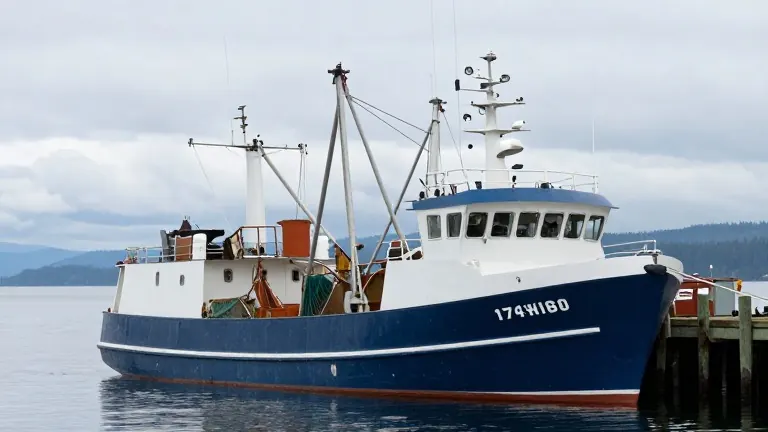
Amy Grondin has spent 30 years working in the fishing industry and has operated her own salmon troller for the last 15 years. She fishes out of Newport, Oregon, and says she has watched salmon populations decline over half her life. For her, the drop in fish numbers is not just a statistical trend. It is a direct hit to her livelihood and the coastal communities that depend on the catch.
Grondin serves on the board of Save Our Wild Salmon, a group that advocates for clean water and habitat protections. She uses her position to push for a different approach to how the Bonneville Power Administration manages its infrastructure. She argues that the agency should treat natural resource protection with the same care it gives to maintaining its power grid.
The core of her argument challenges a common trade-off in energy policy. Officials often suggest that spending on salmon protection makes energy less affordable. Grondin rejects this logic. She states that for many people in the region, healthy rivers and salmon constitute the economy itself. Cutting spending on fish habitat to lower energy costs ignores the financial reality of the Pacific Northwest.
The economic impact extends beyond commercial fishing. State and federal systems manage fisheries to sustain populations, but current numbers are low. Most commercial fishermen take second jobs in winter because the catch alone does not cover their expenses. Sport fishing tourism also suffers. Visitors who come to fish rent slips, buy fuel, and eat at local restaurants. Those meals often feature local ingredients, connecting the fishing industry to multigeneration family farms that rely on healthy rivers for irrigation.
Grondin points to a recent analysis to quantify this economic web. The study found that about 225,000 indirect and adjacent jobs depend on outdoor activities, including commercial and recreational fishing. Another 70,000 jobs are directly tied to these sectors. Together, this portion of Oregon’s economy generates nearly $10 billion annually. If the Bonneville Power Administration fails to protect salmon, a major part of that economic output is at risk.
She acknowledges that the fishing industry uses modern technology, including radar and GPS plotters, to keep vessels safe. She does not argue against the need for reliable and affordable energy. Her complaint is about the balance. She believes the energy system should be managed to protect the businesses that form the agricultural and outdoor economies in Oregon, rather than pitting different groups of people against one another.
Grondin compares her role as a boat owner to the role of the power administrator. She is responsible for maintaining her vessel to ensure the safety of her crew and the affordability of her operation. She expects the same level of stewardship from those who manage the public energy system. Instead of receiving careful maintenance, she feels she receives larger bills every year without corresponding improvements in environmental protection.
The debate centers on who bears the cost of a healthy ecosystem. Grondin believes that investing in salmon habitat is the same as investing in an inclusive and affordable economy. She urges utility lobbyists to stop creating divisions between different industries. For the people living in salmon country, the numbers in the analysis are not abstract. They are the kayakers, farmers, and fishermen who keep the local economy running.
More Business · Consumer Alerts · Report a business · Got a Story?