Washington oyster beds double in size after 25-year push
Restoration teams hit a 150-acre goal in Whatcom and Skagit counties, with Fidalgo Bay populations surging from 50,000 to 5.5 million.
By Marco Ortega ·
Olympia oysters, once abundant across the U.S. and Canadian West Coast, now occupy just 4% of their former range. That number has started to climb. Restoration partners in Washington state recently reached a target of 150 acres of restored oyster beds. This milestone effectively doubles the habitat acreage in the state over the past few decades.
Julieta Martinelli, the Olympia oyster restoration lead for the Washington Department of Fish and Wildlife, said the species thrives when placed in the right locations. "Once you get people excited about putting the oysters in the right places, they take off because this is their place," Martinelli said. The North Salish Sea has become a central focus for this work, with projects spread across Whatcom and Skagit counties.
Local marine resource committees, tribes, and shellfish growers drive these efforts. Jodie Toft, executive director of the Puget Sound Restoration Fund, noted that North Sound currently hosts some of the largest Olympia oysters in the region. Toft described the growth in that area as active, while acknowledging that conditions in Hood Canal and South Sound produce smaller but healthy oysters.
Fidalgo Bay outside Anacortes offers the clearest evidence of the recovery. In the early 2000s, workers reintroduced approximately 50,000 oysters into the bay. The population has since grown to more than 5.5 million. Paul Dinnel, a shellfish biologist with the Skagit Marine Resource Committee, attributed this jump to consistent stocking of juvenile oysters and settlement habitat. He said population growth was inconsistent until around 2015, when bargeloads of shells were added to the bay.
Dinnel described the recent years as a period where the population has been snowballing. "It has certainly exceeded my expectations by quite a bit," he said. Other sites in Whatcom County, including Drayton Harbor and North Chuckanut Bay, are undergoing similar tests. Volunteers from the Whatcom County Marine Resources Committee recently placed mesh bags of oysters in mudflats to evaluate site suitability.
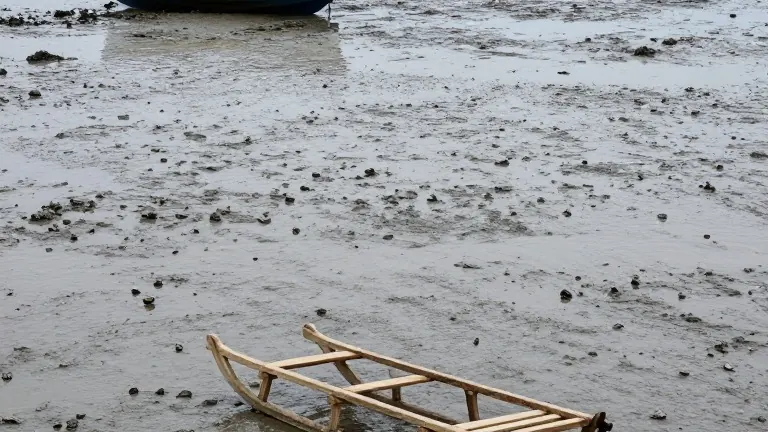
The physical work is demanding. Each bag weighs about 30 pounds. Volunteers drag the bags onto sleds during low tide and transport them to a boat. The boat then drops the bags at designated buoys. A second crew returns the following day to cut the bags open and spread the oysters across the project site. Toft said these placements act as a litmus test for next year's planning. The data will reveal whether the oysters are sinking, staying alive, or growing.
Dana Daniels of the Whatcom County Marine Resources Committee emphasized that habitat specifics dictate success. Oysters prefer muddy sites with proper tidal height and shells for settlement. They avoid open shorelines and sandy bottoms. "You could have spots right next to each other that look almost the same, but oysters survive at one and not the other," Daniels said. The Swinomish Indian Tribal Community is also restoring beds in Similk Bay and Samish Bay, an area that once held one of the largest source populations in the state.
Martinelli noted that historical stressors like overharvesting and pulp mill pollution have largely disappeared. Funding and labor capacity now limit expansion. The species currently represents 8% to 10% of its historical abundance. Oyster seed for these projects comes from a conservation hatchery in Manchester, Washington. Daniels said anyone willing to get muddy can volunteer for the work.