Winter systems to complicate holiday travel in the next few days
Meteorologists forecast snow and ice across the Midwest and South, prompting airlines to prepare for potential cancellations before the holiday weekend.
By Bianca Shevchenko ·
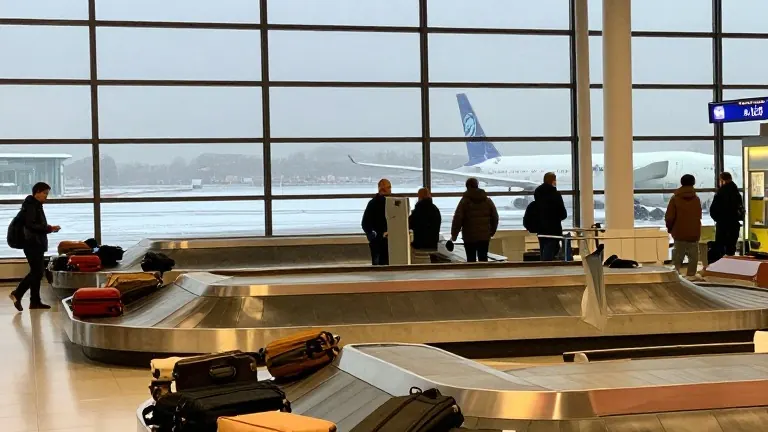
The National Weather Service issued a winter weather advisory on November 26 that covers a broad swath of the central United States, signaling that conditions will deteriorate for millions of people traveling for the holidays.
Forecasters expect the first major system to move through the Midwest by late this week. Snow accumulations of four to eight inches are predicted for parts of Illinois, Indiana, and Ohio. The heaviest snow is forecast for the southern portions of these states, where temperatures are dropping near freezing.
A second system is expected to follow behind the first, bringing wind and colder temperatures. This pattern often leads to ice accumulation on roadways. The Weather Service notes that the ice is most likely to form in the early morning hours, creating hazardous driving conditions for commuters and travelers alike.
Airlines are already adjusting their schedules in response to the forecasts. American Airlines, Delta, and United have issued statements advising customers to check their flight status. The carriers noted that they are positioning extra aircraft in key hubs such as Chicago O'Hare and Dallas-Fort Worth to handle the increased volume of travelers.
Travel experts warn that the holiday travel season is typically the busiest time of the year. The current weather patterns add an extra layer of complexity. Passengers who have flights scheduled between November 29 and December 1 should expect delays. Cancellations are possible, particularly for flights originating from smaller regional airports that have limited de-icing equipment.
The Federal Aviation Administration has advised airlines to be prepared for operational disruptions. FAA officials said they are monitoring the situation closely and will coordinate with airport authorities to clear runways and taxiways. The agency recommends that travelers build in extra time for security checkpoints, as passenger numbers are expected to surge.
State transportation departments have begun spreading salt and sand on major highways. In Illinois, the Illinois Department of Transportation pre-positions equipment along Interstate 55 and Interstate 80. These routes are critical links for travelers moving between Chicago and other Midwestern cities. Officials said they will monitor road conditions 24 hours a day during the event.
The weather models show a high degree of uncertainty regarding the exact timing of the snowfall. Meteorologists said the systems could shift a few days earlier or later. This variability makes it difficult for travelers to plan with precision. The National Weather Service will update its forecasts every six hours to provide the latest information.
Local governments in affected areas have issued statements urging residents to prepare for the weather. Schools in some districts have considered a four-day week to accommodate the break. Businesses are reminding employees to plan their commutes carefully. The focus is on safety, with officials recommending that drivers avoid unnecessary travel during the peak storm hours.
The holiday season is expected to see record numbers of travelers in the air and on the road. The current weather forecast adds a variable that could disrupt these plans. The next major update from the National Weather Service is scheduled for 6 p.m. Eastern Time on November 27. This will provide a clearer picture of the storm's path and intensity.