Alaska Salmon Dispute Dominates Senate Race
Industrial trawlers and Indigenous subsistence fishers clash over bycatch in a contest that could decide U.S. Senate control.
By Chinedu Schneider ·
The central conflict in Alaska's tightly contested U.S. Senate race centers on the declining population of king salmon in the state's western rivers. This ecological crisis has transformed into a political battleground, pitting Indigenous subsistence fishers against the $1 billion pollock industry that dominates the state's marine economy. The outcome of the November election may determine the legislative approach to bycatch, the accidental capture of salmon in industrial nets.
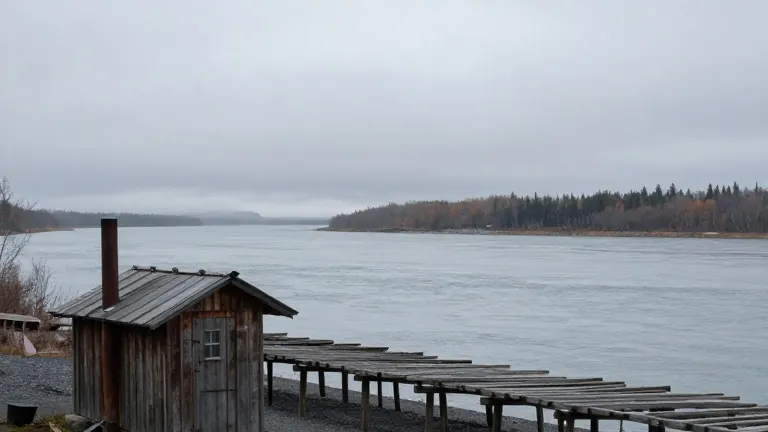
Evon Waska, who resides on the Kuskokwim River, operates a smokehouse that has remained empty this year. He attributes the absence of fish to government agencies that close the river to local subsistence fishing to conserve stocks while allowing industrial trawlers to operate miles offshore. Waska argues that these closures disproportionately affect families who rely on the river for sustenance rather than commercial profit. He stated, "They don't close the trawlers. They close me and my people first."
The industrial fleet uses sock-shaped nets, some quarter-mile long with openings as wide as a football field, to harvest pollock. This white fish is processed into imitation crab and served in fast-food chains. However, the nets also trap high-value king salmon, which are often discarded. The pollock industry is largely based in Seattle, and its operations have drawn increasing criticism from Alaskans who view the waste as unsustainable.
Republican incumbent Dan Sullivan, a long-time ally of the pollock sector, has introduced legislation he describes as the most comprehensive bycatch measure ever proposed. Sullivan claims the bill will reduce accidental catches and protect seafloor habitat. His campaign highlights this legislative effort to counter criticisms of his financial ties to the industry.
Democratic challenger Mary Peltola, an Indigenous candidate from the Kuskokwim region, has positioned herself as an opponent of the factory trawlers that comprise the largest segment of the pollock fleet. Peltola argues that Sullivan delayed his legislative action until late in the year to capitalize on the issue. She noted, "Dan Sullivan reeled in over $300,000 from trawlers and waited until the 11th hour for a half-hearted and half-baked solution."
Heather Mann, who leads a trawlers association, contends that eliminating the pollock fishery would have a minimal impact on restoring salmon runs. She cited scientific data supporting this view, suggesting that other factors contribute more significantly to the decline. Industry representatives point out that the 40,000 Alaska salmon caught by trawlers so far this year represent a small fraction of the total pollock harvest.
In the village of Kwethluk, the economic and cultural impact of the salmon shortage is immediate. Mary Nikolai, the tribal president, observed that most local smokehouses went unused during the summer. She described the situation as a slow trend that is closing out the local workforce. The race has elevated this regional issue to the national stage, with both candidates airing advertisements that reference the state's fisheries.
Source: KNKX Public Radio