Hermantown Council Approves Key Permit for Google Data Center Despite Hours of Opposition
The Hermantown City Council unanimously granted a special-use permit for Google's 1.7 million-square-foot data center after a marathon meeting marked by protests inside and outside City Hall.
By Yasmin Farouk ·
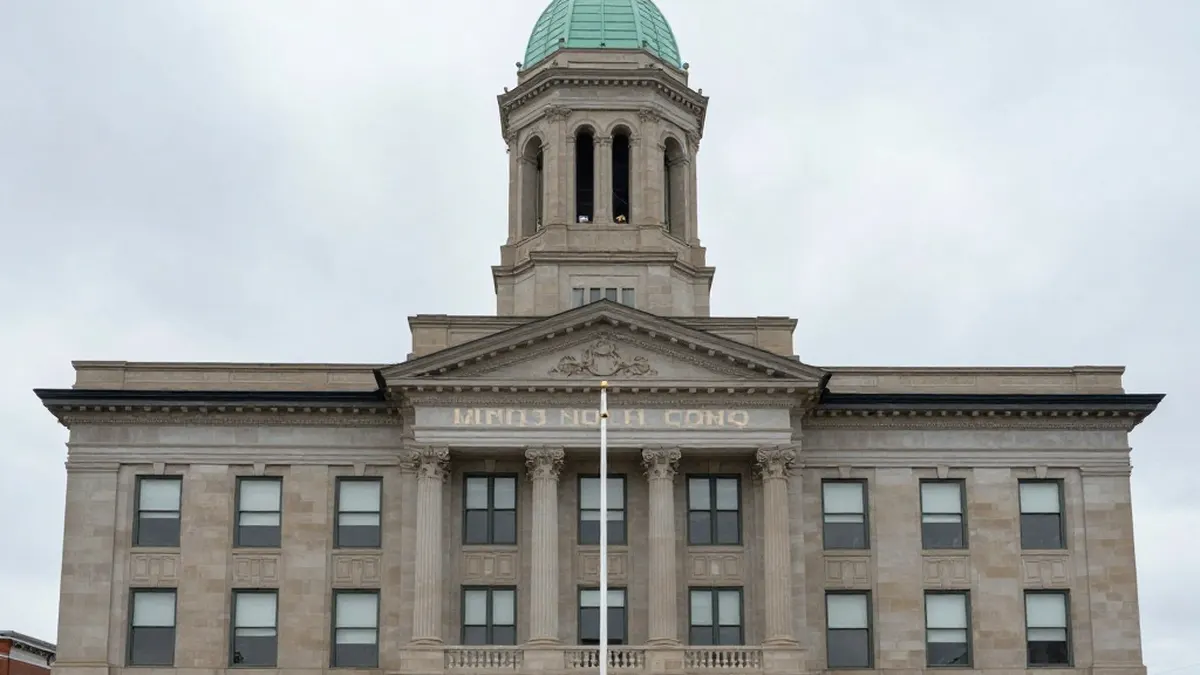
The Hermantown City Council advanced a disputed data center project late Friday, unanimously approving a special-use permit that clears the way for Google's planned 1.7 million-square-foot facility in the city's southwest corner. The five-member council acted after more than four hours of public comment, adjourning after 11:30 p.m. By then, the chambers had largely emptied, with some attendees escorted out and others leaving in frustration.
Alongside the permit, the council approved a package of related measures. It reconfigured 22 existing properties into a plat of three lots, rejected a citizen petition seeking an environmental assessment worksheet, signed off on a development agreement with Google and a cooperative agreement with St. Louis County, and adopted protections for the city should the facility ever stop operating as a data center.
The meeting had originally been scheduled for Monday but was postponed after a large protest. Seeking to avoid a repeat, officials admitted only the first 85 members of the public to City Hall for verbal comment, a decision residents sharply criticized while urging the city to move to a larger venue.
Cliff Davis, a regular presence at meetings on the project, was first in line. He said he has lived in Hermantown for 82 years and paid property taxes for 59. “I don’t think we should have this data center here or any place close to here,” he told the News Tribune. “Even the people in Duluth don’t want this data center here.” Davis pointed to the site's proximity to two trout streams and possible health impacts on neighbors. “They haven’t proven to be the greatest thing,” he said. “And there’s too many of them.”
Inside, speakers were overwhelmingly opposed, each allotted three minutes. Several representatives of Minnesota Power and the Duluth Building Trades Council spoke in favor. Dave Lislegard, executive director of Jobs for Minnesotans, commended the council for adjusting the proposal over the past year, saying, “You guys had an openness and a willingness to listen to your constituents,” a remark that drew laughter from the room.
Outside, opponents who could not get in gathered with an Indigenous drum circle and dancing. The crowd eventually pressed toward the chambers, chanting “Let us speak!”, but barriers and a heavy police presence kept them from the doors. The drumming and chanting were audible inside but did not drown out speakers.
The vote came as three lawsuits tied to the project move through the courts. On Thursday, the group Stop the Hermantown Data Center sought a temporary restraining order to block the permit until the cases are resolved; a week earlier, Sixth Judicial District Judge Theresa Neo had denied a similar request in a separate case. Before public comment, City Attorney Christopher Virta said recent tribal requests and resolutions “should be taken seriously and given due weight as sovereign governments,” but that state law gives tribes no formal, direct role in permitting and that neither they nor the lawsuits barred the council from acting. State Rep. Liish Kozlowski, DFL-Duluth, pushed back during comment, saying, “The treaties are the supreme law of the land, despite what I heard here today.”
The data center is proposed near Midway and Morris Thomas roads. According to a timeline on Google's project website, detailed design work is expected to wrap up next year, and the company still needs wetland and construction permits, which could prompt additional environmental review. Plans for the 234-acre site call for three 375,000-square-foot data buildings, each roughly 33 feet tall, plus three 150,000-square-foot mechanical buildings, a two-story, 60,000-square-foot office building and a 30,000-square-foot fire-suppression structure. The property would also hold three utility pads totaling 200,000 square feet, about 750,000 square feet of equipment yards, 570 parking spaces and seven stormwater basins covering more than 12 acres.