EU Leaders Face Deadlock Over 2028 Budget and Ukraine Aid
EU leaders in Brussels face significant hurdles as they attempt to finalize a massive multi-year budget and secure new financial aid for Ukraine, with divisions deepening over spending priorities and debt levels.
By Chinedu Schneider ·
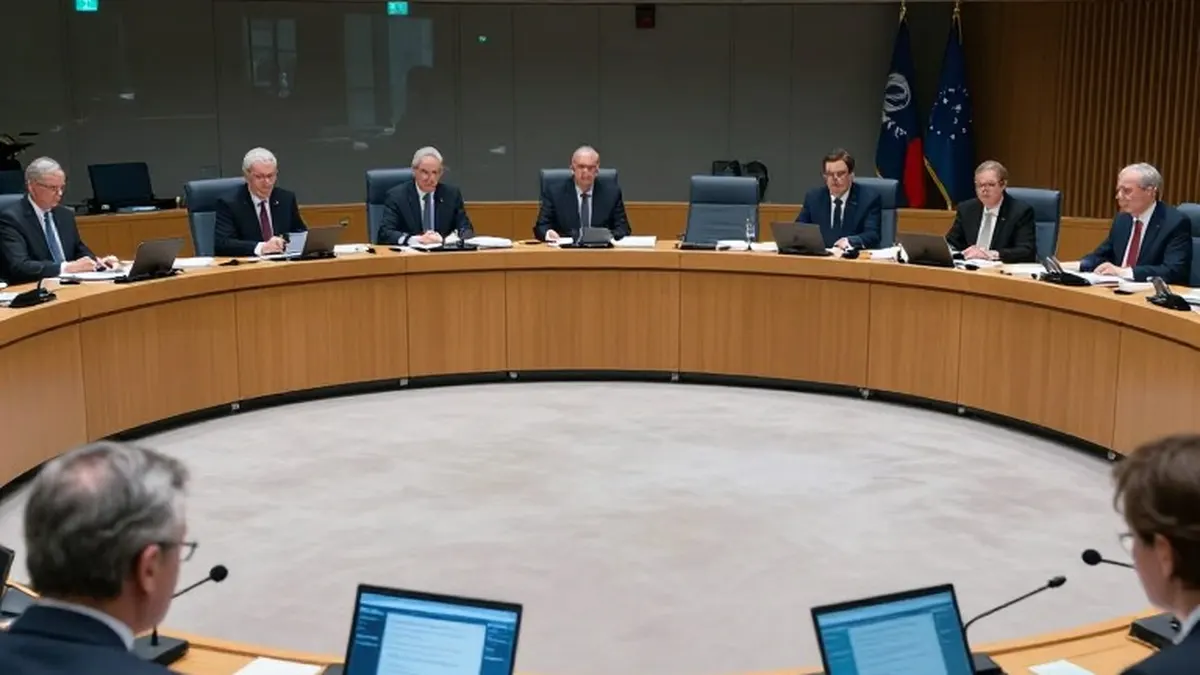
European Union leaders gathered in Brussels on Thursday for an extraordinary summit, where they encountered significant difficulties in reaching consensus on the bloc's upcoming multi-year financial framework. The core of the dispute involves a budget proposal valued at nearly 1.76 trillion dollars for the period from 2028 to 2034, alongside a new 49 billion dollar loan designed to support Ukraine’s economic and military stability for next year.
Visible tensions emerged as delegates debated the allocation of funds. Some leaders argued for stricter fiscal discipline, while others defended established policies that account for a large share of current spending. Despite these divergent views, the majority of participants expressed a desire to secure additional resources for emerging strategic priorities and to continue supporting Ukraine, which is entering its fifth year of war.
German Chancellor Friedrich Merz highlighted the inherent contradictions in the current discussions. He stated that Europe requires solid finances and must avoid taking on excessive debt, yet it simultaneously faces a series of critical tasks that must be fulfilled. Merz emphasized that a flourishing economy, the full development of the internal market, and improved defense capabilities are the key priorities.
Other heads of state expressed more direct skepticism about the likelihood of an immediate breakthrough. Italian Prime Minister Giorgia Meloni told reporters that the group was light-years away from a solution. She noted that Italy was unwilling to approve a budget structure that would require the country to contribute more while receiving less in return.
Hungarian Prime Minister Peter Magyar shared a similar pessimism regarding the timing of a deal. He posted on Facebook that the opposing positions in the room made a same-day agreement virtually impossible. He further suggested that even a resolution before Christmas was unlikely, given the depth of the divisions among member states.
The new joint spending package represents a small portion compared to national budgets and is primarily financed by the 27 member countries based on their economic size. However, the process requires unanimous approval from all states, a high bar that complicates negotiations. Although the budget period begins in 2028, leaders aim to finalize the deal by year-end. Elections are scheduled for next year in France, Italy, Poland, Greece, Estonia, Finland, and Slovakia, which could further complicate the legislative process.
Dutch Prime Minister Rob Jetten acknowledged the challenge, describing the negotiations as a marathon. He stated that the budget needs to be modernized and potentially downsized to achieve a compromise. Jetten expressed his readiness to work through the process whether it concludes today, tomorrow, or later in December.
European Council President Antonio Costa, who is chairing the summit, urged leaders to adopt an open mind and a constructive approach. He emphasized the necessity of reaching unanimity by the end of the year. The summit is expected to continue into Friday as officials work to bridge the gaps between different political factions.
Ukraine remains a central element of the budget puzzle. The proposed spending package includes 110 billion dollars for the Kyiv government over the seven-year period. Leaders must also determine whether the costs of servicing the new loan should be covered by the EU budget. This issue has become a point of contention, with Bulgaria, the Czech Republic, Hungary, and Slovakia opposing the use of funds for military aid.
Merz warned earlier this month that Germany might hold up the entire budget agreement if member states did not make a collective commitment to Ukraine without exception. He reiterated this warning on Thursday, noting that he would discuss the matter in depth during one-on-one talks. He argued that ensuring sufficient support for Ukraine is vital to prevent new waves of refugees from entering Europe if the war does not end. This discussion follows the approval of a 99 billion dollar loan nearly a year ago, which has since been strained by intensified Russian attacks on infrastructure and disruptions to Black Sea trade.