Hamas Consults Factions Over Response to Wave of Israeli Strikes
Hamas is consulting with other Palestinian factions to coordinate a response after Israel confirmed the killing of several senior officials in the Gaza Strip.
By Marco Ortega ·
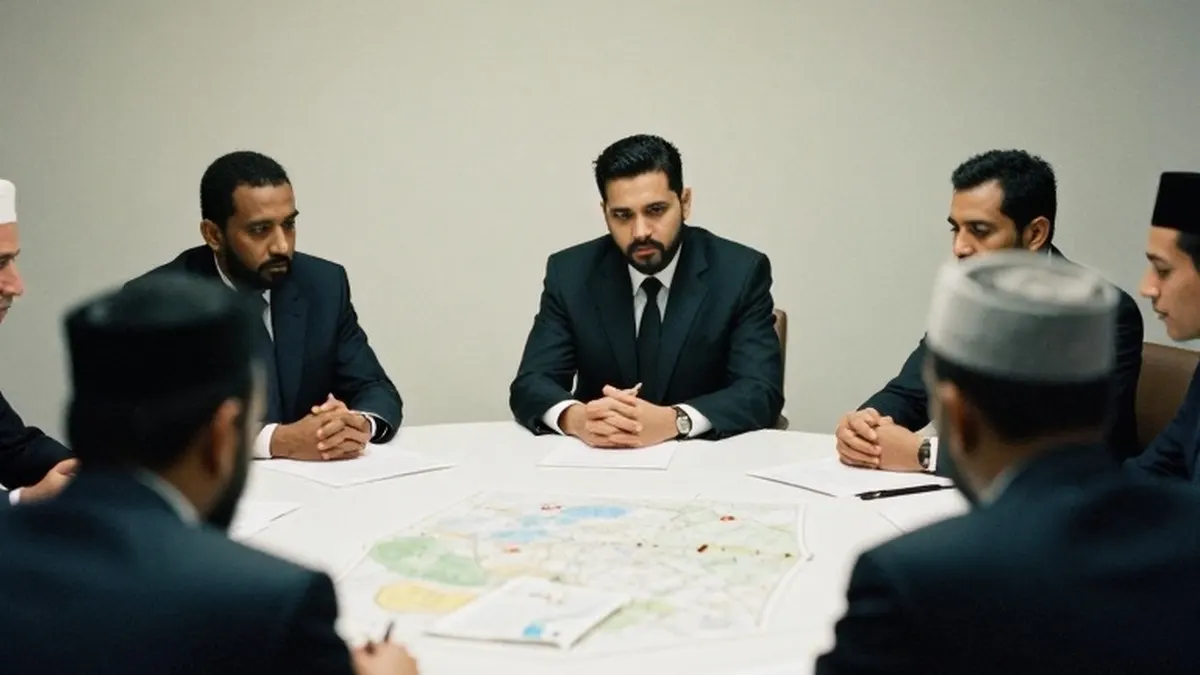
Hamas leadership is currently engaged in consultations with other Palestinian factions to determine an appropriate response to a recent series of Israeli targeted killings. Khalil al-Hayya, a senior figure in the organization, stated that the group finds the current situation of continued strikes and siege under an existing agreement to be unacceptable. He emphasized that daily killings directed against Hamas officials have prompted these internal discussions to coordinate a collective reply.
The latest development in this sequence of events occurred on Thursday when the Israel Defense Forces and the Shin Bet confirmed the death of Khaled Abu Nada. Abu Nada was a senior official in Hamas's political bureau who had been struck in Deir al-Balah, located in the central Gaza Strip. The military identified him as the head of the organization's Economic Department and its education minister.
According to the IDF, Abu Nada played a critical role in managing Hamas's banking and investment systems. He was also responsible for directing funds toward terrorist activities and overseeing the rehabilitation of the group's military capabilities. His death marks a significant escalation in the campaign to decapitate the organization's administrative and financial leadership.
Following the strike, Prime Minister Benjamin Netanyahu and Defense Minister Israel Katz issued a joint statement reaffirming Israel's commitment to targeting Hamas leadership. They asserted that no member of the leadership is immune from action and that the group will not be able to evade the Israeli military indefinitely. The statement signaled that the campaign of targeted strikes would continue.
The killing of Abu Nada followed a rapid succession of similar operations. On Wednesday, the IDF and Shin Bet confirmed the death of Muhammad Majed Abu al-Ouf, who headed Hamas's internal security apparatus in the northern Gaza Strip. Military sources indicated that Abu al-Ouf was involved in restoring the organization's operational capabilities and had overseen the execution of Palestinians who opposed Hamas rule.
This strike came shortly after the confirmed killing of Naeem Abu Nahel, the head of Hamas's internal security apparatus for the entire Gaza Strip. Netanyahu and Katz had confirmed Abu Nahel's death on Tuesday. In response to that specific strike, Hamas condemned the action and called upon the international community to exert pressure on Israel to adhere to the terms of the ceasefire agreement.
These targeted killings are taking place against the backdrop of ongoing international efforts to implement US President Donald Trump's peace plan for the region. The plan includes provisions for the disarmament of Hamas and the establishment of an alternative governing authority to manage the territory.
On Monday, the Board of Peace announced that Hamas and other Palestinian factions had agreed to a disarmament roadmap. This agreement outlines the process for relinquishing weapons and transferring civilian and security responsibilities to a transitional Palestinian administration. However, the board noted that implementation has so far remained limited and called on both Israel and Hamas to fulfill their respective commitments under the framework.
Al-Hayya did not specify the exact measures Hamas and the other factions are considering in response to the strikes. The consultations aim to define a unified stance that addresses the military pressure while navigating the political implications of the ongoing peace process initiatives.