IDF Debut Pioneers Program to Enhance Jordan Valley Border Security
A new military track integrates pre-military students into border defense duties, aiming to strengthen security and foster long-term settlement in the region.
By Bianca Shevchenko ·
The Israel Defense Forces officially launched a new initiative called the Pioneers program on Thursday. This historic military service track is designed to involve trainees from pre-military academies in the defense of nine communities located in the Jordan Valley. The program follows the model of existing groups such as Nahal and hesder yeshivot, which blend religious or academic studies with military service.
Participants in the new track are individuals who have formally enlisted in the IDF. Before joining community defense missions, these trainees complete three weeks of intensive military training. This preparation qualifies them at the Rifleman 03 level, allowing them to undertake specific security tasks. The arrangement mirrors the unpaid service structure used in other combined academic and military programs.
The soldiers assigned to this program will perform routine security duties at several isolated locations along the eastern border. Their responsibilities include conducting surveillance operations and monitoring company-level military communications. In the event of an infiltration or attack on a local community, these troops will act as the primary line of defense. They will operate as part of local rapid response teams to protect the residents of the region.
The initiative was developed through a joint effort involving the IDF Central Command, the Defense Ministry's socio-security department, and three pre-military academies. The program is set to operate in nine communities and outposts throughout the Jordan Valley. Among the designated locations are Hamat Gader and Beit Ha'arava. Beit Ha'arava is a kibbutz that was established in 1943 and later abandoned following the creation of the State of Israel in 1948.
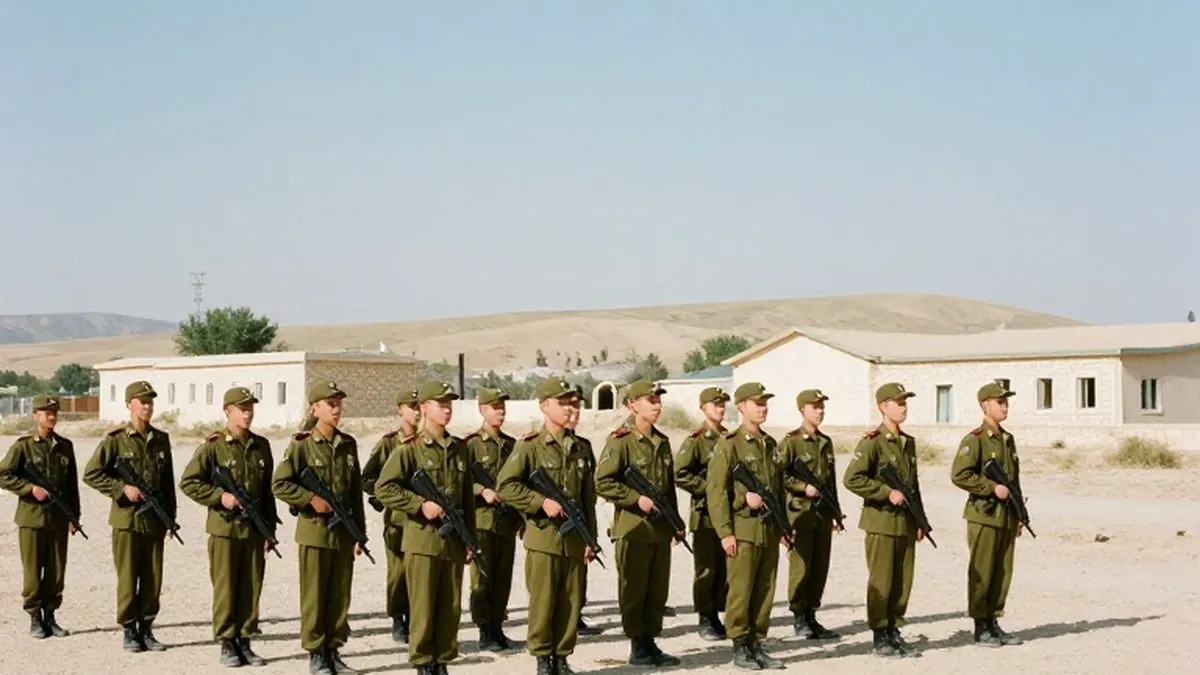
A ceremony was held on Thursday evening to mark the completion of military training for the first cohort of 220 academy trainees. During their three-week training period, the recruits engaged in weapons handling, defensive combat drills, and urban warfare exercises. These exercises were conducted at both the squad and team levels to prepare them for field operations.
Brig.-Gen. Gadi Dror, the Chief of Staff of the Central Command, stated that the program was launched after a successful pilot project in Beit Ha'arava. He noted that the military decided to implement the full initiative based on the positive results of the pilot and the increasing interest from prospective participants. The expansion reflects a broader desire to integrate young people into the border security framework.
Dalia Yanko, who heads the Defense Ministry's socio-security department, indicated that there is already registered interest for the next group of participants. She mentioned that there are plans to expand the project to additional areas within the Jordan Valley. This growth suggests that the model may become a standard component of border defense strategy in the coming years.
The IDF emphasizes that the initiative serves multiple purposes beyond immediate security. The military highlighted the social, educational, and Zionist value of the program. By placing young soldiers in the region, the forces aim to strengthen defensive capabilities while also fostering a connection between the participants and the land. The program is viewed as a way to cultivate future combat soldiers and commanders.
At the conclusion of the training ceremony, the 220 trainees, dressed in their military uniforms, received their weapons. The IDF stated that after completing their year at the pre-military academies, these young soldiers will be assigned to various military units. Most will begin combat training, with the military hoping that a significant number will eventually assume command roles within the ranks.
The program has already sparked enthusiasm among participants, with some young people expressing a love for spending time in the Jordan Valley. There is a possibility that some of these individuals may choose to settle in the region in the future. This outcome aligns with the broader goals of the initiative to integrate security needs with long-term regional development.