Justice Alito Says Americans Must Defend Free Speech, Religious Liberty and Racial Equality in Any Climate
Speaking at a conservative legal gathering in Washington, Supreme Court Justice Samuel Alito named three principles he says the country must preserve no matter the political atmosphere.
By Marco Ortega ·
Supreme Court Justice Samuel Alito says the health of the American republic rests on three principles the country must hold onto regardless of the political moment: freedom of speech, religious liberty and racial equality.
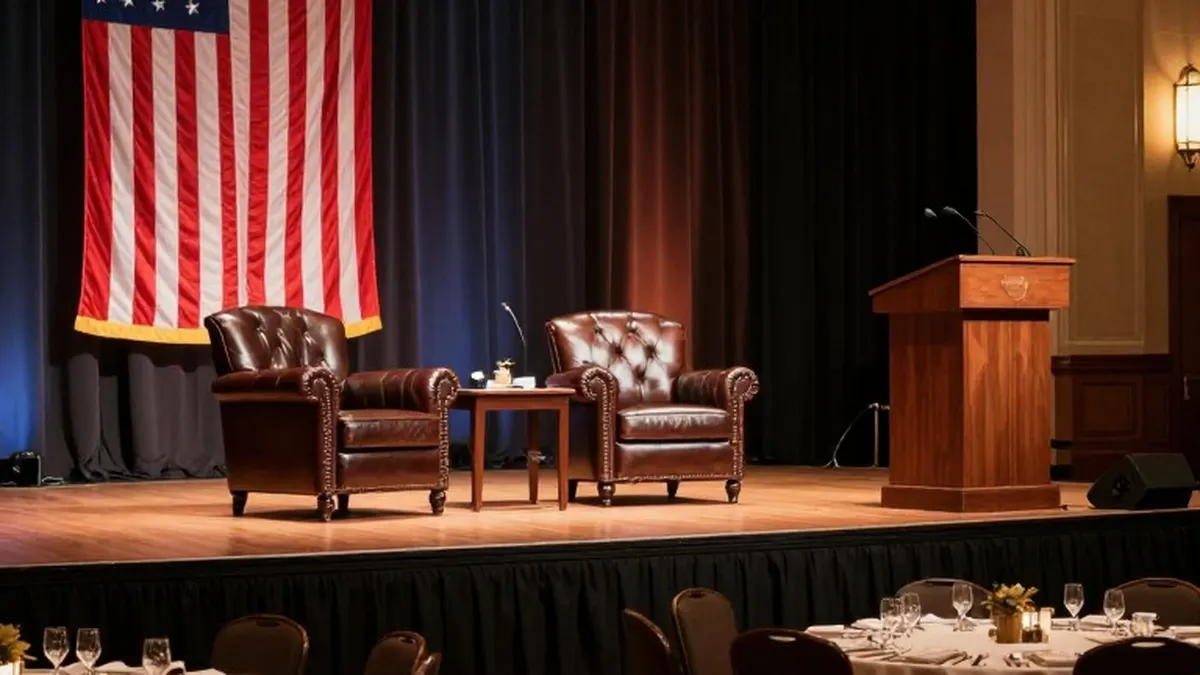
Alito laid out his case during a fireside chat with Mollie Hemingway, editor-in-chief of the Federalist, held after the Antonin Scalia Memorial Dinner at the 2026 National Lawyer's Convention in Washington, D.C. "I'm not saying we're entering the dark age, but these are things that we have to preserve no matter what the atmosphere is in the country or the world at the time," he said.
His remarks arrive in the wake of a punishing midterm election for Republicans, who lost 42 House seats and eight Senate seats, with the Alaska Senate race still uncalled. Democrats are set to take control of Congress with eight lawmakers backed by the Democratic Socialists of America, and incoming and returning members alike have pressed for investigations and subpoenas targeting President Donald Trump and his administration.
The comments also come amid the ongoing war with Iran, which has destabilized oil supply chains around the globe and pushed the price of goods and gas higher.
The 76-year-old jurist placed freedom of speech at the top of his list, warning that "you cannot have Democratic self-fulfillment if you cannot have robust free speech." That protection, he added, extends to "even speech that is hurtful to some of the people who hear what is being said."
On religious liberty, Alito spoke as the high court prepares to decide at least two major cases on the subject this term: St. Mary Catholic Parish v. Roy and Grand v. City of University Heights. "I think that we have placed religious liberty on a sounder footing than it was on 20, 25 years ago," he said, calling religious freedom "central to human dignity" in a country where people follow nearly every faith in the world. Mutual respect for those beliefs, he said, is "essential" if Americans are to get along amicably and productively.
Alito closed his trio with racial equality, which he described as "essential for our pluralistic society." He pointed to the principle Dr. Martin Luther King articulated at the Lincoln Memorial, the hope that children would one day be judged by the content of their character rather than the color of their skin. "If we don't hold to that principle, then I think the society is going to start to come apart," Alito warned.
The court agreed in October to hear Association for Education Fairness v. Montgomery County Board of Education this term, a case brought by parents of Asian American students who argue that a Maryland school district's admissions policies unlawfully discriminate despite appearing race-neutral. Alito also cited the court's 2023 decision in Students for Fair Admissions v. Harvard, which ended affirmative action in college admissions, as one of the most consequential rulings of the past few decades.
Alito's appearance comes as speculation continues about whether he plans to retire. In a Bloomberg article published after the midterms, he said the Democratic sweep had not altered his intention to remain on the court. Nominated by President George W. Bush, Alito has served since 2006, a tenure he noted has moved him up the ranks. "With those, with those 20 years, I jumped to 42nd in the the list of all-time service by Supreme Court justices," he said.
More News · National news · Report a business · Got a Story?