Kremlin Greenlights Ukraine Talks After Witkoff Visit
Russia has accepted a proposal to restart tripartite peace negotiations in November, signaling a potential shift in diplomacy amid continued missile strikes.
By Zanele Khumalo ·
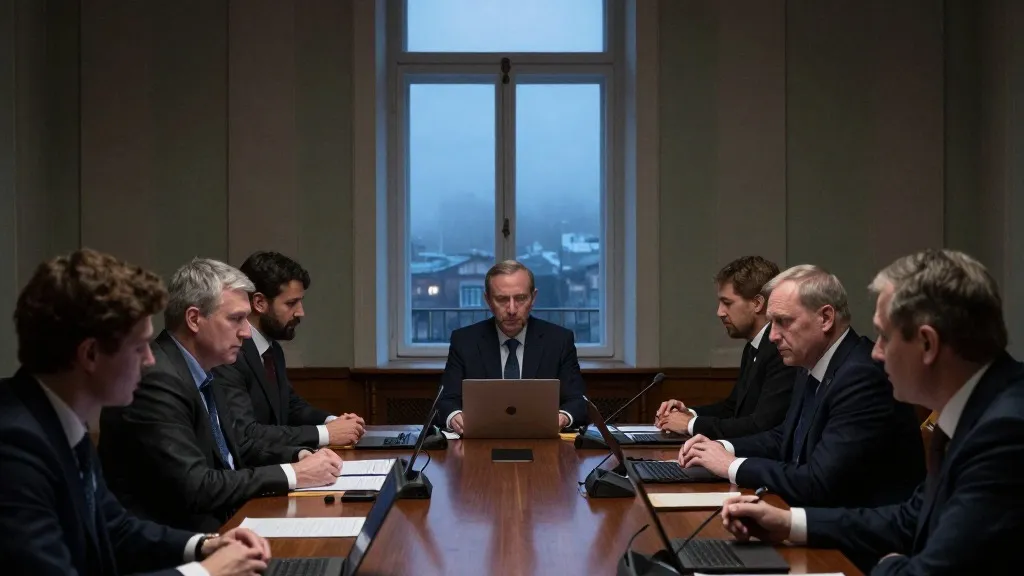
Russia has formally agreed to resume three-way peace negotiations with the United States and Ukraine, a move that sets the stage for the first direct talks between the three parties since early February. The Kremlin confirmed on Wednesday that President Vladimir Putin approved the restart of discussions "in principle," a development that could finally break the diplomatic stalemate that has characterized the conflict for over four and a half years. This agreement follows a high-stakes meeting in St. Petersburg between Putin and U.S. envoy Steve Witkoff, marking a significant pivot in Washington's efforts to secure a ceasefire.
The path to this moment has been fraught with stalled progress and shifting dynamics. Early this year, representatives from the three nations held three rounds of negotiations, including two sessions in Abu Dhabi in January and February, followed by further discussions in Geneva. Despite these efforts, officials reported minimal tangible progress beyond the exchange of prisoners of war, as both Moscow and Kyiv remained firmly attached to their longstanding, often contradictory, demands. The latest proposals that emerged from a recent meeting in Oslo, Norway, were criticized by the Kremlin as containing "little of real value," though Russian adviser Yuri Ushakov later conceded they represented a step in the right direction.
The diplomatic momentum has been driven by President Donald Trump’s intensified pressure on Kyiv to reach a deal. Speaking at the White House on Tuesday, Trump urged Ukrainian President Volodymyr Zelenskyy to compromise, stating that the U.S. has provided substantial support to Ukraine but received "absolutely nothing back except grief, death, tremendous monetary loss." Zelenskyy, in an audio message released late Wednesday, expressed support for the swift restart of talks, noting that the agenda is clear: to end the war and prepare for a meeting at the leaders' level. He added that while Russia has previously canceled engagements, this time may be different.
The negotiations are expected to focus on constructing a post-conflict security framework for both Russia and Ukraine. According to Ushakov, the talks will aim to build a security system that addresses the concerns of both nations once the fighting stops. The St. Petersburg meeting, which lasted approximately three hours, involved Witkoff, Ushakov, and Russian presidential envoy Kirill Dmitriev, with Trump’s son-in-law Jared Kushner joining via video. A U.S. official indicated that the discussions included a postwar economic plan and European security arrangements, suggesting a broader scope than previous technical-level talks.
Beyond the core peace process, Putin signaled openness to broader economic and strategic dialogue. In televised remarks, he stated he was ready to consider restoring economic ties with the United States and discussing the U.S.-led conflict involving Iran. Ushakov noted that "large-scale joint economic projects" were discussed in detail, with some nearing the implementation stage. Additionally, Putin and Witkoff explored the possibility of a trilateral meeting between Russian, Chinese, and U.S. leaders at an upcoming economic summit in China, with Beijing already preparing for such a gathering.
The diplomatic push coincides with continued military activity on the ground. Shortly after Zelenskyy’s message, missile alerts sounded over Kyiv, accompanied by loud explosions. Ukrainian officials reported that overnight Russian attacks left three people dead and twelve wounded in the capital, damaging ten residential buildings. In Kharkiv, two people were killed and eleven injured when drones struck a residential area. Ukrainian Prime Minister Serhii Koretskyi confirmed that energy facilities in Kyiv and three other cities were targeted. The Russian Defense Ministry claimed its forces struck a warehouse, an electrical substation, and a bulk carrier bound for Odesa, while also intercepting 373 Ukrainian drones overnight.
In a gesture perceived as a sign of goodwill, Russia released Stephen Hubbard, a retired American teacher who had been imprisoned on charges of fighting as a mercenary in Ukraine. Witkoff noted that the release appeared to be a response to Trump’s request to Putin. Meanwhile, U.S. envoy Witkoff returned to Oslo after his trip to Russia, where he met with Norwegian Prime Minister Jonas Gahr Støre. Støre suggested that a "new phase" of diplomacy may have begun, with the new talks likely occurring in mid-November. He also addressed the question of borders, stating that while Ukraine may not formally accept a line along the current front, it might be able to live with it.
The upcoming negotiations represent a critical test for the U.S.-led peace efforts, which have seen little significant progress since early last year. With leaders keen to inject new momentum into the process, the coming weeks will determine whether these talks can move beyond technical discussions to a substantive agreement. The alignment of Russian, American, and Ukrainian interests remains fragile, but the agreement to meet in November offers a tangible opportunity to bridge the gap between the warring parties and the global powers seeking to end the conflict.
Source: Atlanta News First