Netanyahu Leads in Tight Israel Election, But Coalition Math Is Uncertain
With 61 seats needed to govern, the two Arab-led parties may hold the deciding vote in a parliament where no bloc has secured a clear majority.
By Bianca Shevchenko ·

Benjamin Netanyahu held the lead in Israel’s parliamentary election as of Wednesday morning, but the race remained too close to declare a winner. Prime Minister Netanyahu trailed Gadi Eisenkot in the official tally, though the gap was narrow enough that weeks of coalition negotiations could determine who forms the next government.
The opposition bloc, which includes Eisenkot’s Yashar party and two Arab-led factions, collected more total votes than Netanyahu’s right-wing alliance. This result suggests that a large portion of the electorate voted against the incumbent administration. Netanyahu addressed supporters in Jerusalem, asserting that his bloc had a clear majority among the Zionist public. Eisenkot, a former military chief of staff, declared that the public had voted for change, emphasizing a platform of increased diplomacy.
The key to forming a government lies in the Knesset, a 120-seat body where a coalition requires at least 61 members. Neither bloc has secured that threshold alone. The United Arab List and the Joint List, representing roughly 20% of the population, position themselves as potential kingmakers. Both Netanyahu and Eisenkot have historically resisted formal partnerships with these parties, creating a strategic dilemma for both leaders.
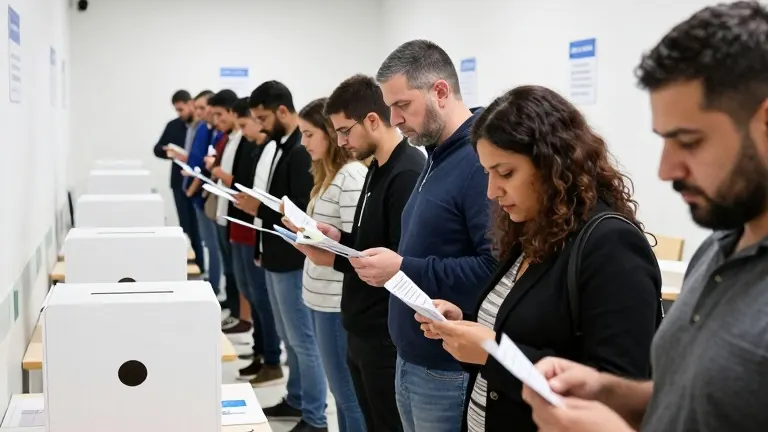
Voter turnout exceeded 77%, the highest in more than two decades. Tens of thousands of expatriates traveled home to vote in the first election since the October 7, 2023, attack by Hamas. The conflict has remained central to the campaign, with Netanyahu facing criticism over the government’s response and international legal challenges, including an arrest warrant for alleged war crimes.
Eisenkot’s allies are pushing for a coalition that includes the Arab parties. Yair Golan, leader of the Democrats party, argued on social media that the opposition must overcome mistrust of Arab political leaders to secure a majority. If neither side can assemble the necessary 61 seats, Netanyahu will remain as caretaker prime minister, and a new election will be scheduled for next year.
Election officials expect to finish counting votes, including ballots from soldiers, by Thursday afternoon. The final count will determine which candidate receives the first mandate to form a government. That candidate will have six weeks to assemble a coalition before the process resets.
Source: KNKX Public Radio