New Delhi Air Quality Hits Severe Levels After Diwali
The capital's air quality index surpassed 350 on Monday, a level that health officials say poses serious risks to residents.
By Marco Ortega ·
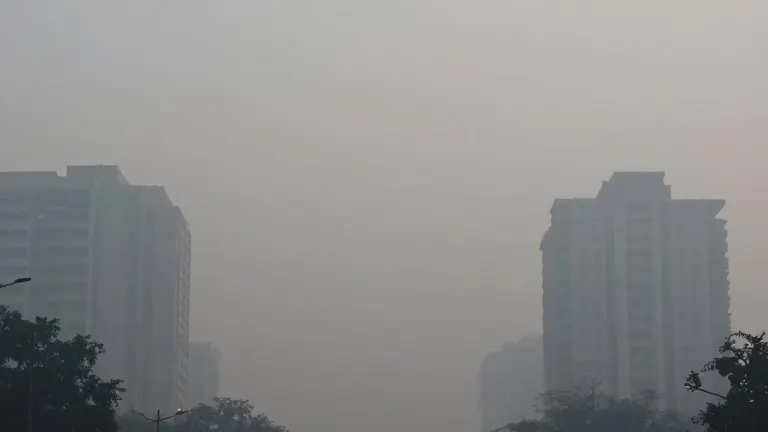
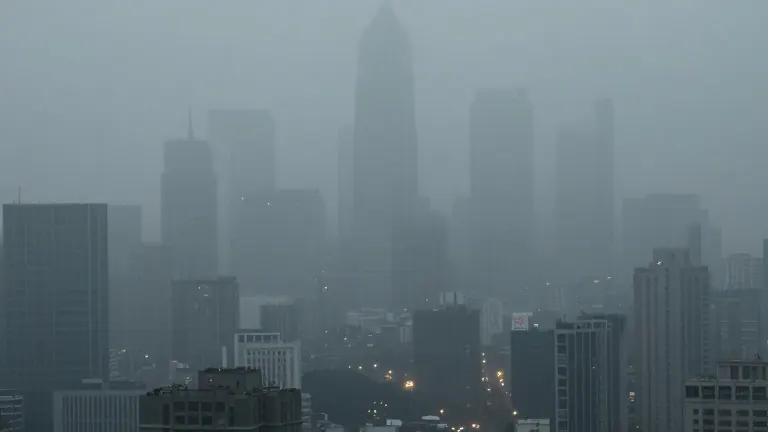
New Delhi residents faced a dense gray haze on Monday after firecrackers used during Sunday's Diwali celebrations mixed with existing seasonal pollutants. The event pushed the city's air quality index above 350 in multiple districts, a threshold classified as severe that indicates a high risk of health effects for the general population.
The Supreme Court of India issued a ruling in October that aimed to reduce the environmental impact of the festival. The order restricted the use of conventional fireworks and permitted only approved green firecrackers for three specific hours on Saturday and Sunday. These certified products generate fewer emissions than traditional varieties, but they are not pollution-free and still release particulate matter into the atmosphere.
Isyad, a resident who uses only a first name, reported physical symptoms resulting from the thick smog. He described experiencing throat irritation and itchy eyes as a direct consequence of the poor air quality. His account reflects the immediate physical toll that the annual pollution spike takes on the city's inhabitants.
New Delhi and its surrounding metropolitan area are home to more than 30 million people. The region consistently ranks among the most polluted in the world during the winter months. The crisis intensifies when Diwali fireworks coincide with cooler weather and smoke from crop-residue fires in the neighboring states of Punjab and Haryana. Farmers burn leftover rice stalks to clear fields, and the resulting drift adds to local pollution from vehicles, industries, and construction sites.
Meteorological conditions in late October and November exacerbate the problem. Low wind speeds and stagnant air prevent pollutants from dispersing, allowing the haze to linger over the capital for days. Local authorities have implemented measures to curb pollution, including limits on construction activity and restrictions on diesel generators. Courts have also sought to control firecracker usage, but these steps have not prevented the return of severe pollution each year.
Shweta Narayan, a public health expert at the Global Climate and Health Alliance, characterized the government's response as temporary and knee-jerk. She stated that a lot of interventions happen only because the government is pressured or pushed in a corner to do something. Environmentalists argue that long-term solutions, such as cleaner energy and stricter controls on vehicle emissions, are necessary to prevent the annual crisis.