Nonprofit uses federal grants to expand tree-based farming in Western Washington
Agroforestry Northwest, formed in 2022, received close to $500,000 in federal grants this year after cutting staff and rewriting grants in 2025.
By Marco Ortega ·
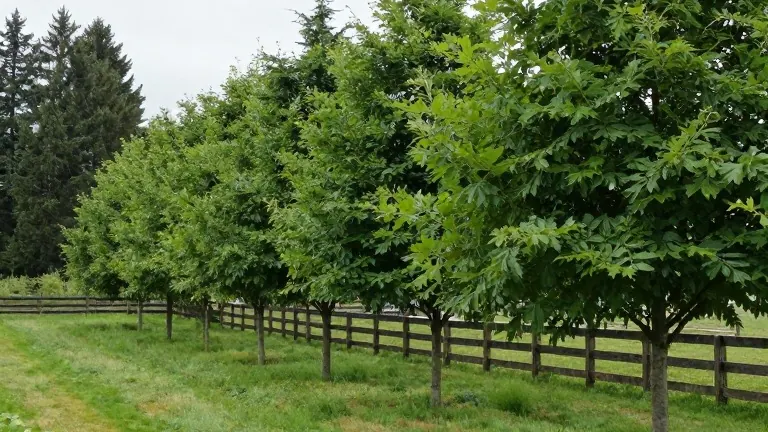
Agroforestry Northwest, a nonprofit started in 2022, received close to half a million dollars in federal grants this year, money Executive Director Carrie Brausieck expects to pay for building agroforestry projects across Western Washington. The organization works from Raising Cane Ranch at 5719 Riverview Road in Snohomish, a 38-acre property that operated as hay and cattle land before trees and plants were planted across it.
Agroforestry places multiple crops, plants or animals on the same ground to raise yields and improve ecological conditions. Western Washington has lost farms for decades, and combining harvestable crops with grazing areas lets smaller operations produce more per acre.
Brausieck said her group's aim is to introduce as many agroforestry methods as possible in the northwest part of the state, an area that adopted agricultural techniques more slowly than farm-heavy Eastern Washington. "Agroforestry is relatively new to our region," she said. "The first several years were just education, outreach and talking."
Besides Raising Cane Ranch, the organization runs a 100-acre demonstration forest in Arlington and several biocultural restoration sites along the Skykomish River, and it plans to establish more sites on the Nooksack River in coming years. Its members survey local farms and issue grants for sustainable agriculture designs such as alley cropping, windbreaks and riparian buffers. "We work with farmers and foresters all across the Puget Sound," Brausieck said, adding that her organization has limited capacity and that working with conservation districts "can amplify how much agroforestry gets adopted."
Conservation districts have also funded this work on their own. The Skagit County Conservation District offers landowners up to $100,000 per year to install riparian buffers along streams, which regulate water temperatures and keep migrating salmon healthy. In Whatcom County, which leads Western Washington's agricultural production, the Conservation Reserve Enhancement Program has funded more than 132 miles of riparian buffer construction and planted over 1 million trees since it began in 1999.
Brausieck said subsidies are necessary because the work costs too much for many farming operations to cover. "This is expensive to do," she said. "Not every landowner can just go out and purchase trees." Fuel prices have risen in recent months, adding to those costs, and a proposed cut of nearly $5 billion to the USDA 2027 budget has created uncertainty about future funding.
Cuts in 2025 reduced staffing at Agroforestry Northwest and at conservation districts. "We had to keep certain things part-time," Brausieck said. "We had to adjust staff. And we spent, honestly, a lot of 2025 trying to rewrite grants in line with the new administration so that we could recuperate some of that funding."
Most federal money for industrial agroforestry targets higher farm production with lower environmental effects. Agroforestry Northwest also builds art into its work. At Raising Cane Ranch, that meant an elaborate garden and cathedral where plants form the walls, aisles and windows. "Nature is a creative force, and so are humans," Brausieck said. "By integrating nature with the arts, we can communicate and inspire, and be inclusive to people who aren't into farming or forestry."