Serbia Voters Face Choice Between Vučić and Student Bloc Sunday
A canopy collapse in Novi Sad triggered a two-year protest movement that now challenges the long-serving president in a parliamentary vote expected to be extremely close.
By Marco Ortega ·
Serbian voters cast ballots on Sunday in a parliamentary election that analysts predict will produce a narrow margin. The contest pits Aleksandar Vučić, who has held senior executive roles since 2012, against the Student List, a group formed from two years of anti-corruption demonstrations. Reliable polling data remains scarce, leaving the exact outcome uncertain until counts are finalized.
The opposition movement emerged after 16 people died when a canopy collapsed at a railway station in Novi Sad. University faculties selected 250 candidates for the ballot, bypassing traditional party hierarchies. Ilija Srdanović, a cardiologist and professor at Novi Sad University, tops the list but does not hold a formal leadership title. He told the BBC that standing with his students was a normal part of their struggle. The candidate roster includes academics, athletes, and engineers, none of whom have prior political office.
Vučić stepped down as president last month to run for prime minister in this snap election. He cites a decade of economic growth and infrastructure projects as key achievements. However, the Novi Sad disaster links directly to his flagship Belgrade to Budapest high-speed rail project, making it difficult to distance himself from the failure. Magda Anastasijevic, an analyst at ACLED, noted that Vučić has previously survived crises by identifying scapegoats, but the canopy collapse did not allow for that tactic.
The Student List accuses Vučić’s Serbian Progressive Party of dominating state institutions and media. An international observation mission cited media bias and misuse of public resources after the 2023 vote. A pro-government camp has occupied a central Belgrade park for 18 months, where residents have reportedly attacked journalists. Vučić described the camp as a symbol of resistance. The BBC sought comments from leading party figures but received no response.
Foreign policy divisions also shape the race. Serbia maintains EU membership talks while keeping close ties with Russia and China, both of which do not recognize Kosovo's independence. Vučić warned that these links could be severed under a Student List government, asking at a rally if they would impose sanctions on Russia. The Student List and its backers argue that the current system favors the ruling party through control of public resources.
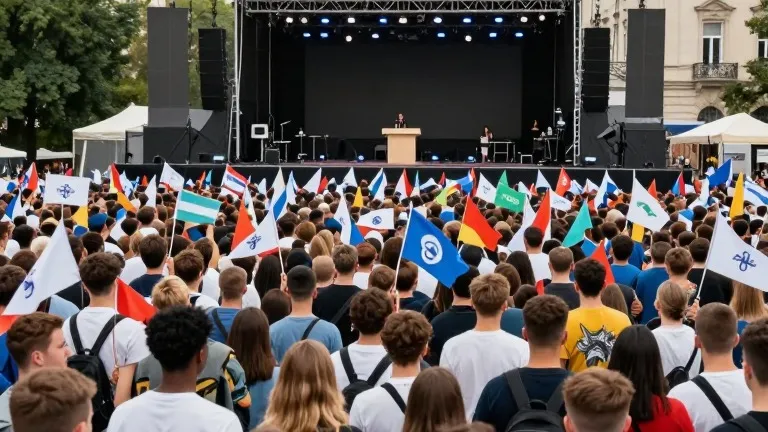
Closing rallies illustrated the divergent strategies of the two sides. The ruling party filled Belgrade Arena with Vučić as the sole speaker. In contrast, a reported 150,000 people gathered in Slavija Square to listen to students and Student List candidates. The final tally will determine whether Serbia continues with its current single-leader model or shifts toward the collective approach proposed by the student movement.
Source: BBC News
More Politics · World news · Report a business · Got a Story?