Seven European flights grounded after coordinated bomb threat alerts
Airlines including Ryanair and SAS diverted or inspected aircraft in five countries following a wave of suspicious emails, with authorities describing the incidents as likely hoaxes.
By Bianca Shevchenko ·
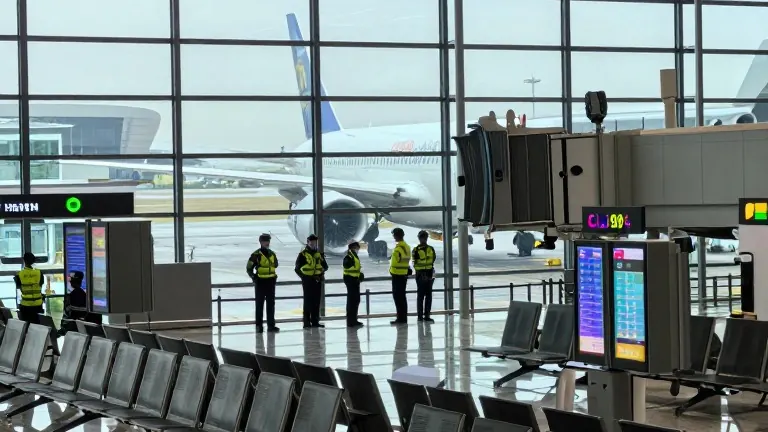
Passengers on seven commercial flights across Europe faced delays, evacuations, and security scans on November 3 after authorities received multiple bomb threat alerts. The disruptions affected aircraft operated by Ryanair, Scandinavian Airlines, and other carriers originating from the United Kingdom, Ireland, Portugal, and Italy. While no explosives were found on any of the planes, the simultaneous nature of the alerts prompted a cross-border investigation into whether the incidents were part of a single coordinated campaign.
In Italy, two Ryanair jets arriving from Dublin and Lisbon were inspected at Rome Fiumicino airport. Italian police bomb disposal experts searched the aircraft interiors, luggage, and passengers, clearing the alert after finding no threats. One of the flights was escorted by the Italian Air Force during its final approach. Similar checks occurred in Spain, where a Ryanair flight from Manchester landed in Murcia. The plane was found to be free of explosives after a thorough inspection.
Poland experienced disruptions at Warsaw Chopin airport, which was briefly closed. A Ryanair flight from London Heathrow was diverted to the smaller Modlin airport, while a Scandinavian Airlines jet from Copenhagen landed as planned. In Bulgaria, Transport Minister Georgi Peev confirmed threats against two flights bound for Sofia. Border police received an email at 10:35 local time reporting suspected improvised explosive devices on planes from Bergamo and Dublin. An operational headquarters was convened to manage the response, and both aircraft landed without diversion.
Aviation security expert Paul Mason described the cluster of incidents as unusual because bomb threats on passenger planes are not frequent. He noted that the threats appeared credible and spanned different airlines, suggesting a deliberate act by a specific actor rather than random malicious calls. Marco Chan, a senior lecturer in aviation operations at Kingston University, explained that crews treat such threats as genuine until resolved. Ground staff and pilots must validate the threat's credibility, which may require diverting a plane to an airport with specific security facilities.
The UK government characterized the events as malicious hoax threats. Officials stated that the country maintains extensive aviation security systems and well-tested processes for handling potential threats. Former airline pilot Terry Tozer emphasized that captains must assess factors such as diversion airport facilities and passenger evacuation procedures. Once on the ground, aircraft are moved to isolated stands for police and bomb disposal teams to search.
Sarah, a passenger on the flight to Murcia, recalled the plane stopping suddenly and remaining on the runway for about 30 minutes. Fire engines and a bomb squad arrived, and passengers were asked to evacuate with only their personal items. She said they were informed about the bomb threat only after they had disembarked. The events follow a similar incident on November 2, when a Wizz Air flight from London Luton made an emergency landing in Budapest after a bomb threat report.
Authorities in multiple countries continue to work together to determine if the incidents were linked. No official connection has been established yet between the seven flights inspected on November 3. The security checks in Italy, Spain, Poland, and Bulgaria yielded negative results, allowing passengers to depart or continue their journeys after the alerts were cleared.