Smithsonian curator challenges the Gerry Thomas TV dinner myth
While the salesman is credited with inventing the frozen meal in 1953, historians point to a team effort that included bacteriologist Betty Cronin and postwar food science.
By Chinedu Schneider ·
The history of the frozen TV dinner is often told as a single moment of inspiration, but experts argue the origin is far more complex. In 1953, Swanson Frozen Foods faced a logistical crisis with 260 tons of turkey moving in refrigerated railcars because the company had overestimated Thanksgiving demand.
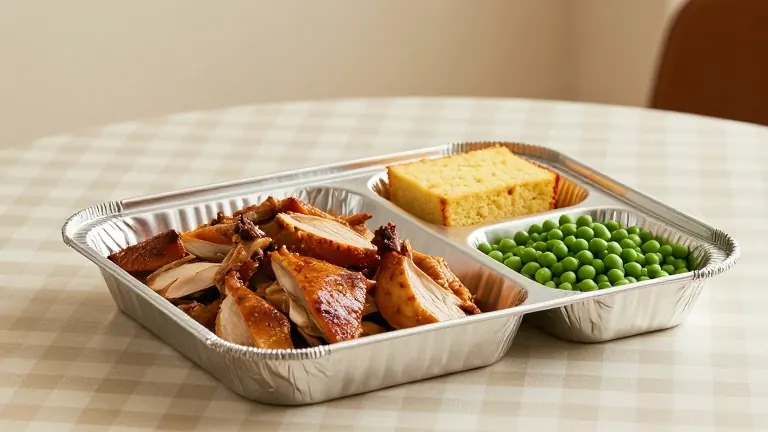
The standard narrative credits Gerry Thomas, a Swanson salesman and military veteran, with solving the problem. The company story states that Thomas, recalling meal trays served on a commercial flight, conceptualized a three-compartment tray holding turkey, cornbread, stuffing, peas, and sweet potatoes. Swanson sold the first TV dinner in 1954 for 98 cents.
Megan Elias, the Winiarski Curator of Food and Wine History at the Smithsonian's National Museum of American History, questions whether a salesman possessed the technical knowledge to transform raw frozen meat into a stable, safe meal. She notes that in the 1950s, women trained as home economists worked in food industry test kitchens, often wearing lab coats and aprons, while men held marketing and advertising roles.
Elias suggests Thomas may have proposed the concept, but the execution required specific scientific expertise. She identifies Betty Cronin, a bacteriologist at Swanson, as a key figure. Cronin was responsible for making sure the food was safe and that the several components reheated evenly, a difficult engineering challenge for the era.
Culinary historian Laura Shapiro agrees that the origin story is likely a team effort. She points out that World War II left behind industrial machinery and processing techniques that were no longer needed for military rations. This existing infrastructure allowed companies to experiment with frozen meals, though early attempts, such as the poorly received frigid dinner, were not successful.
Swanson capitalized on this technology with major resources. The company launched a national advertising campaign called Operation Smash. Shapiro believes the name TV dinner was chosen to project an image of a modern American future where televisions were central to household life.
Betty Cronin provided context in a 1989 interview for the 35th anniversary of the product. She explained that Thomas proposed the name because televisions were becoming common in homes after the war, and families were staying in front of them to watch. Cronin had no children and lived with a companion for 50 years, according to her obituary.
The TV dinner became a staple of mid-century American culture, with consumers purchasing billions of dollars worth of the product over the decades. The item is now displayed at the Smithsonian's National Museum of American History, sitting across from Julia Child's kitchen.