
SpaceX catches Starship upper stage in orbit in historic first
One day after losing the rocket's booster to an explosion, SpaceX used the mechanical arms of its Texas launch tower to catch Starship's returning spacecraft for the first time.
By Marco Ortega ·
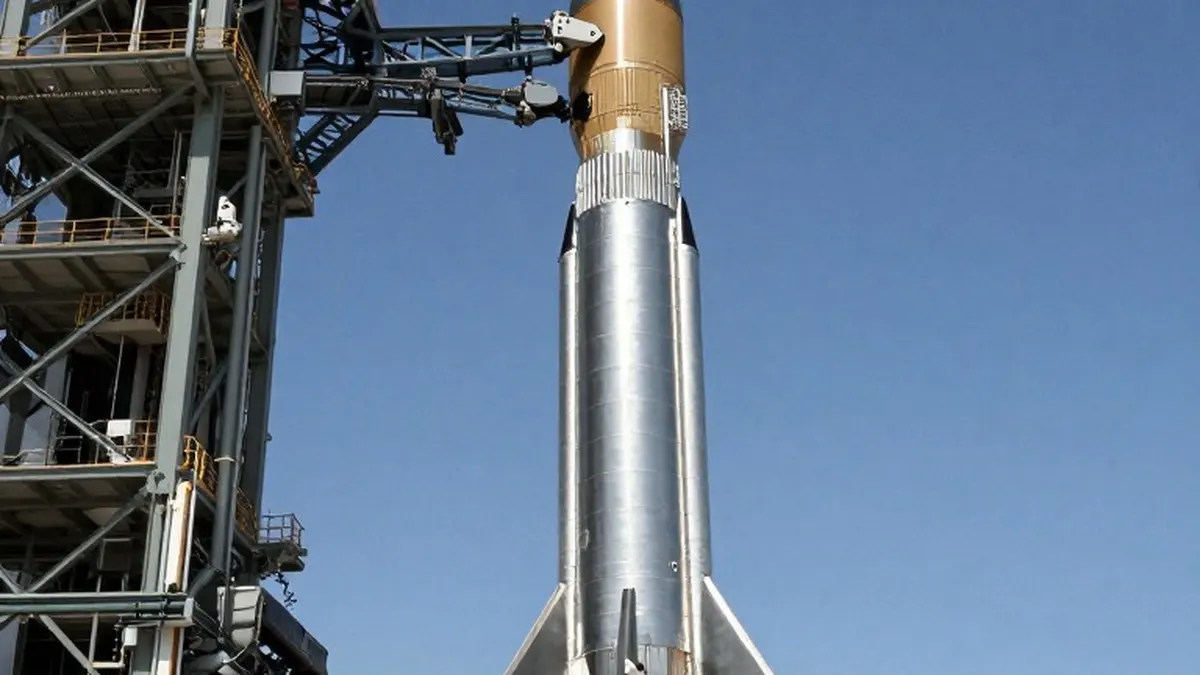
SpaceX pulled off a landmark feat on Saturday, catching the upper stage of its enormous Starship rocket as it returned from orbit, a first for the company. The recovery came one day after the rocket's booster exploded during the same test mission.
Engineers at the company's Starbase, Texas site used the launch tower's mechanical arms, known as the chopsticks, to pluck the spacecraft portion of the rocket out of the air. The tower itself has been nicknamed Mechazilla.
The mission, designated Test Flight 15, was the most ambitious Starship demonstration to date. It was the first time Elon Musk's company tried to recover both halves of the vehicle: the booster and the upper stage.
The two-part attempt did not go perfectly. During the opening phase of the flight on Friday, SpaceX was unable to catch the booster and redirected it toward an offshore splashdown in the Gulf of Mexico, where it exploded before reaching the water.
The upper stage pressed on into orbit and circled the Earth 14 times before making its successful return to the launch tower on Saturday.
The flight also caused ripples in air travel. The Hawaii Department of Transportation temporarily paused some West Coast flights on Friday because of debris risk from the launch, while the FAA separately imposed a rare nationwide ground stop tied to telecommunications system failures. Both orders have since been lifted.
The flight also carried a commercial payload. During Friday's portion of the mission, SpaceX deployed another 26 of its newest Starlink v3 satellites, adding to a constellation that already numbered more than 11,000 satellites in low Earth orbit. The company has said a single Starship can carry as many as 60 Starlink v3 satellites.
Turning Starship into a dependable, fully reusable rocket sits at the center of SpaceX's plans. In the near term, the company needs the vehicle to launch larger batches of satellites to grow Starlink, its satellite internet service and current profit center.
Beyond that, SpaceX is expected to rely on Starship to ferry astronauts and cargo between lunar orbit and the Moon's surface for NASA. Musk has also described a broader ambition to use the rocket to colonize Mars and make humanity multi-planetary.
More News · National news · Report a business · Got a Story?