Surveillance Tech: Experts Detail Scope of License Plate Readers
Academics explain how automatic systems track vehicles across public spaces during a recent on-the-record briefing.
By Chinedu Schneider ·
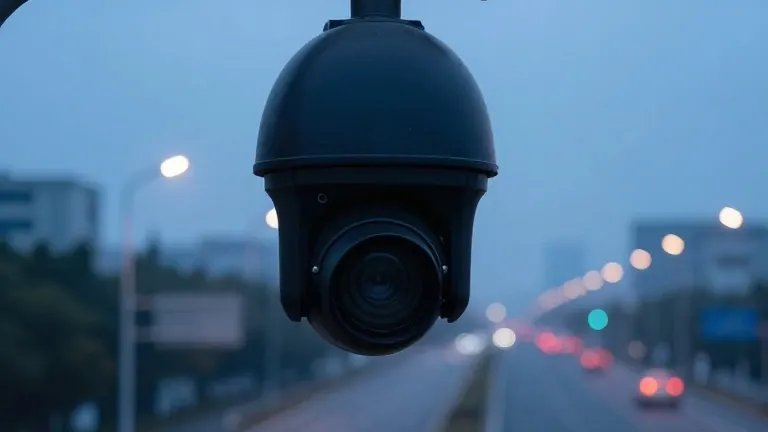
Automatic License Plate Reader systems have expanded their reach across the United States, prompting a detailed review of their capabilities by leading academics. The technology operates as a continuous monitoring tool that captures vehicle data without direct driver interaction. This expansion has raised questions about the balance between traffic management and digital surveillance.
The Electronic Frontier Foundation defines the hardware as high-speed, computer-controlled camera systems. These devices are typically mounted on street poles, streetlights, highway overpasses, mobile trailers, or attached to police squad cars. The systems automatically record every license plate number that enters the field of view. Each capture includes the specific location, date, and time of the event. Flock is cited as the most widely known commercial provider of this technology.
Prison Pipeline Collective member Doug McVay attended a recent on-the-record briefing to examine these systems in depth. The session featured three experts in criminal justice and criminology. Kimberly Przeszlowski, an assistant professor at Quinnipiac University, provided academic insight. Steven Keener, who directs the Center for Crime, Equity and Justice Research and Policy at Christopher Newport University, analyzed the data implications. Johnny Nhan, an associate dean at Texas Christian University, contributed to the discussion on policy.
Taylor Seitz, the scientific outreach manager at SciLine, moderated the briefing. The event allowed the public to hear directly from researchers about the operational realities of ALPRs. The audio from this session is set to feature in the current episode of the Prison Pipeline podcast. The discussion covers how these intrusive tools function within the broader framework of state surveillance.
The briefing aimed to clarify the mechanics of a technology that many residents encounter without understanding its data trail. By gathering specific details from university faculty, the session sought to move beyond general concerns. The participants outlined the specific methods used to deploy and maintain these camera networks. Their analysis provides a factual baseline for ongoing debates about digital privacy in public spaces.
Source: KBOO