Tongue River Fire District Defends Cross-Border Responses Amid Cost Scrutiny
Wyoming volunteers argue that faster arrival times justify the modest fuel costs of aiding Montana emergencies.
By Bianca Shevchenko ·
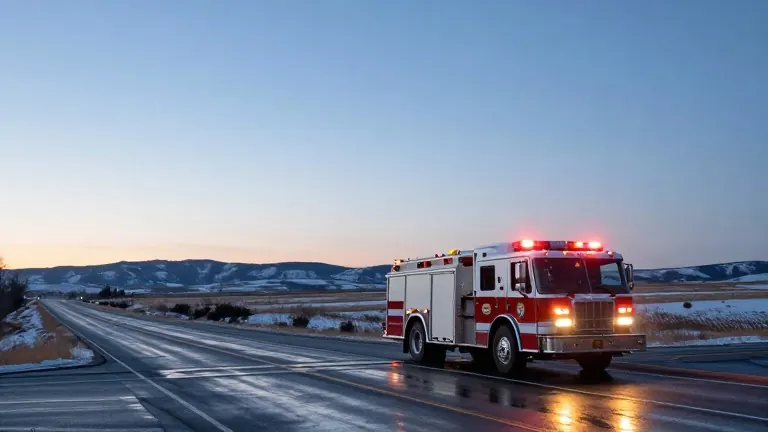
Fire Chief Jeff Barron of the Tongue River Fire Protection District is defending his agency's practice of responding to emergencies in Montana. He argues that the financial outlay is small compared to the safety benefits of arriving faster than the nearest Montana agency.
The volunteer district typically responds to vehicle accidents and fires across the border five to six times annually. Barron states that more than half of these incidents involve vehicles with Wyoming license plates. He noted that an ambulance based in Hardin, Montana, can take 45 minutes to an hour to reach certain sites near the state line. His volunteers can reach those same locations in approximately 20 minutes.
Critics have questioned whether Sheridan County taxpayers should fund services rendered in another state without detailed public accounting. Barron estimates that a typical cross-border trip costs the district between $200 and $300 in fuel. He described these expenses as well within the district's budget, noting that they are reflected in general fuel expenditures rather than being separately itemized.
The Tongue River district is funded by ad valorem taxes and general purpose excise tax revenue. Barron said the recent 25% property tax reduction in Wyoming cost the district approximately $8,000 in revenue. He estimates that a further 50% reduction could result in an additional $9,000 loss. The town of Ranchester supports the district by providing a building rent-free and covering utilities, a benefit Barron said would be impossible to replicate with commercial space.
On September 1, Sheridan County commissioners reapproved a mutual-aid agreement with Big Horn County, Montana. Under this agreement, the responding jurisdiction does not charge for the first 12 hours of an incident. Barron said he is working to establish a separate, similar agreement for his independent fire district. He is also seeking to formalize a similar arrangement with the Crow Tribe.
The district recently participated in a multi-agency response to grassfires ignited by a BNSF Railway train on October 6. The incident involved agencies from Wyoming and Montana, as well as the U.S. Forest Service. Barron said he is working to recover the costs associated with that specific event. He also cited a February fire on the Crow Reservation where his volunteers assisted Bureau of Indian Affairs firefighters because the nearest Montana unit was 40 minutes away.
Barron wrote in a letter to the editor that emergencies do not recognize state boundaries. He questioned the logic of standing down because an accident occurred on the Montana side of the border. He described the decision to respond as akin to tripping over a $100 bill to pick up a penny.
Other parts of Wyoming engage in similar cross-border cooperation. Daniel Tysdal, the Weston County Fire Warden, said his agency assists with wildfires across the South Dakota border. Chris Kenney, chief of the Newcastle Volunteer Fire Department, did not return a request for comment regarding vehicle accidents across the line.
More Business · Consumer Alerts · Report a business · Got a Story?