EPA's Own Modeling Shows Methane Rule Rollback Would Barely Move Oil Prices
The Trump administration's proposal to loosen methane rules would trim crude prices by about 11 cents a barrel in 2027, according to the agency's own estimates.
By Chinedu Schneider ·
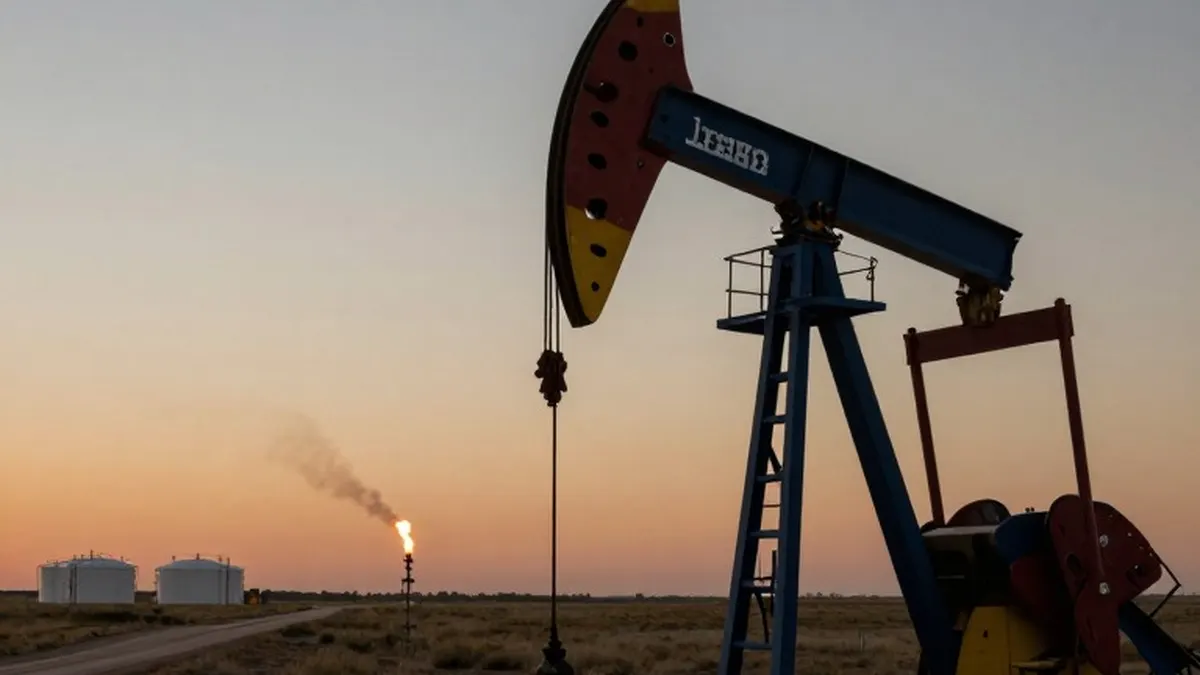
The Trump administration's plan to roll back methane emissions rules for oil and gas operators would do little to bring down energy prices, according to economic modeling from the Environmental Protection Agency itself.
President Donald Trump and EPA Administrator Lee Zeldin unveiled the proposal on Tuesday in Lubbock, Texas, describing it as a way to cut regulatory costs and back domestic energy production. "When owners and operators can produce, America benefits with lower prices," Zeldin said in the agency's announcement.
The agency's projections tell a more modest story. It estimates the changes would lower U.S. crude prices by 11 cents a barrel in 2027, a drop of 0.14%. Domestic oil production would rise by 0.09%, which CNBC calculated as roughly one additional barrel for every 1,000 the country would otherwise produce.
Baden Moore, an energy research analyst at CLSA, said uncertainty over how the policy is implemented, and whether it would survive across administrations, could restrain producers' investment decisions. That "limits the upside to current production rates in the near term," he told CNBC, including in 2027. He added that the main effect could be slowing declines in existing output, since some wells might stay in operation that would otherwise become uneconomic under compliance costs.
Moore expects only a small share of the U.S. shale market to be affected. CLSA anticipates oil prices staying above $80 a barrel, a level at which many wells are already commercially viable, so few depend on regulatory relief to keep running. The proposal could therefore help many operators while having a limited effect on total supply. The International Energy Agency says marginal wells, which produce small volumes of oil and gas, make up about 80% of active U.S. wells but under 10% of production.
Under the proposal, the EPA is weighing lighter methane requirements tied either to a well site's production levels or to whether it uses conventional or unconventional extraction. The agency would also eliminate its Super Emitter Program, which uses approved third-party monitors to flag major methane releases. In addition, operators could handle gas produced alongside oil by flaring it in a way that destroys 95% of the methane.
The EPA projects the changes would lead to an additional 60 million short tons of methane emissions from 2027 through 2050. It told CNBC it estimates the economy would save about $45 billion over that period, including roughly $42 billion in lower compliance costs. The agency also expects operators to capture less gas for sale or use, costing about $4.2 billion in revenue, a figure already built into the $42 billion compliance savings estimate.
The proposal still has to go through the rulemaking process, including a public-comment period and further EPA review, before it can be finalized.
The announcement comes as the administration has also moved to ease sanctions on Russian diesel exports as part of efforts to address fuel prices. Energy Secretary Chris Wright told CNBC on Tuesday that additional shipments could be allowed depending on Moscow's actions.
Source: CNBC
More News · National news · Report a business · Got a Story?