US envoy Barrack backs Damascus control over Suwayda
The special envoy's comments mark a clear divergence from Israeli policy in southern Syria.
By Bianca Shevchenko ·
The diplomatic relationship between Washington and Damascus is facing a new test in southern Syria. US special envoy Tom Barrack has publicly sided with the Syrian government in its dispute over the southern governorate of Suwayda. His remarks signal a distinct break from the position held by Israel in the region.
Barrack discussed the situation on Friday during an interview with Mario Nawfal, an Australian influencer on the platform X. The envoy referenced a specific Druze sheikh, identified by analysts as Hikmat al-Hijri. Barrack indicated that Washington prefers the Syrian government to maintain authority over the area rather than a faction aligned with al-Hijri. This group includes the National Guard, a Druze armed organization that observers accuse of receiving support from Israel.
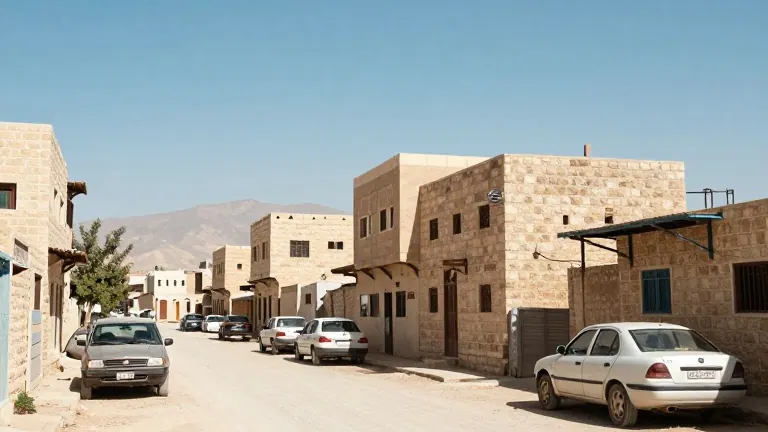
Suwayda is a majority Druze region and one of the last areas where the central government in Damascus does not hold full control. Israel has recently attacked Syrian ministries and soldiers while attempting to build alliances with local Druze groups. The National Guard is accused of acting as a proxy for Israeli interests. These actions have created friction between the two governments.
Navvar Saban, a researcher at the Arab Center for Contemporary Syrian Studies, stated that the message from Barrack was unambiguous. He noted that Israeli support for al-Hijri does not equate to American backing. Saban explained that Washington prioritizes an agreement with Damascus while Israel maintains its own security demands.
The divergence stems from the collapse of Bashar al-Assad’s regime in December 2024. Since then, the US has rebuilt relations with the new leader, Ahmed al-Sharaa. President Donald Trump views instability in Syria as a danger to a country recovering from 13 years of war. In contrast, Israeli Prime Minister Benjamin Netanyahu holds a different view. Israel seized land in Quneitra governorate immediately after Assad's fall. It has since bombed the Ministry of Defence and harassed residents in southern Syria.
Tensions escalated in July 2025 when sectarian violence broke out in Suwayda. Forces linked to the government joined Bedouin tribes against Druze residents, resulting in significant casualties. Israel intervened during the fighting by attacking Syrian forces entering the province. Since then, Israel has reportedly courted local figures like al-Hijri, who opposes the new leadership in Damascus. Nanar Hawach, a Syrian analyst, said Washington is building a partner in Damascus while Israel prefers a weaker government that cannot assert itself in the south.
A trilateral agreement was signed in Amman in September 2025. The deal required Syria to invite an independent international commission to investigate the July 2025 violence. While major fighting has paused, a deadlock remains. Residents in Suwayda still distrust the government. Hawach noted that distrust has hardened because Damascus has pressured local leadership. He added that trust will return only when the state serves residents directly and pursues accountability for the 2025 events. Saban agreed that a durable settlement requires credible accountability and guarantees for movement, education, and security.
Source: Al Jazeera