
Van Gogh masterpiece fetches record $190.4 million following legal resolution with Fischer heirs
The 1890 painting 'Chestnut Trees in Blossom' sets a new auction record in New York after an agreement is reached with the descendants of a Jewish publisher who sold the work during the 1930s.
By Chinedu Schneider ·
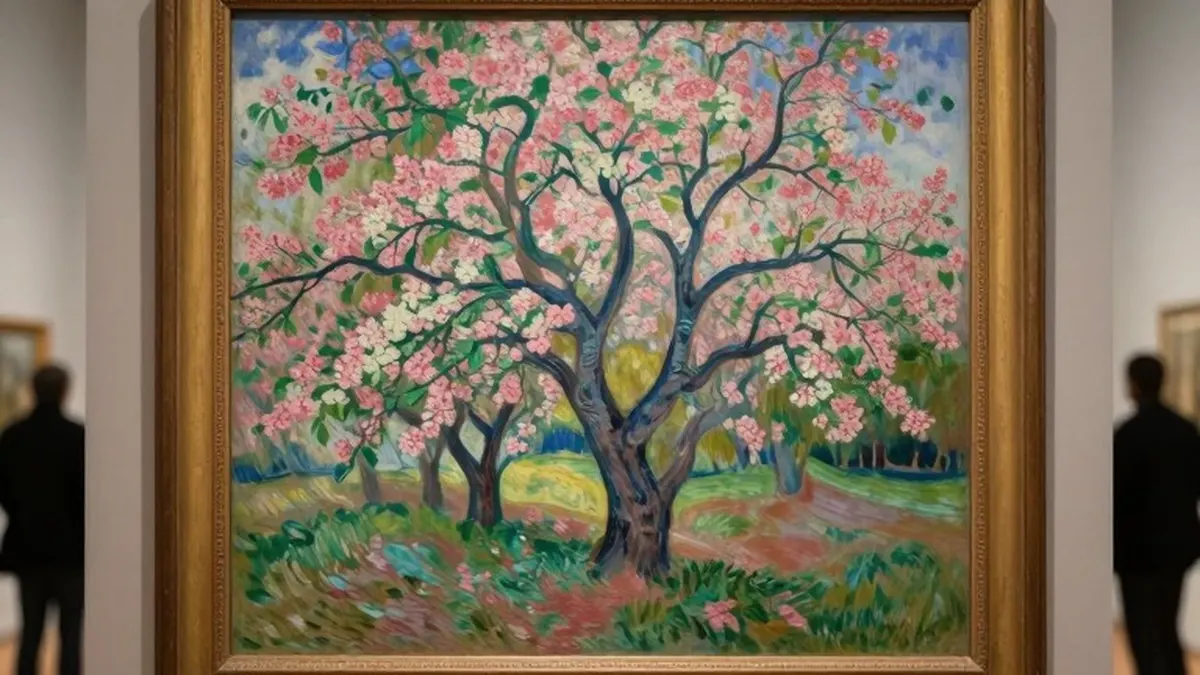
New York, November 19, 2026. A masterpiece by Vincent van Gogh has achieved a record-breaking price of $190.4 million at Sotheby’s, marking a significant milestone in the art world. The sale concludes a complex dispute involving the heirs of Samuel Fischer, a German publisher who originally owned the work. The family’s descendants had argued that the painting was sold under duress due to the circumstances faced by Jewish families during Nazi persecution in the 1930s.
The artwork, titled 'Chataigniers en fleurs' or 'Chestnut Trees in Blossom,' was created in 1890 in Auvers-sur-Oise, France. This transaction establishes a new auction record for the Dutch post-Impressionist painter. It also stands as the most expensive piece sold at auction during the current season, surpassing previous benchmarks in the market.
Prior to this sale, the highest price ever recorded for a Van Gogh painting was $117.2 million. That figure was set in November 2022 when 'Orchard with Cypresses,' painted in 1888, was sold at Christie’s in New York. The recent result significantly exceeds that previous high, reflecting continued strong demand for works by the renowned artist.
Samuel Fischer acquired the painting in Paris in 1909. His family later sold the piece in 1936. The heirs contended that the specific conditions under which the Fischer family operated were directly linked to the decision to sell the artwork. According to research conducted by Gunnar Schnabel, the attorney representing the heirs, the Nazi regime imposed strict limitations on what Jews were allowed to take when departing Germany. Additionally, the family was required to pay the Reich flight tax, a financial burden that complicated their situation.
Before the 1936 sale, the painting had been exhibited in locations outside of Germany. It was displayed in Rotterdam in 1933 and subsequently in Bern in 1934. These exhibitions suggest that the work maintained a level of visibility and recognition in international art circles during that period, even as political tensions rose in Europe.
Leading up to the auction, Schnabel, who is based in Berlin, urged Sotheby’s to demonstrate that the painting had been sold at its true market value. The legal team also argued that the Fischer family would have proceeded with the sale regardless of the broader political context. These claims formed the basis of the dispute that required resolution before the lot could be offered to the public.
The current owners, the Blaquier-Arrieta family, have held the painting for more than half a century. Sotheby’s noted that the family acquired the work in 1975. On Tuesday, the auction house announced that an agreement had been reached between the Blaquier-Arrieta family and all legal descendants of Hedwig and Samuel Fischer regarding the sale of 'Chataigniers en fleurs.'
Schnabel did not respond to a request for comment from AFP following the announcement. The resolution appears to have satisfied both parties, allowing the auction to proceed without further legal interruption. This outcome highlights the ongoing efforts in the art world to address historical ownership issues related to the Nazi era.
According to Sotheby’s, the Fischer heirs expressed gratitude for the collaborative process. They described the negotiation with Sotheby’s and the Blaquier-Arrieta family as trusting and fair. The family stated that this agreement allows them to acknowledge the suffering endured by the Fischer family during the Nazi era and to honor the history of Gisela Berman Fischer, who had long sought justice for her relatives.
The successful sale underscores the enduring value of Van Gogh’s work in the global market. It also serves as a precedent for how auction houses and sellers navigate disputes involving provenance and historical context. As the art market continues to evolve, such cases draw attention to the importance of transparency and fair treatment of all parties involved in the ownership of significant cultural assets.