Washington Task Force Logs 19 Missing Indigenous Person Alerts in First Four Months
Two of the individuals reported missing between January and April remain at large, according to a new state interim report presented at a local summit.
By Marco Ortega ·
A new state report details a persistent gap in finding missing Indigenous people in Washington.
The Washington Attorney General’s Missing and Murdered Indigenous Women and People Task Force received 19 alerts for missing persons between January and April of this year. As of the report’s release, two of those individuals have not been located. The document notes that alert numbers have risen annually as more law enforcement agencies learn to use the system.
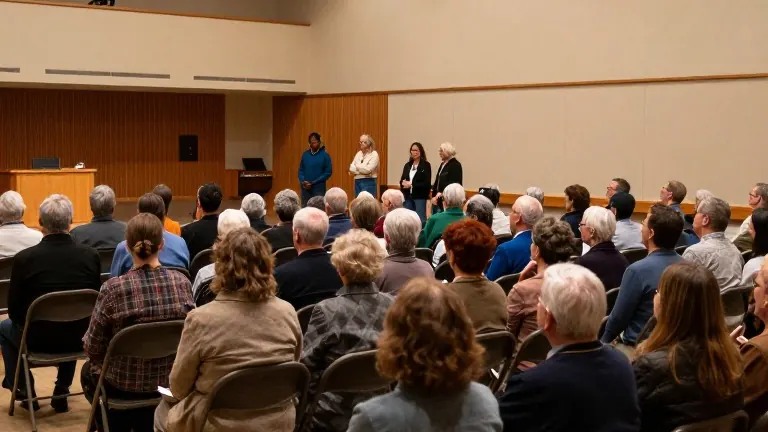
The data was released to a crowd at the annual Missing and Murdered Indigenous Women and People Summit. The event took place on Thursday at the PeaceHealth St. Luke’s Community Health Education Center in Bellingham. The gathering ran from 8:30 a.m. to 5 p.m. and filled the room to standing capacity. Organizers discussed moving to a larger venue for next year due to high attendance.
Speakers at the summit addressed the systemic factors driving the crisis. These include overlapping law enforcement jurisdictions, federal policies, and community mistrust of police. Nationally, homicide is the sixth-leading cause of death for Indigenous women and girls and the third-leading cause for Indigenous men. A federal study cited in the source material states that Native American women are murdered at a rate 10 times higher than the national average. Additionally, more than four in five Native women will experience some form of violence in their lifetimes.
Ron Noland Jr. spoke about his mother, Besalynn James, a Lummi tribal member. According to the FBI, James went missing on Jan. 20, 2025. She was reported to the Lummi Nation Police department four days later. Noland said his mother’s boyfriend reported she left at 1 a.m. following an argument and did not return. James is one of approximately 124 missing Indigenous people in Washington. Her son noted that she would have recently turned 64.
Miranda Noland, Ron’s wife, shared her perspective on the daily fears faced by young tribal members. She described a cycle of abuse and a sense of being targeted. “We as women, as Native American women, deserve more,” she said. “I want answers. I will never get them. I’m afraid for my daughters to become women because I don’t want them to go through what many of us have gone through.”
Kenna Miller, a member of the Intertribal Youth Council, discussed the impact of generational trauma. She noted that boarding schools stripped communities of traditional ways, leaving parents without certain resources. “We’re not crazy. We’re not violent,” Miller said. “We’re afraid to go on buses, we’re afraid to be in big communities, we’re afraid that we might be raped, taken or murdered.”
Deborah Parker, former vice chair of the Tulalip Tribes, recounted her 2012 efforts to include Native women in the Violence Against Women Act. She told the audience that she stood with Senators Patty Murray, Barbara Boxer, and Amy Klobuchar in Washington, D.C., to share her story of childhood abuse. The bill passed hours before her flight home. Parker pointed to recent political shifts, citing the election of Deb Haaland as the first Native American woman governor of New Mexico and Mary Peltola’s anticipated role as the next senator from Alaska.
The state has implemented new tools to assist families. The Attorney General’s Office created a toolkit with checklists for tracking missing loved ones. In 2023, the office established the first Cold Case Unit dedicated to missing and murdered Indigenous women and people. It also created two tribal liaison positions at the Washington State Patrol to improve communication among tribes, law enforcement, and families.
Irene Moses shared the story of her mother, Lummi elder Iva Darlene Smith, who went missing on May 15, 2009. Moses described her role as a voice for those who can no longer speak. “Our loved ones are more than statistics,” she said. “They are mothers, daughters, sisters, aunties and grandmothers. They deserve to be remembered, honored and loved.”