Federal regulators mandate cyan lights to distinguish driverless vehicles
New NHTSA proposals aim to standardize the visual signaling of autonomous fleets and remove outdated manual control requirements.
By Ken Adams ·
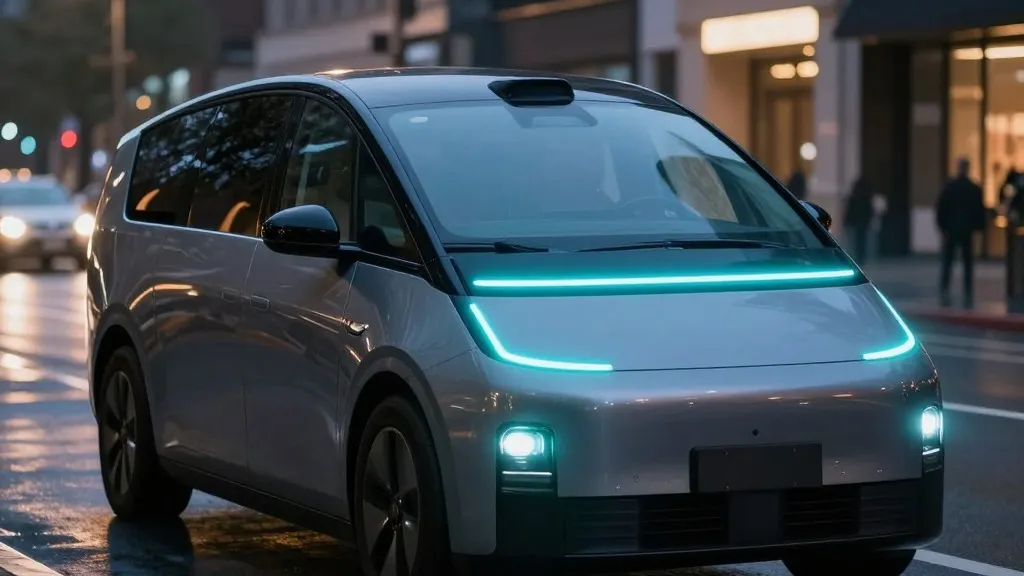
The automotive industry has spent years debating how to visually distinguish driverless cars from traditional vehicles, with manufacturers experimenting with everything from flashing text to custom audio alerts. Federal regulators have now intervened to end that ambiguity, proposing a single, standardized solution: a distinctive cyan-colored light. This move seeks to unify the visual language of autonomous vehicles, replacing a fragmented patchwork of proprietary signals with a consistent national standard that all market participants can adopt.
The National Highway Traffic Safety Administration released proposed amendments to Federal Motor Vehicle Safety Standard No. 108. The core of the proposal mandates cyan marker lamps to clearly signal to law enforcement and other road users that an automated driving system is in control. Regulators selected this specific blue-green hue because the current spectrum of automotive lighting is already occupied. Red, amber, and white lights are reserved for braking, turning, and headlamps, while flashing blue and red lights indicate emergency vehicles. Cyan fills the remaining visual gap, minimizing the risk of confusing human drivers with the status of nearby robotaxis.
Several major players in the autonomous space are positioned to benefit from this standardization. Companies such as Waymo, Nuro, and Zoox, along with traditional automakers including GM and Mercedes-Benz, would gain a uniform regulatory framework. There is already some precedent for this approach, as Mercedes-Benz previously received state-level approval for turquoise lights on its Level 3 Drive Pilot vehicles, though the automaker later pivoted to a Level 2++ system. By establishing a federal baseline, NHTSA aims to create a level playing field for both dedicated robotaxi operators and legacy manufacturers entering the autonomous market.
The proposed rule makes cyan lights optional for manufacturers, but it strictly defines the color, brightness, and placement for those who choose to implement them. This ensures that any vehicle utilizing the signal does so with a legal and consistent setup, avoiding a confusing mix of varying intensities or positions. The agency is also proposing to eliminate several legacy requirements that do not apply to vehicles without human drivers. These include the mandatory installation of physical hazard switches, manual beam shifters, and interior turn levers, which serve little purpose in a car controlled by software.
Further technical updates include revisions to the 12.8-volt testing standard, allowing automakers to design around modern LED architectures without navigating unnecessary administrative hurdles. The agency is also considering removing rules that dictate the relative positioning of high-beam and low-beam lights. These changes are part of a broader Department of Transportation effort to streamline the deployment of autonomous vehicles. The goal is to facilitate the production of cars that may lack traditional human-operated controls, such as steering wheels and pedals, by updating the regulatory code to match modern engineering realities.
Despite the push for streamlined regulations, enforcement of existing rules remains active. Last month, NHTSA initiated an audit query into the Tesla Cybercab to review the technical data and processes used in its certification. The inquiry focuses on the vehicle's lack of sideview mirrors, pedals, and a steering wheel, features that are currently required under FMVSS. This simultaneous approach of proposing new flexibility while auditing current compliance underscores the regulatory tension between encouraging innovation and maintaining safety standards.
Source: The Verge