Musk targets 2028 chip output at Terafab
Tesla and SpaceX are accelerating semiconductor equipment deliveries to meet an aggressive two-year production deadline.
By Bianca Shevchenko ·
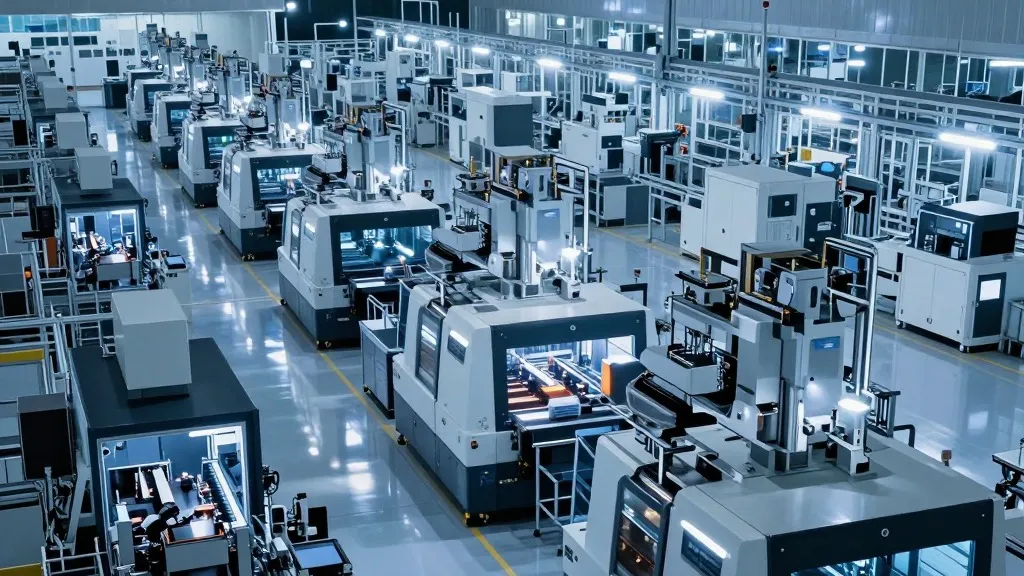
The semiconductor supply chain is tightening as major equipment makers rush to deliver critical tools for a new joint venture. Elon Musk announced on October 20 that ASML and other suppliers are moving shipments forward for the Terafab project, a massive chip manufacturing facility co-developed by Tesla and SpaceX.
The primary facility in Gibbons Creek, Texas, aims to begin volume production of advanced chips by the third or fourth quarter of 2028. Musk described this schedule as highly aspirational, noting that it carries significant uncertainty. He expressed appreciation for the accelerated deliveries from ASML and other partners, which are essential for meeting these aggressive dates.
SpaceX plans to produce its first experimental test chip at a research fabrication site in Austin, Texas, around the second quarter of 2027. This initial step precedes the full-scale production at the main Gibbons Creek plant. The project is designed to be vertically integrated, handling logic, memory, and advanced packaging in a single location. It utilizes extreme ultraviolet lithography systems based on Intel's 14A manufacturing node technology.
Intel joined the venture in April 2026 to help refactor silicon fabrication processes. ASML, the sole commercial supplier of the required EUV machines, is a critical partner in this effort. The first EUV tool for Terafab was reportedly scheduled for delivery in mid-2027, though it is unclear if this date has been pulled forward. Other key suppliers include Applied Materials, Lam Research, KLA Corporation, and Tokyo Electron, which provide front-end processing and metrology equipment.
Musk also detailed plans to secure next-generation NVIDIA hardware to support the project's computing needs. SpaceX and xAI are procuring a 440,000-GPU Nvidia Vera Rubin training cluster that is expected to be online by the end of the second quarter of 2027. This infrastructure is part of a broader goal to have 13 gigawatts of AI compute active by the end of 2027, a target Musk said he is highly confident about achieving.
The commercial ambition of Terafab is immense, with Musk claiming the facility's output could rival the GDP of a top-20 global economy from a single building. The project aims to manufacture one terawatt of AI computing power annually, a figure that exceeds current global estimates for AI-optimized data center capacity. While the timeline is aggressive, the move is intended to reduce dependence on external foundries and secure supply for Musk's AI clusters, self-driving vehicles, and humanoid robots.
Source: Tom's Hardware · original report published
More Business · Consumer Alerts · Report a business · Got a Story?