National Symphony Orchestra Plays Without Home
Displaced by the Kennedy Center closure, the group is performing a reduced season at six different venues across the region.
By Chinedu Schneider ·
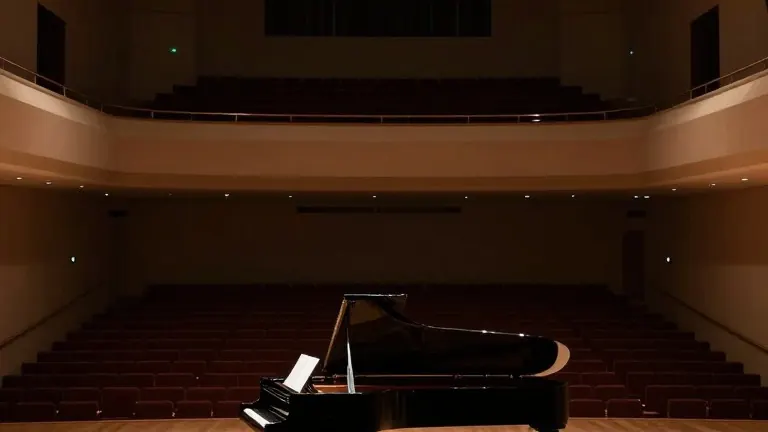
The National Symphony Orchestra has lost its primary performance venue after the John F. Kennedy Center for the Performing Arts shut its doors on Sept. 15. This closure followed months of declining ticket sales, public boycotts, and a federal legal dispute regarding the addition of President Trump's name to the building's exterior. Trump assumed control of the institution in early 2025, replacing board members and firing President Deborah Rutter.
The orchestra, which has occupied the Kennedy Center since its 1971 opening, now operates as a transient ensemble. Music director Gianandrea Noseda, who has led the group for nine years, described the sudden change as a shock. He stated that the news arrived like a cold shower, forcing the team to immediately question their future without a permanent base.
Management secured six alternative concert venues in the greater Washington, D.C. region to host the upcoming season. The scheduling process was compressed because the group had to await budget approval from the Kennedy Center Board of Trustees. Consequently, the new season was announced in mid-August, only six weeks before the first performance. The opening concert occurred on Sept. 26 at the Music Center at Strathmore in Bethesda, Md., just 11 days after the main hall closed.
Anne Midgette, a former classical music critic for The Washington Post, expressed concern that the orchestra might not survive the transition. She noted that the group is deeply intertwined with the Kennedy Center's infrastructure. Despite the disruption, she acknowledged that the musicians are maintaining a high level of artistic quality while navigating a reduced schedule.
Rick Barber, the associate principal double bassist who joined the ensemble in 1995, admitted to feeling anxiety during the months of uncertainty. However, he believes the orchestra will continue to exist. He finds stability in the act of playing, stating that political divisions fade away when he performs. Noseda, who extended his contract through 2031 rather than seeking a new position, encourages the group to view the situation as an opportunity to reach new audiences.
Financial challenges loom large for the season ahead. The Washington Post reported in August that ticket revenue is expected to drop by approximately half, while donations are projected to decline by a quarter. These figures reflect cuts to the Kennedy Center's development department and the departure of key staff, including executive director Jean Davidson, who left in March citing the institutional turmoil.
The orchestra plans to perform about half as many concerts this year compared to a typical season. The group must now determine if audiences will attend these distributed shows and if donors will return. The outcome of this season will serve as a test for the NSO's ability to sustain its operations outside of its traditional home.
Source: KNKX Public Radio