Netanyahu bloc leads Israel vote but falls short of majority
With 85% of ballots counted, the Prime Minister's camp holds 53 seats while Gadi Eisenkot’s opposition bloc trails by five, leaving Arab parties in a pivotal position.
By Bianca Shevchenko ·
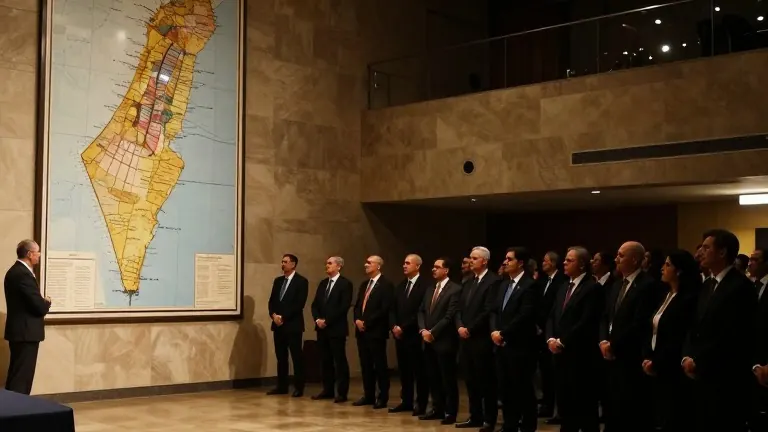
Prime Minister Benjamin Netanyahu and his rivals are locked in a tight contest for control of the Israeli parliament. Partial results show his right-wing bloc ahead but unable to secure a majority. The opposing camp claims the public has demanded change. Both sides are now vying to build a governing coalition.
With 85 percent of ballots counted, Netanyahu’s Likud party and its allies are projected to win 53 seats in the 120-seat Knesset. Gadi Eisenkot’s Yashar party and three other opposition groups are set for 48 seats. This five-seat gap leaves neither side with the 61 seats required to form a government. The outcome now hinges on how the remaining parties choose to align themselves.
Arab-led parties are on track to win 19 seats, a record for their representation. This number is enough to tip the balance of power. However, all but one Jewish party in the election have pledged not to work with Arab groups. This creates a difficult political puzzle for the leaders who must assemble a stable cabinet.
President Isaac Herzog praised the 77.7 percent voter turnout, noting it was the highest in more than two decades. He described the participation as a badge of honor for Israeli society. Herzog said he expected official results next week. He plans to invite the leader he believes has the best chance of success to form a government.
Eisenkot declared that his bloc had won the trust of the people. He called the current leadership a coalition of failure. Netanyahu countered by claiming his side had secured a great majority. He warned against forming a government that relies on anti-Zionist Arab parties. Both leaders insisted they should be tasked with forming the new administration.
Between 430,000 and 480,000 absentee ballots from soldiers and diplomats remain uncounted. This could delay the final results by one or two days. If the current blocs cannot form a coalition, Israel may face another election. The two Arab parties say they are ready to act as a safety net for the Jewish opposition if necessary.
Source: BBC News