Israel Election Leaves No Clear Winner as Nearly 90 Percent of Votes Counted
Neither Benjamin Netanyahu's bloc nor the opposition led by Gadi Eisenkot has reached the 61 seats needed to govern, with more than 500,000 special ballots still to be counted.
By Marco Ortega ·
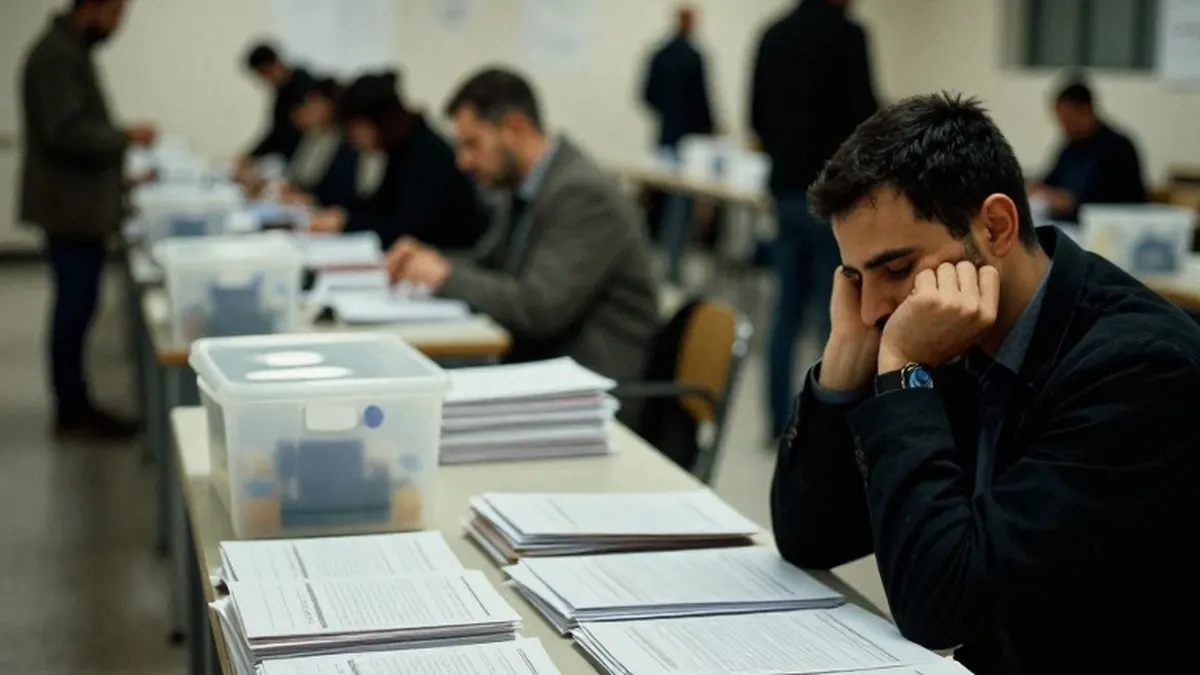
Israel's election has produced no clear winner so far, with nearly 90 percent of ballots counted and neither major political bloc reaching the 61 seats required to form a government.
The Central Elections Committee said on Wednesday that it had counted more than five million votes as of 9pm local time (19:00 GMT). Prime Minister Benjamin Netanyahu's bloc is on track for 53 seats in the 120-member Knesset, while the opposition bloc led by Gadi Eisenkot is expected to take 48. Projections from Tuesday's voting also indicated that the Arab parties, the Joint List and Ra'am, could hold a record combined 19 seats.
Final results could arrive as early as Thursday evening, though no decisive outcome is expected. More than 500,000 special double-envelope ballots are still to be tallied, and they could shift the seat distribution. These include votes cast by soldiers, diplomats and others who voted away from their registered polling stations.
The vote was the first since the October 7, 2023, attacks and the war in Gaza, and was widely viewed as a referendum on Netanyahu's premiership. The 77-year-old appears far from defeated despite lacking a clear majority. He will stay on as caretaker prime minister until a new government is formed.
President Isaac Herzog will start consulting party leaders on forming an administration next week, once official results are published. He has urged all parties to avoid another election that would stall the process. Coalition building is the norm in Israel, and no party has ever won an outright majority in the country's history.
Before the vote, both Eisenkot and Netanyahu ruled out forming a minority government with Arab-led parties. Because Netanyahu's bloc is set to be the largest, analysts predict he will form a unity government that could include Eisenkot, though that outcome is far from certain.
In a post on X on Wednesday, Eisenkot said his alliance was focused on the "heavy task entrusted to us, bringing change to Israel and establishing a Zionist mobilisation government". He described the result as the will of voters who expressed no confidence in the government of October 7th.
Amid record turnout among Arab voters, Netanyahu's Likud party accused Arab parties of stealing the election. It alleged bribery, threats, violence, forgeries and the use of prohibited software to mobilise voters. Likud said it was handing hundreds of testimonies and pieces of evidence to the police, the Shin Bet and the Central Elections Committee.
The Joint List, a predominantly Arab alliance, said in a statement published late on Wednesday by Turkish news agency Anadolu that preliminary figures showed Arab turnout played a decisive role in denying Netanyahu and his coalition a parliamentary majority, while cautioning that final results were not yet announced. It said it would work to remove Netanyahu's government and prevent its return. Leader Yousef Jabareen said the alliance could back an anti-Netanyahu government from outside but would not join it.
Source: Al Jazeera