Tesla Pushes Humanoid Robot Launch to Late 2027
Elon Musk cites ongoing challenges with robot hands and AI reliability as the primary reasons for the delayed external delivery timeline.
By Chinedu Okafor ·
Elon Musk has officially shifted Tesla’s timeline for delivering its Optimus humanoid robots to outside customers to the end of 2027. During the company’s Q3 2026 earnings call, Musk acknowledged that significant hurdles remain, specifically regarding the robot’s hand mechanisms, overall durability, and the underlying artificial intelligence. These are the same persistent engineering challenges facing the entire industry, despite Musk’s assertion that no other company is close to matching Tesla’s progress.
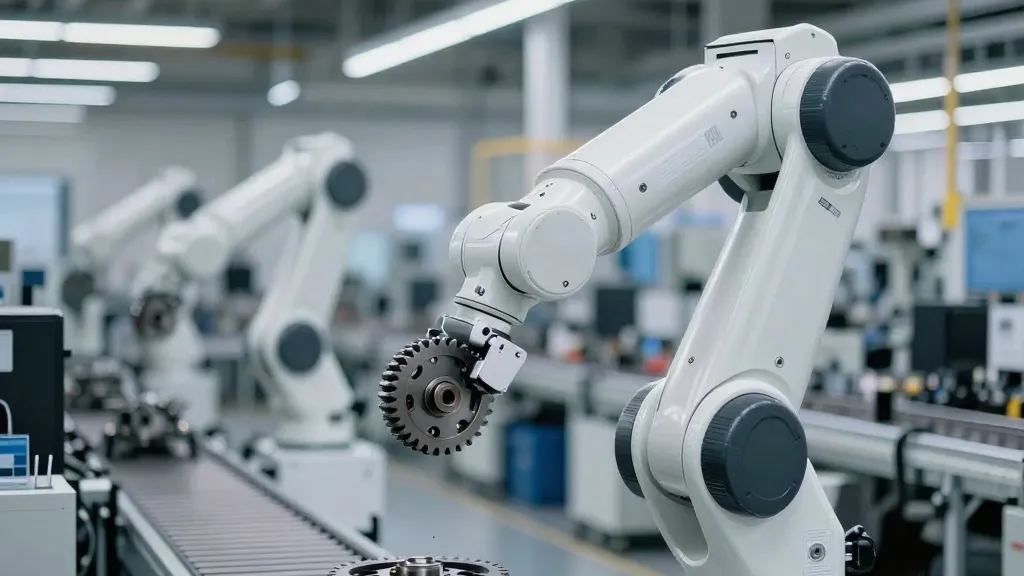
Tesla has begun early production of Optimus on its high-volume line in Fremont, California, the facility formerly dedicated to Model S and Model X vehicles. While the line is designed to eventually support a massive output of approximately 20,000 units per week, Musk stated that reaching this capacity will take at least another year. The delay is largely attributed to ongoing design changes, meaning the current production rate is still far below the long-term target.
The most significant technical bottleneck remains the robot’s hands. A Tesla engineer noted that the fingers must be soft enough to handle delicate items yet durable enough to withstand constant wear, a difficult balance given that robots cannot heal like human skin. Custom gears also present reliability concerns. On the software side, Tesla lacks a large fleet of robots collecting real-world data, similar to how its cars power Full Self-Driving. To address this, the company plans to build 10,000 to 20,000 units to practice tasks in an internal training environment known as the Optimus Academy, with the AI5 chip slated for integration around April 2027.
Musk promised a video within the next month or two showing Optimus performing unscripted tasks, arguing that many competitor demos rely on pre-programmed routines. However, the timeline has shifted repeatedly. In 2024, Musk predicted internal use by 2025 and high-volume external sales by 2026. By January 2025, he claimed thousands of robots would be doing useful work by year-end, a goal he later admitted was not met. Now, external deliveries are targeted for late 2027, starting with industrial jobs that are dangerous, repetitive, or require continuous operation.
Competitors are also making steady progress. XPeng activated an automated production line for its IRON robot in Guangzhou in September, with plans for mass production by the end of 2026 and deliveries in early 2027. Meanwhile, Boston Dynamics has started producing its electric Atlas and has committed all its 2026 deployments, including to Google DeepMind. Hyundai, which owns Boston Dynamics, plans to deploy 25,000 robots across its plants in the coming years. Notably, Boston Dynamics hired Milan Kovac, Tesla’s former head of Optimus, in January.
The stakes are high for Tesla, which aims to position Optimus as the first production-quality humanoid robot for commercial use. While the company has built the most units, the challenge lies in making them reliably useful. Investors are watching closely to see if the late-2027 target holds, given the history of delays and the intense competition from rivals who have already begun integrating their robots into real-world industrial settings.
Source: Electrek