Village Raid in Taraba State: Death Toll Surges to 40 Amidst Escalating Bandit Violence
Amnesty International reports 40 victims after gunmen on motorcycles attacked Binnari village, sparking a dispute over the final count between local survivors, police, and international observers.
By Arjun Patel ·
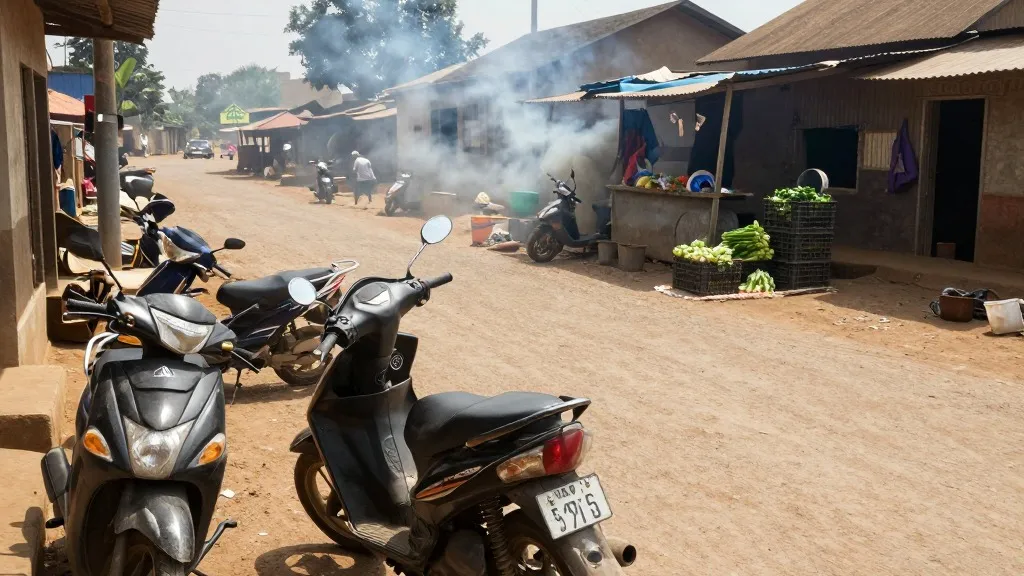
Amnesty International announced on Saturday that the death toll from a violent raid on Binnari village in Taraba State has risen to 40, marking one of the deadliest recent incidents of banditry in eastern Nigeria. The international human rights organization stated that while local police initially confirmed ten deaths, additional bodies were discovered on Saturday, significantly altering the scope of the tragedy.
The attack occurred just after Friday prayers when a large group of armed men descended upon the community. Police officials reported that ten bodies had been recovered by Friday evening following the assault by gunmen riding motorcycles. During the raid, the attackers systematically looted local shops, seizing food supplies and other provisions before withdrawing from the village.
Discrepancies in the reported figures have emerged between official sources and local witnesses. Residents of Binnari told the AFP news agency that they counted at least 20 bodies after the attackers departed. Sa'idu Nuhu, a local resident, noted that many people remained missing at the time of his report. Another villager, Isiyaku Musa, also placed the minimum death toll at 20, suggesting that the initial police count may have been incomplete.
Community leader Malam Abubakar Saifullahi provided detailed accounts of the raid's logistics. He described the arrival of approximately 50 motorcycles, each carrying two armed men. The assailants targeted shops and took cash, foodstuffs, and other goods. They also confiscated motorcycles that residents had abandoned in their haste to flee the gunfire.
Amnesty International used the incident to criticize the Nigerian government's handling of security in rural areas. The group stated that authorities continue to leave communities in parts of the north vulnerable to gunmen who commit atrocities with impunity. This statement highlights a growing frustration with the state's ability to protect remote populations from organized criminal groups.
Banditry has become a persistent threat in northwest and central Nigeria, where powerful gangs operate in regions with limited state presence. These groups are generally not driven by ideology but by economic motives. They raid villages, kidnap individuals for ransom, and impose taxes on farmers and miners in areas where police and military forces are overstretched.
The violence in Taraba State is part of a broader pattern of instability in the country. While Taraba is located in the central-eastern region, it faces similar threats to those in the northwest. The bandit gangs in these areas exploit the difficult terrain and the distance from major urban centers to launch surprise attacks on rural settlements.
In a separate security development on the same day, the Nigerian military reported that it had killed 15 terrorists in an air strike in Borno State. This operation is part of the ongoing campaign against armed rebellions that have plagued the country since the 2009 uprising by Boko Haram. The simultaneous events underscore the multiple fronts on which the nation is fighting to restore stability.
The incident in Binnari village serves as a stark reminder of the human cost of banditry in Nigeria. As the death toll continues to climb, families are left searching for missing loved ones while authorities work to confirm the final number of casualties. The dispute over the exact figures highlights the challenges of gathering accurate information in the immediate aftermath of such a violent and chaotic attack.
Source: Al Jazeera