Federal judges pause Trump's D.C. arch and golf course plans
Two separate court orders temporarily halt construction on the Memorial Circle arch and the East Potomac Park redevelopment, giving plaintiffs time to seek longer-term legal relief.
By Marco Ortega ·
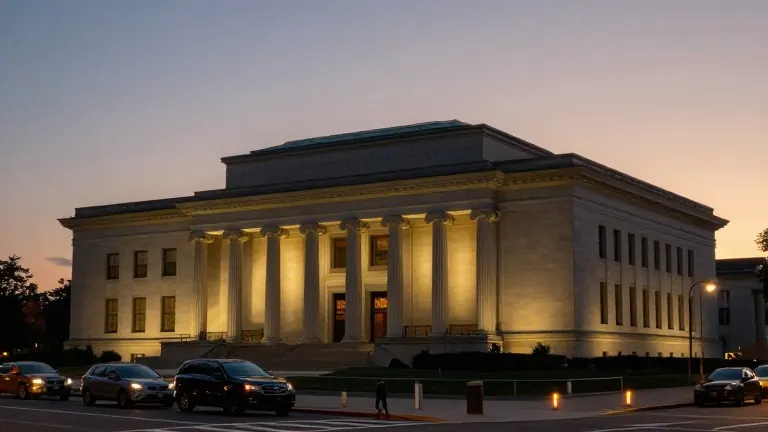
D.C. District Judge Tanya Chutkan extended a temporary restraining order on Wednesday, halting construction on President Trump’s proposed 250-foot arch at Memorial Circle until December 3. The order prevents the administration from beginning excavation, demolition, or utility work at the site. This extension follows an initial block issued on November 5, after the National Capital Planning Commission and National Park Service granted final approval for the structure.
The pause allows Chutkan to evaluate requests for a preliminary injunction, a longer-term legal barrier that would stop construction while the lawsuit proceeds. The case began with challenges from Vietnam War veterans and an architectural historian. It has since grown to include the governments of D.C. and Virginia, as well as nine members of the Kennedy family. Max Kennedy, son of Robert F. Kennedy, argued that the project violates established rules and should have gone through Congress.
Critics contend the arch’s scale and location disrupt the historic view between Arlington National Cemetery and the Lincoln Memorial. Plaintiffs claim the project violates the Commemorative Works Act and D.C.’s Height of Buildings Act. The administration argues the arch is covered by a 1925 congressional authorization for unbuilt columns and frames the project as a matter of national security and urgency, though approved plans do not yet specify military uses.
Simultaneously, D.C. District Judge Ana Reyes has kept East Potomac Park open for two weeks. Her order was issued on Saturday, just before the park was set to close indefinitely for redevelopment into a championship golf course. The administration has appealed this order, which expires on November 28. Plaintiffs, including local golfers and preservationists, have asked for a two-week extension until December 12 to allow Reyes to consider a preliminary injunction.
While the courts pause the projects, the administrative process continues. On Thursday, the Interior Department presented its golf course plan to the Commission of Fine Arts. About 700 members of the public submitted comments, nearly all opposing the proposal. Concerns included reduced accessibility for non-golfers, the elimination of the park’s perimeter loop, and the removal of historic cherry trees. The Interior Department noted that deferred maintenance alone would cost $43 million, without specifying the total renovation cost.
Commissioners appointed by Trump did not have the quorum needed to vote on preliminary approval. Vice Chair Rodney Mims Cook Jr. suggested that the park has enough space to accommodate both the new course and public amenities, asking the Interior Department to bring alternative designs to a late January meeting. The administration plans to present the same proposal to the National Capital Planning Commission in early December.
Tensions between Judge Reyes and the administration have intensified. Reyes accused the government of rushing the process and potentially violating the National Environmental Policy Act by splitting the project into smaller parts to bypass reviews. Trump called the judge’s decision political and destructive on Truth Social, arguing that delaying the work would cost jobs and prestige. Government lawyers have rejected a misconduct inquiry into whether officials misled the court, stating the court has enough information to rule quickly.